Utah can afford the Prop. 3 Medicaid expansion with minimal changes, says Rep. Raymond Ward
Jan 31, 2019, 3:39 PM
Rep. Raymond Ward speaks to KSL Newsradio's Dave & Dujanovic about his plan to expand Medicaid while still keeping the budget balanced. (Photo: Kristin Murphy / KSL)
(Photo: Kristin Murphy / KSL)

There are 555,651 Utahns who voted “yes” on Proposition 3 this November, letting their elected leaders know that they want Medicaid to be offered to every Utahn under 65 who are at or below 138 percent of the federal poverty line.
But just because they voted for it doesn’t mean they’ll get it. Now that the people’s mandate has reached the Utah Legislature, word is coming back that the proposition simply might not be financially possible.
Rep. Raymond Ward, however, doesn’t believe that’s true. He says that, with some changes, the state could expand coverage and keep their budget balanced. He has put a bill forward that he says will get the Medicaid expansion approved while keeping the state budget in balance, and Thursday morning, he spoke with KSL Newsradio’s Dave & Dujanovic to explain how it works.
“There is no free money.”
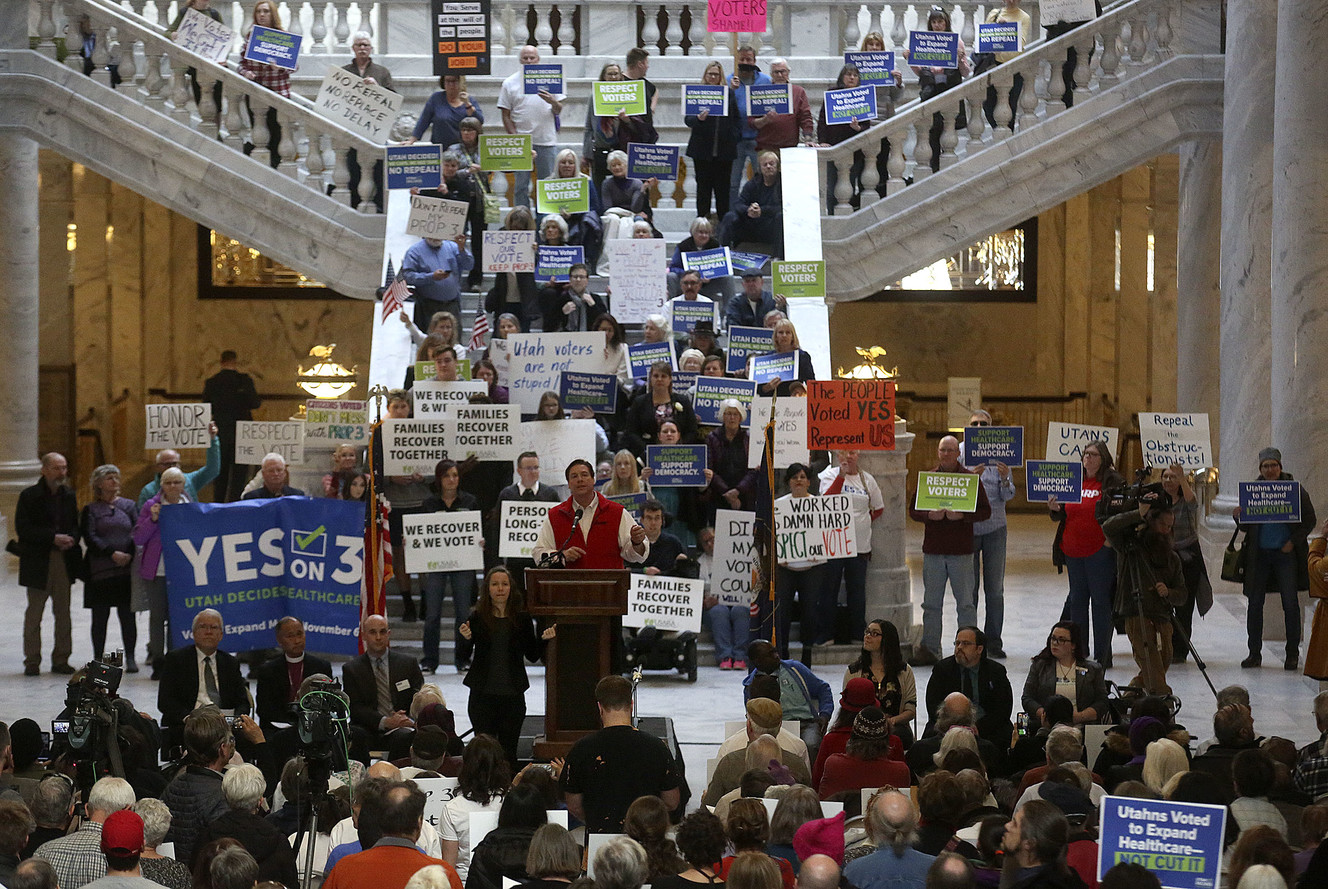
The Rally Against Repeal at the Capitol in Salt Lake City on Monday, Jan. 28, 2019. (Photo: Kristin Murphy / KSL)
Rep. Ward contacted KSL after hearing one of his fellow House representatives, Paul Ray, speak about the Medicaid expansion on the Dave & Dujanovic show.
Rep. Paul Ray speaks to KSL Newsradio’s Dave & Dujanovic about the Medicaid expansion.
“There’s a little bit of misleading going on when it comes to the cost of it,” he said. “I would like nothing more than to be able to provide health care for everybody, but there is a cost and there is no free money.”
The state’s budget, Ray explained, was already being stretched thin. He’d already been tasked to find an addition $29.8 million for Medicaid just to cover the rate of inflation. Adding coverage to thousands more people, he said, would cost the state far more than they could afford, even if federal funding would cover part of the expenses.
Ward, however, sees things a bit differently. Shortly after the show aired he contacted us, asking for the opportunity to share a different perspective.
Not passing Proposition 3, Ward says, would send a dangerous message to the people. “I think it will be very negative for the state if the legislature just overturns what the people passed on the ballot,” he says.
Proposition 3, he says, isn’t unfeasible. In fact, he told Dave & Dujanovic, “With some minimal changes, the state can easily afford the initiative.”
Rep. Raymond Ward’s plan to expand Medicaid
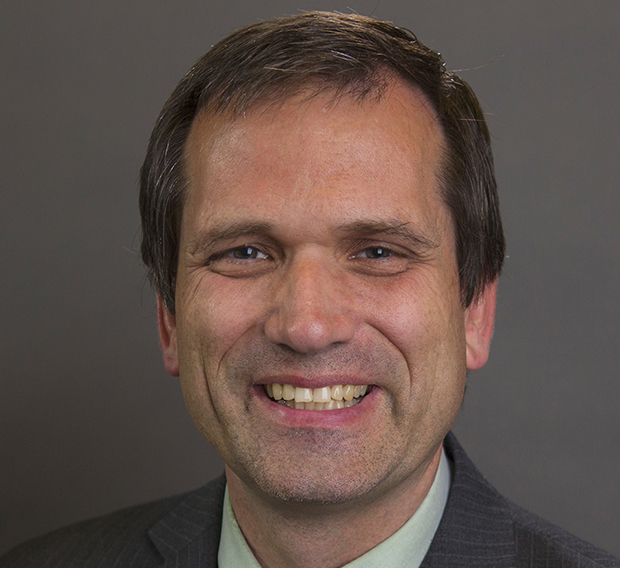
Utah Rep. Raymond Ward. (Photo; Utah House of Representatives)
“It’s really pretty straightforward,” Ward says about his bill to keep Proposition 3 in tact. “The changes that would need to be made are not large.”
There are three things, he says, the state would have to do to make sure that they could expand Medicaid to the extent the Proposition had requested without going over budget:
1. Remove the inflation adjustment
The original bill behind Proposition 3 called for the funding to be increased along with the rate of inflation, a clause that Ward says will cost the state about $30 million each year.
“The program could work without that,” he says; if it did, that $30 million a year would be freed up in funding.
The inflation adjustment, Ward admits, is important. If it fails to keep up with doctors’ rising expenses, some doctors might refuse to serve patients covered by Medicaid. Still, he believes health care options would exist.
“If you don’t do that adjustment, you’ll probably have fewer doctors willing to take Medicaid,” Ward admits. “But you would have some. … I’d rather have have the program in place and get the people coverage.”
2. Charge more of the expense to the federal government
Utah runs a number of programs, Ward says, that require the state to cover 30 percent of the costs, with the other 70 percent handled by the federal government. The state will only have to pay 10 percent of the expenses. For the extra patients covered under Proposition 3, the federal government covers the other 90 percent.
With a little creative reclassification, Ward says, Utah could get the federal government to cover 90 percent of the costs for all of the patients.
“The State pays less and the Feds pay more,” Ward says. “That saves an addition $20 to $30 million a year.”
Those two changes, Ward says, combined with the increased sales tax already proposed in the original bill, would give the state enough money to expand Medicaid and keep its budget balanced for the next four to six years.
Rep. Ward’s bill, H.B. 210, is currently being reviewed by the Office of Legislative Research and General Counsel. Ward believes that it would soon be given a fiscal estimate and that, once it has been, it will “look great against the other bill.”
“Some people need it really badly,” Ward says. “It is really important to get these people covered.”
Dave & Dujanovic can be heard weekdays from 9 a.m. to noon on KSL Newsradio. Users can find the show on the KSL Newsradio website and app, as well as Apple Podcasts and Google Play.