Rewriting the path to healing: Inside Harper Clinic’s whole-person mental health model
Dec 15, 2025, 9:32 AM | Updated: 10:49 am


OREM — A few decades ago, you’d have had a hard time finding a doctor to treat both your mind and body; And a century ago, you’d have been hard-pressed to find a doctor to treat your mind at all. Today, medical professionals are understanding more and more the undeniable connection between the body and mind, confirming what patients have felt for years: the mind and body are not separate systems—they speak to each other constantly.
At Harper Clinic, this connection isn’t a footnote. It’s the foundation.
As more Utahns seek care for anxiety, depression and trauma-related conditions, the Orem clinic is gaining attention for its integrated approach that treats mental, physical and emotional health as a single, interconnected ecosystem. The model, clinic leaders say, reflects what modern science has made clear.
Harper Clinic combines functional medicine and mental health treatment under one roof, bringing providers into the same room—sometimes literally—to collaborate on a patient’s care plan. It’s a shift from the fragmented system many patients know well, where seeing multiple specialists means juggling appointments, portals and conflicting recommendations.
A bidirectional highway between brain and body
The clinic’s model is anchored in research showing the two-way relationship between mental and physical health. According to Mayo Clinic, stress—particularly chronic stress—dampens the immune system response, lowering resilience and making people more vulnerable to a long list of health problems.
And it’s not just about stress. Trauma can dysregulate hormones. Anxiety can alter sleep cycles, which in turn affect mood, cognition and immune response.
Likewise, physical imbalances can worsen emotional symptoms. Nutrient deficiencies, blood-sugar swings, inflammation, thyroid imbalance and gut dysbiosis all influence brain chemistry.
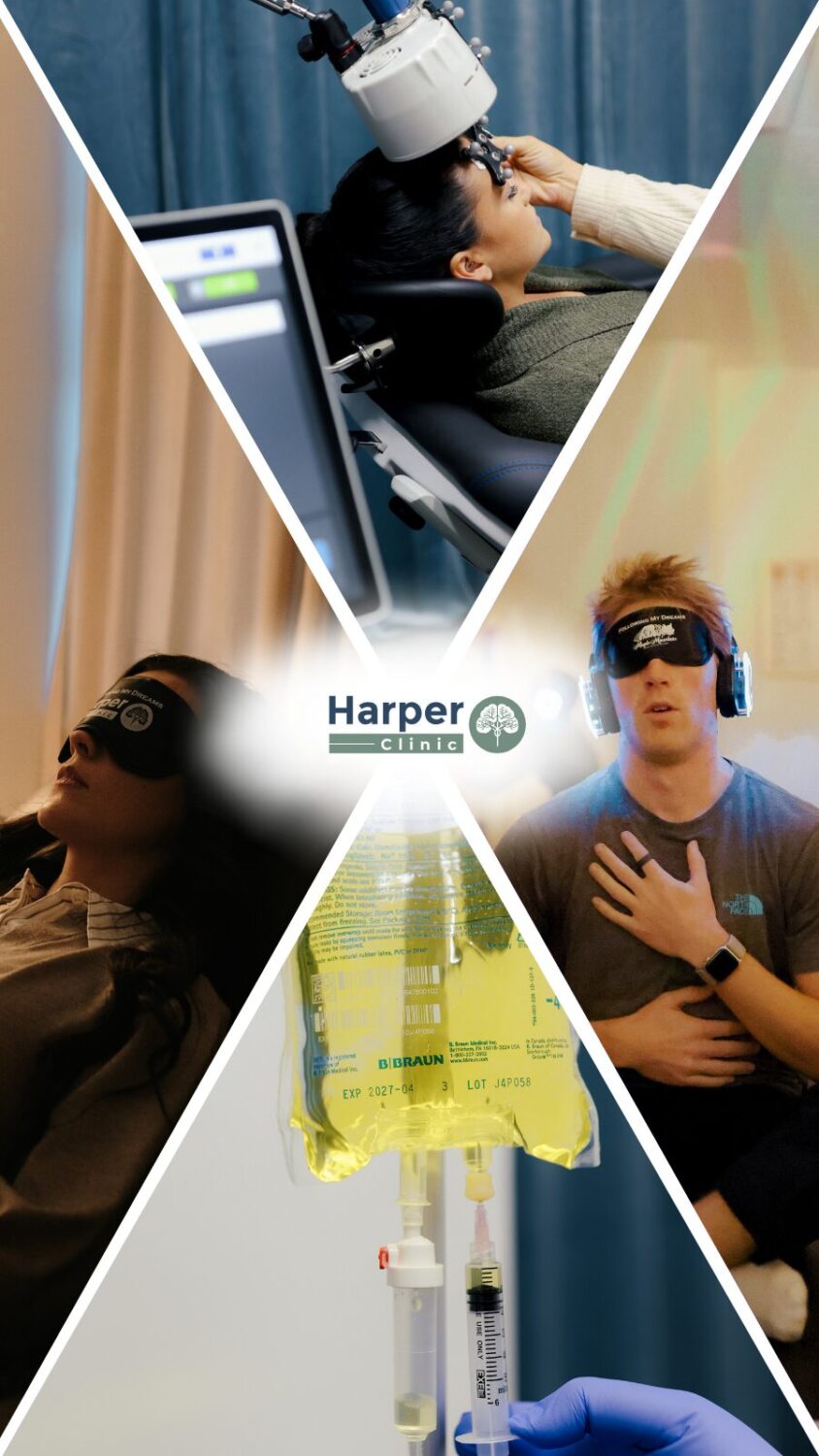
For some, increased stability comes through conventional modalities such as talk therapy or medication. For others, the clinic pairs foundational support with advanced treatments including transcranial magnetic stimulation (TMS), ketamine therapy, amino acid therapy or trauma-focused interventions.
The point, according to Harper Clinic, is not choosing between traditional or alternative care—it’s recognizing that mental health improves when the whole person is supported.
Integrated care under one roof
Unlike many mental health settings where psychiatrists, therapists and functional-medicine providers operate independently, Harper Clinic’s team works side-by-side. Treatment plans are built collaboratively and adjusted in real time.
For example, a patient receiving transcranial magnetic stimulation (TMS) may also be evaluated for nutrient deficiencies that influence neurotransmitter production. A person with treatment-resistant depression might benefit from ketamine therapy while simultaneously working with a therapist on trauma-processing skills. Another patient may receive hormonal or gut-health support that reduces physical symptoms contributing to anxiety.
The clinic’s functional-medicine framework often helps identify root causes—sleep issues, chronic stress response, inflammation—rather than focusing solely on symptom management. In short, it’s not about chasing problems one at a time; it’s about looking at the entire system.
This coordinated care can reduce trial-and-error, shorten the time to meaningful improvement and provide continuity across different types of treatment. Many patients find relief simply in being seen as a whole person—not as a collection of symptoms requiring different specialists.
Modern tools for a modern mental health landscape
Among Harper Clinic’s most requested services is TMS, a noninvasive treatment that uses magnetic pulses to stimulate neural activity linked to mood regulation. It’s FDA-approved for depression and often used when medication alone doesn’t bring relief.
The clinic also provides ketamine therapy, which has gained national traction for its rapid impact on treatment-resistant depression and suicidal ideation. When paired with trauma-informed psychotherapy and foundational health support, providers say the results can be transformative.
Amino acid therapy is another option—one that supports neurotransmitter balance using targeted nutrients. For patients experiencing emotional dysregulation tied to biochemical imbalances, this approach can offer a gentler, physiology-based path to stability.
These tools aren’t replacements for therapy or lifestyle changes; they complement each other to promote better outcomes for patients.
Removing barriers and reducing the burden of care
Harper Clinic emphasizes accessibility alongside innovation. The clinic accepts insurance—an important distinction in a landscape where many advanced mental-health treatments are offered only out-of-pocket.
In addition, having all services in one place reduces the logistical burden on patients who may already feel overwhelmed. Intake teams coordinate schedules, collaborate across specialties and ensure that patients know what to expect at every step.
Looking at the future of mental health
The need for mental health care for adults in Utah is critical; according to Mental Health America, Utah ranks fiftieth of 51 states in terms of overall adult mental health. With that sobring statistic in mind, clinics like Harper are rewriting the roadmap. Whole-person care is no longer viewed as a luxury or niche philosophy—it’s increasingly seen as the future. Because when you support the mind, body and soul together, people don’t just feel better; they feel whole again.
For more information on services, appointments or insurance options, visit harperclinicutah.com.