
25% of Navajo CARES assistance applicants at risk of being excluded due to missing records
Dec 24, 2020, 12:58 PM
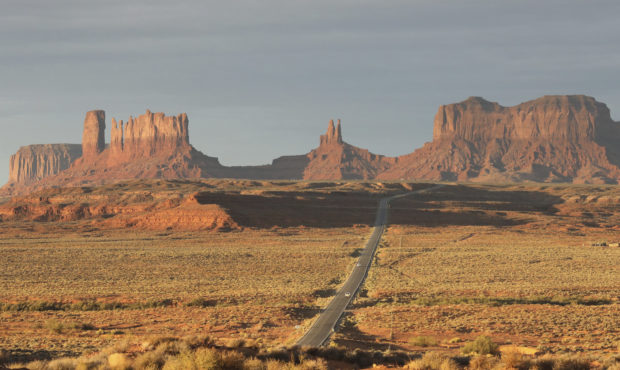
Monument Valley is a prominent Navajo Nation landmark. (Associated Press)
(Associated Press)

WINDOW ROCK, Arizona — Roughly 25% of applicants to the Navajo CARES Hardship Assistance Program are at risk of being excluded from financial assistance because of missing records and information from its vital database, according to press release from the Navajo Nation. As of Monday, nearly 30,000 applicants still need to be validated before the Dec. 31 deadline.
The Navajo Nation Office of the Controller received 295,000 applications by its initial deadline Nov. 30. However, nearly 73,000 members — roughly 25% of the applications — had problems, causing invalidation.
“As a result, nearly 25% of applicants were not initially eligible for payment due to the lack of a valid record in the database,” said Pearline Kirk, controller of the Navajo Nation, in a statement.
Many of the invalidated applications didn’t have matching Certificate of Indian Blood (CIB) records. Thousands of other applications contained errors when matching applicants’ names, dates of birth or addresses with the vital database.
The Controller’s Office got to work to validate the 73,000 applications before the Dec. 31 deadline. Staff reached out to roughly 2,400 applicants a day via phone call, email, text messaging and social media campaigns.
As of Monday, the office resolved 43,000 applications — leaving almost 30,000 applicants at risk of being excluded from emergency financial support.
“The Controller’s Office has made numerous failed attempts to reach certain applicants based on the contact information provided on their application,” Kirk said. “We have used various means to the get the word out including social media, print media, radio and press releases.”
The Navajo CARES assistance program provides direct financial assistance to members who have experienced hardship from the COVID-19 pandemic. The funds are provided through the federal CARES Act by the U.S. Treasury.
However, members who apply through the Navajo Hardship Assistance Program don’t need to pay the federal government back — so long as they meet the eligibility criteria.
Although the deadline is Dec. 30, the lifeline may be extended as Congress mulls over its second stimulus relief bill. The future of the legislation is uncertain as President Donald Trump vetoed the $900 billion plan passed Tuesday — with the House failing to pass an amended version that would triple the $600 direct payments to Americans.
Through the Controller’s Office efforts to validate records that are mismatched with the Navajo Nation’s database, Kirk said she hopes it will leave them with a more efficient system.
“When complete, the Controller’s Office will have added nearly 80,000 new records to the database and cleaned up or corrected over 100,000 other records,” she said. “Our efforts will leave the Navajo Nation with a census record that is more complete than ever before, thus affording the Navajo Nation multiple benefits beyond the Hardship Assistance Program.”






