Communication is ‘flowing again’ between Utah sheriffs and ICE, sheriff says
Jul 28, 2025, 9:00 PM

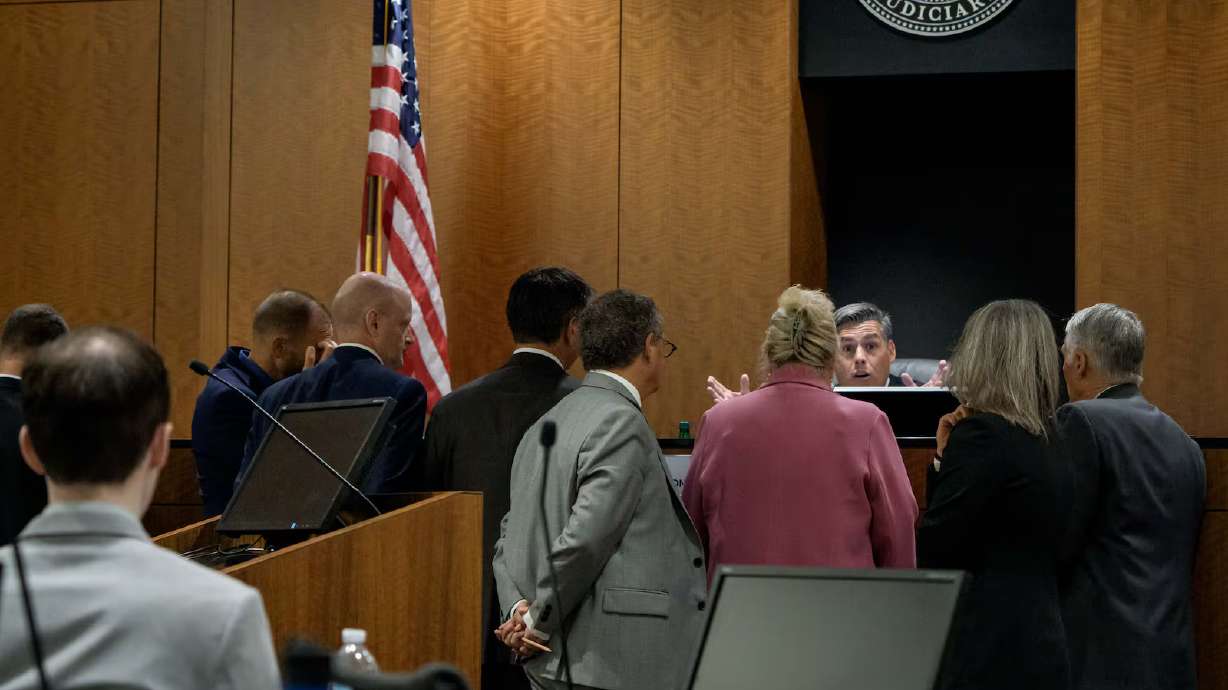
Utah County Sheriff Mike Smith speaks to the Utah County Commissioners after they heard comments from the public prior to their voting on whether or not to go ahead with increased data sharing, training and creation of a task force between the Utah County Sheriff's office and ICE during a meeting in Provo on Wednesday, July 16, 2025. (Scott G. Winterton, Deseret News)
(Scott G. Winterton, Deseret News)
SALT LAKE CITY — A representative for Utah sheriffs said communication between federal immigration agents and local authorities has improved since Utah County representatives approved a policy allowing law enforcement and Immigration and Customs Enforcement to share information.
For years, Utah sheriffs said ICE wasn’t returning calls and coordination was falling apart. However, following a visit to Washington and the appointment of new local ICE leadership, Utah Sheriffs Association President Tracy Glover said the situation is finally turning around.
“The lines of communication have really been opened up,” said Glover. “The new leadership has been at our last two sheriffs’ meetings.”
But, Glover added that none of the local sheriffs he spoke with are interested in doing ICE’s job.
The 287(g) program gives sheriffs access to the ICE immigration database, but only after someone is booked on a separate charge, helping identify serious offenders.
Glover said this isn’t about politics; it’s about keeping people safe.
“That’s kind of where our interests lie, with community safety. And ICE can do their job as it relates to a broader effort,” Glover said.
Many residents have raised concerns that this could lead to raids or increased fear in immigrant communities. Glover said that’s not their goal.
“I have yet to find a sheriff that’s interested in doing ICE’s job for them,” he said. “If there are criminals in our community that are also illegal aliens, then we’re interested in helping ICE — just as we would the FBI or the DEA or Homeland Security or any other federal partner.”
Simone Seikaly contributed to this article.