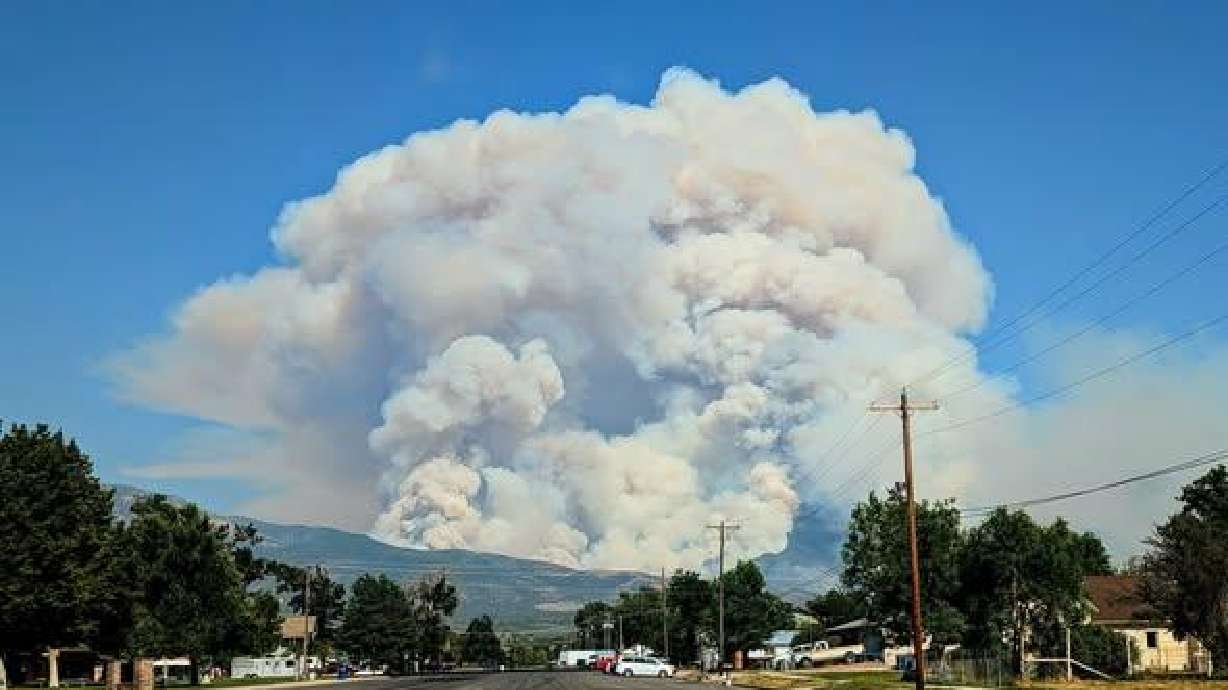
Salt Lake City and Provo air quality reaches EPA standards after 15-year journey
Nov 19, 2025, 4:05 PM | Updated: Nov 21, 2025, 11:57 am
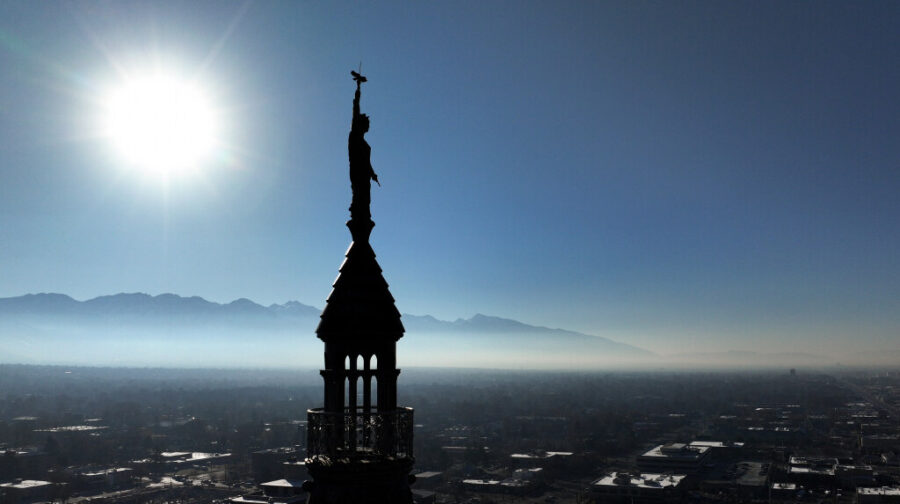
The Environmental Protection Agency determined that Salt Lake City and Provo had met the air quality standards after 15 years. (Kristin Murphy, Deseret News)
(Kristin Murphy, Deseret News)
SALT LAKE CITY — Utahns in Salt Lake City and Provo can breathe easier. And cleaner too.
The Environmental Protection Agency announced Wednesday that Salt Lake City and Provo nonattainment areas, or the areas not in air-quality compliance, had reached the 2006 PM2.5 24-hour National Ambient Air Quality Standard.
“The people of Utah deserve clean air and practical solutions that recognize the realities of life in the Salt Lake City and Provo areas,” EPA Regional Administrator Cyrus Western said. “Meeting the PM2.5 standard underscores all of the hard work that Utah has done over the past decade to improve air quality. This demonstrates that Utah can meet federal air quality standards in a way that respects local priorities and fosters cooperative federalism.”
What is PM2.5?
According to the EPA, particulate matter or PM is “a complex mixture of extremely small particles and liquid droplets in the air.” PM2.5 is made up of particles smaller than or equal to 2.5 micrometers (μm) in diameter.
The EPA also cites particulate matter as “the main cause of visibility impairment in the nation’s cities and national parks.”
The CDC warns that these tiny particles can get into deep parts of the lung and potentially enter an individual’s bloodstream.
The standard requires concentrations of PM2.5 to be smaller than 35 micrograms per cubic meter (μg/m3). If there are more of these tiny particles inside that space, the air quality is considered poor.
The EPA determined that people exposed to high concentrations of particulate matter are at a higher risk of aggravated asthma, chronic bronchitis, reduced lung function, irregular heartbeat, heart attack and premature death in people with heart or lung disease.
Utah’s role in air quality control
Since 2009, the Salt Lake City and Provo areas have been designated as “nonattainment,” meaning neither of those areas met the EPA’s air quality standard.
Utah companies worked with government organizations to improve air quality across these areas.
In 2020, the EPA proposed approval of Utah’s redesignation requests and maintenance plans to continuously improve Utah’s air quality. Over the next five years, the Utah Department of Environmental Quality and the EPA worked collaboratively to pass the 2020 proposal.
“The achievement of cleaner air in Utah resulted from extensive planning and collaboration among the public, industry, and various government levels, leading to significant investments and the implementation of 23 new rules targeting emissions from multiple sources,” Utah Department of Environmental Quality, Division of Air Quality Director Bryce Bird said.
According to Bird, Utah’s state legislature provided incentives to either retrofit or replace high-emission wood stoves and diesel vehicles. Vehicles are required to have annual or semi annual emissions testing done.
Additionally, Bird said that public education campaigns have been successful in encouraging members of the public to reduce emissions, along with improvements to public transit.
“The work to support growing communities in the area by reducing air pollutant emissions continues and the state works to attain the 2015 standard for ground-level ozone in Utah’s urban counties and the Uinta Basin,” Bird said.