Combined acre-feet of Lake Powell, Lake Mead at record low. Here’s what that means for the Colorado River Basin
Jul 17, 2026, 11:35 AM
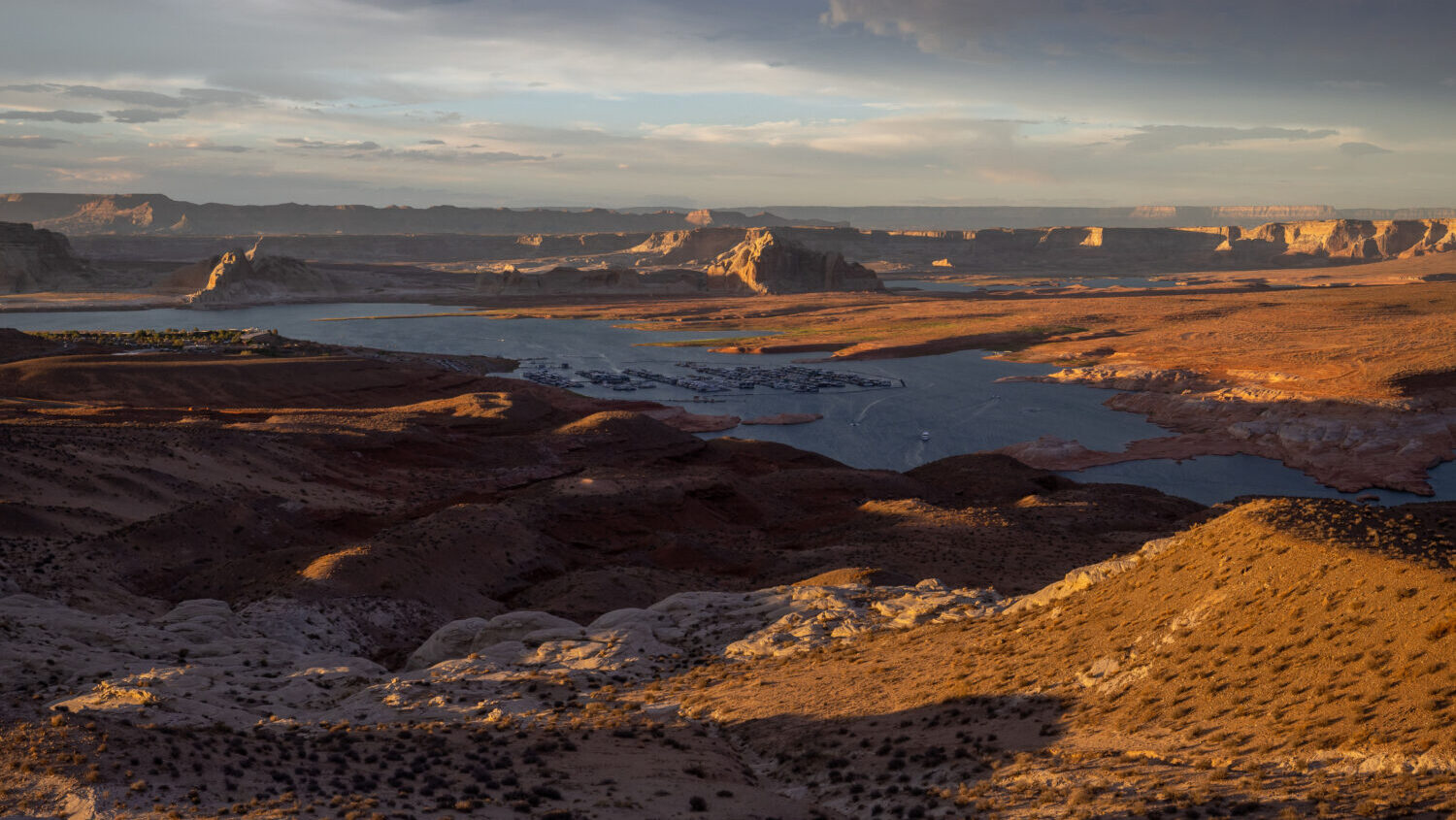
The Wahweap Marina and parts of Lake Powell in Arizona, foreground, and Utah, background, are pictured on Monday, July 18, 2022. (Spenser Heaps, Deseret News)
(Spenser Heaps, Deseret News)

SALT LAKE CITY — The Colorado River Basin is at a significant point in its history as Lake Powell and Lake Mead’s combined total water is now at a historic low, prompting concern from Colorado River experts.
The combined acre-feet of water in both reservoirs according to a new report totals 12,675,509 acre feet of water.
That breaks down to 5,505,869 acre-feet in Lake Powell and 7,169,640 acre-feet in Lake Mead. The two reservoirs sit in two parts of the Colorado River Basin with Powell in the upper basin and Mead in the lower basin.
The acre-feet total of 12,675,509 pre-dates Lake Powell itself and dates to 1957, during the construction of the Glen Canyon Dam.
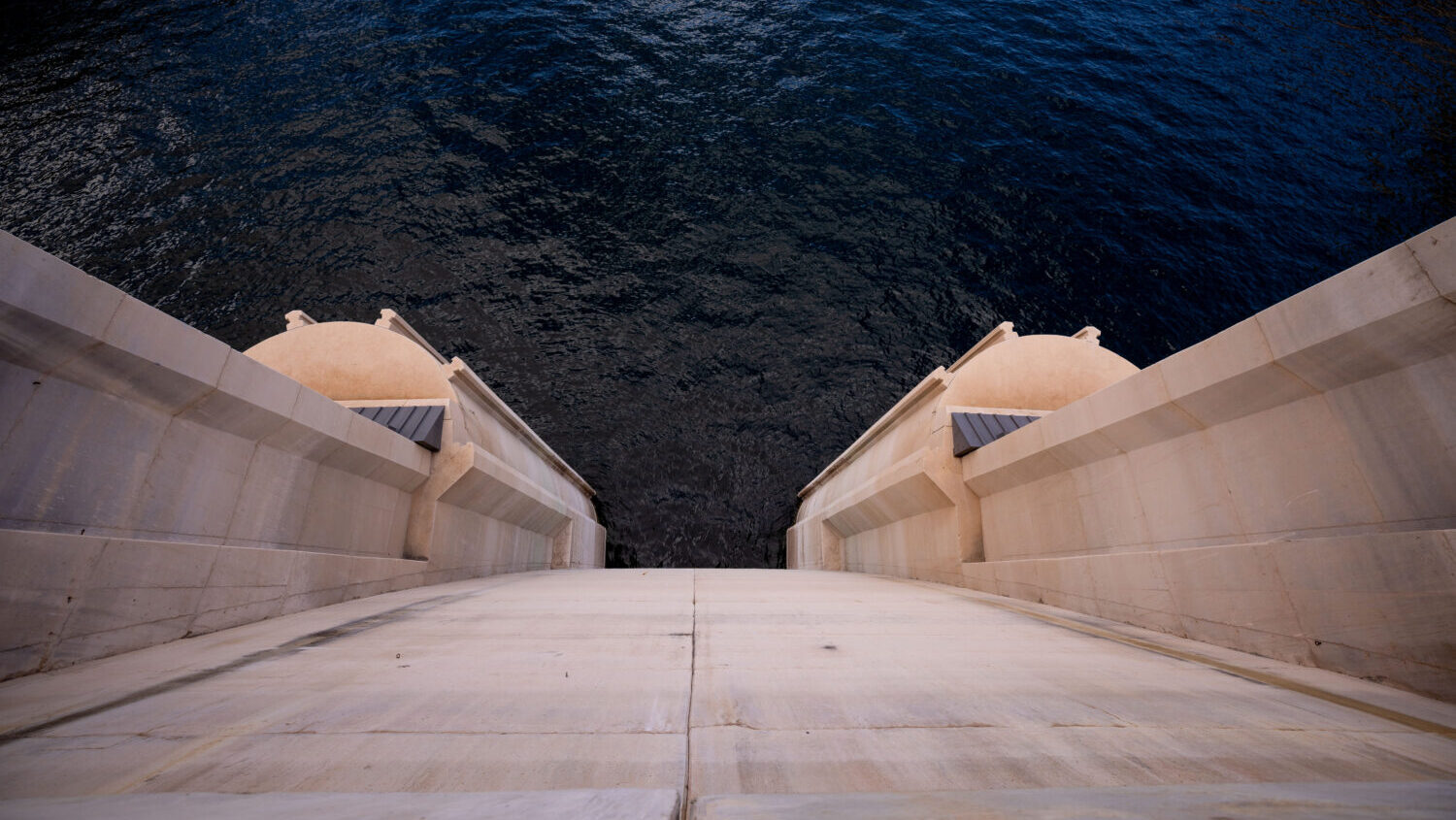
The curved concrete wall of Glen Canyon Dam holds back Lake Powell in Page, Ariz., on Tuesday, July 19, 2022. (Spenser Heaps, Deseret News)
Jack Schmidt, one of the authors of the new report, said he was shocked to see the numbers go back that far and said this is can be used as a teaching moment.
“I think that when a milestone is broken, it is a teaching moment to remind the community of citizens of the West just how significant is the crisis,” he said.
Now, just how bad is it?
A milestone of this nature magnifies a short-term and a long-term crises. The short-term, more immediate problem, is the absence of water in the basin.
The long-term problem? States that share the critical resource of the Colorado River Basin cannot agree on a solution.
Water rights
Structural and legal complexities accompany any conversation about water rights in the American West.
Schmitt said over half of the water is used for growing livestock feed like alfalfa and grass hay.
“The irony is the biggest users of water are the most senior users of water and they have the earliest and most solid rights,” Schmidt said.
Ironic, because municipalities have the most junior, or weaker, water rights. Meaning, large groupings of people often have the least secure claims to the water.
And litigating the situation isn’t a straightforward legal matter. Schmidt said negotiations are at a standstill mainly because of the water rights issues.
Glen Canyon’s looming magic number
There is a magic number looming for Lake Powell and Glen Canyon Dam. It’s the minimum power pool number, which according to the Arizona Department of Water Resources “is the lowest water elevation in a reservoir required to successfully operate a hydroelectric dam’s turbines.”
When a reservoir like Lake Powell drops below its minimum power pool number, its adjacent dam can no longer generate electricity. Schmidt said Lake Powell’s minimum power pool number is 3,490 feet above sea level, and that we’re on track to hit that number by early 2027.
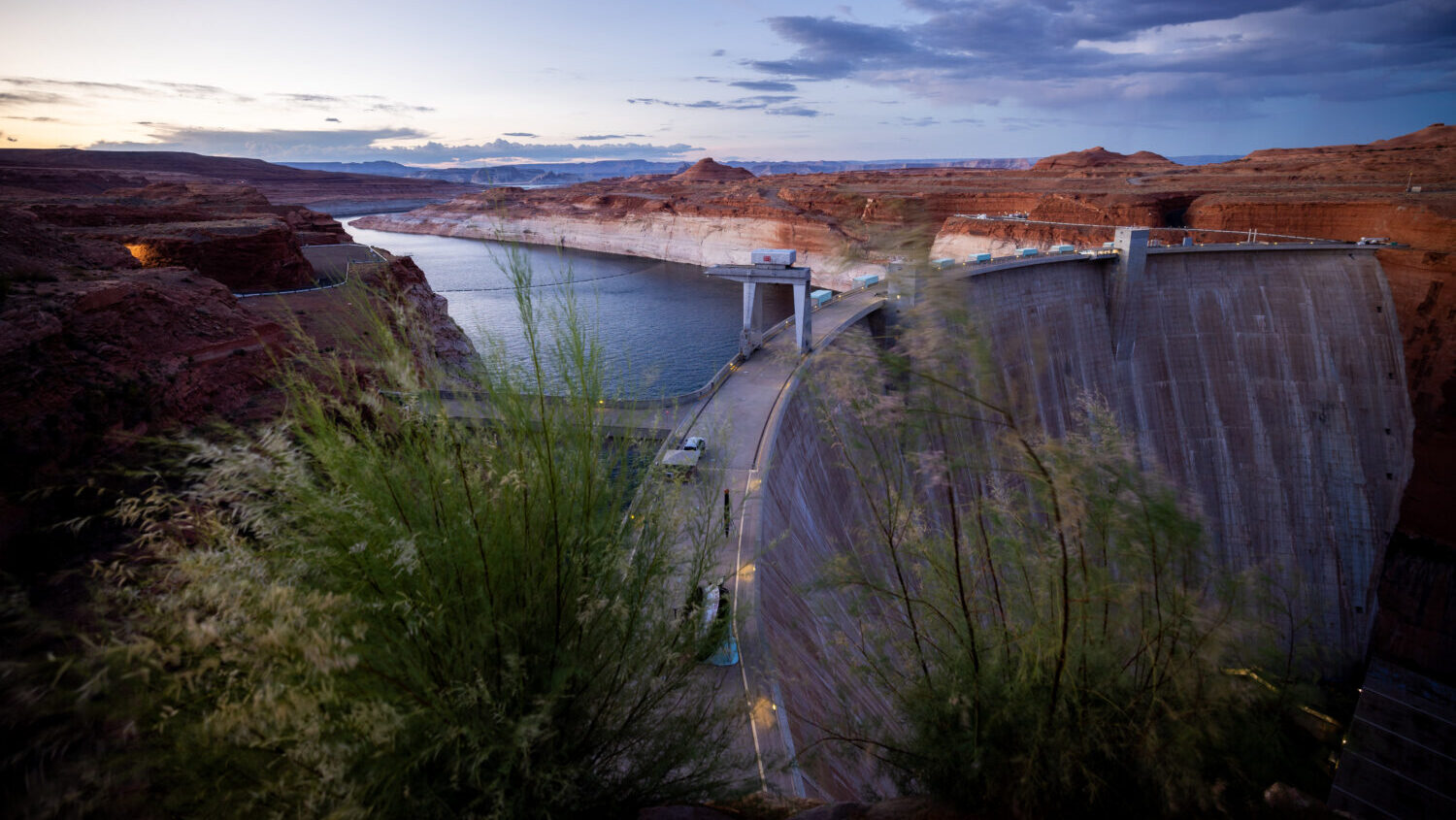
Glen Canyon Dam holds back Lake Powell in Page, Ariz., on Monday, July 18, 2022.
At that point, the situation becomes even more complicated. Moving water downstream becomes more complex, and who gets to use federally subsidized electricity comes into play.
Reaching that number also brings the river outlet works into play, which according to the Association of State Dam Safety Officials are “the system of gates, valves, conduits, and tunnels used to regulate or release water impounded by a dam.”
In other words, they are the tools that release water downstream into the lower basin if a reservoir drops below its minimum power pool number.
“If you can’t withdraw water through those tubes, through the power plant, you greatly reduce the flexibility of how you operate the dam and the flexibility with which you release water downstream,” Schmidt said.
Those tubes have been called into question.
“The lower basin states have caused called for a continued study of the long-term ability to use the river outlet works,” he said. Schmidt also said that lower basin states would have “much to lose.”
A stark reminder
“We have to live as people even though agriculture is the economic sector that’s going to have to make the biggest reductions in use,” Schmit said. “There’s no alternative.
“There has to be a serious conversation about how to reinvest in American agriculture, including here in Utah to encourage Utah or give Utah’s farmers the ability to use water more efficiently,” he said.