Church of Jesus Christ announces $65 million donation to women/child consortia
Aug 7, 2026, 5:39 PM
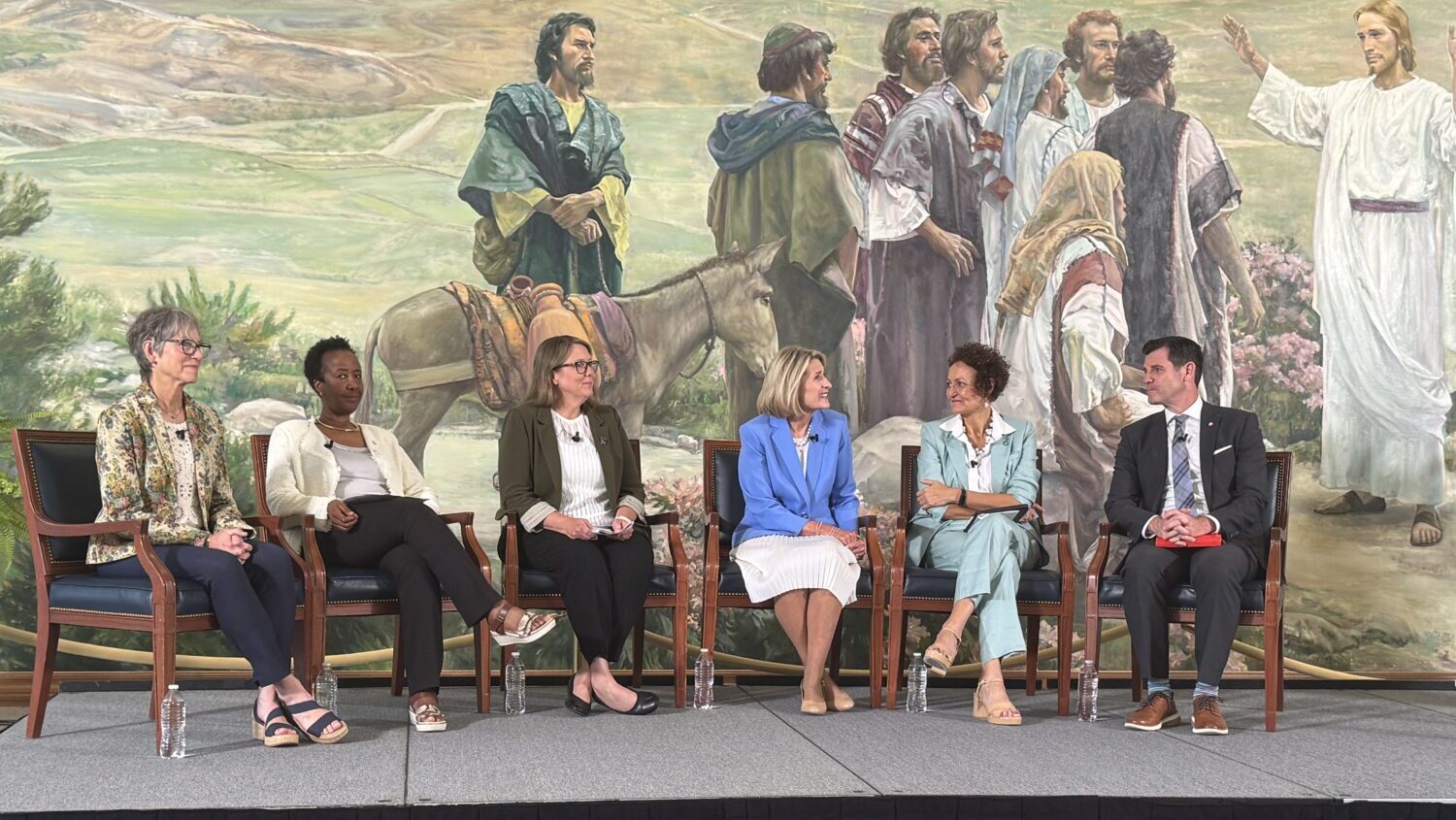
General Relief Society Pres. Camille N. Johnson, 4th from left, joins a panel discussion featuring leaders from the Caring for Women and Children Initiative Consortia. (Photo credit: Holly Richardson, KSL)
(Photo credit: Holly Richardson, KSL)
SALT LAKE CITY — On Friday afternoon, an emotional General Relief Society Pres. Camille N. Johnson announced an additional $65 million from The Church of Jesus Christ of Latter-day Saint to continue the work of the Caring for Women and Children Initiative Consortia.
The consortia’s work focuses on the well-being of women and children in 12 high-need countries and across four areas of emphasis: Expanding access to nutrition, maternal and newborn health in Ghana, maternal, newborn and child health in Sierra Leone and Zambia, and improving agriculture, nutrition, and health services in Nepal.
The consortia consists of the Church and seven partner organizations: CARE, Catholic Relief Services, Helen Keller Intl, The Hunger Project, iDE, Save the Children and Vitamin Angels. It’s goal has been collaboration, giving them the ability to expand their reach well beyond what any one organization could do.
Other reading: Church of Jesus Christ announces 10 hymns to be included in ‘Hymns for Home and Church’
“I am grateful for the compassion, expertise, and dedication of those involved in this initiative and inspired by the results of this collective effort to care for women and children,” said Pres. Johnson. “Through collaboration and faith, we are helping build greater hope, resilience and opportunity for generations to come.”
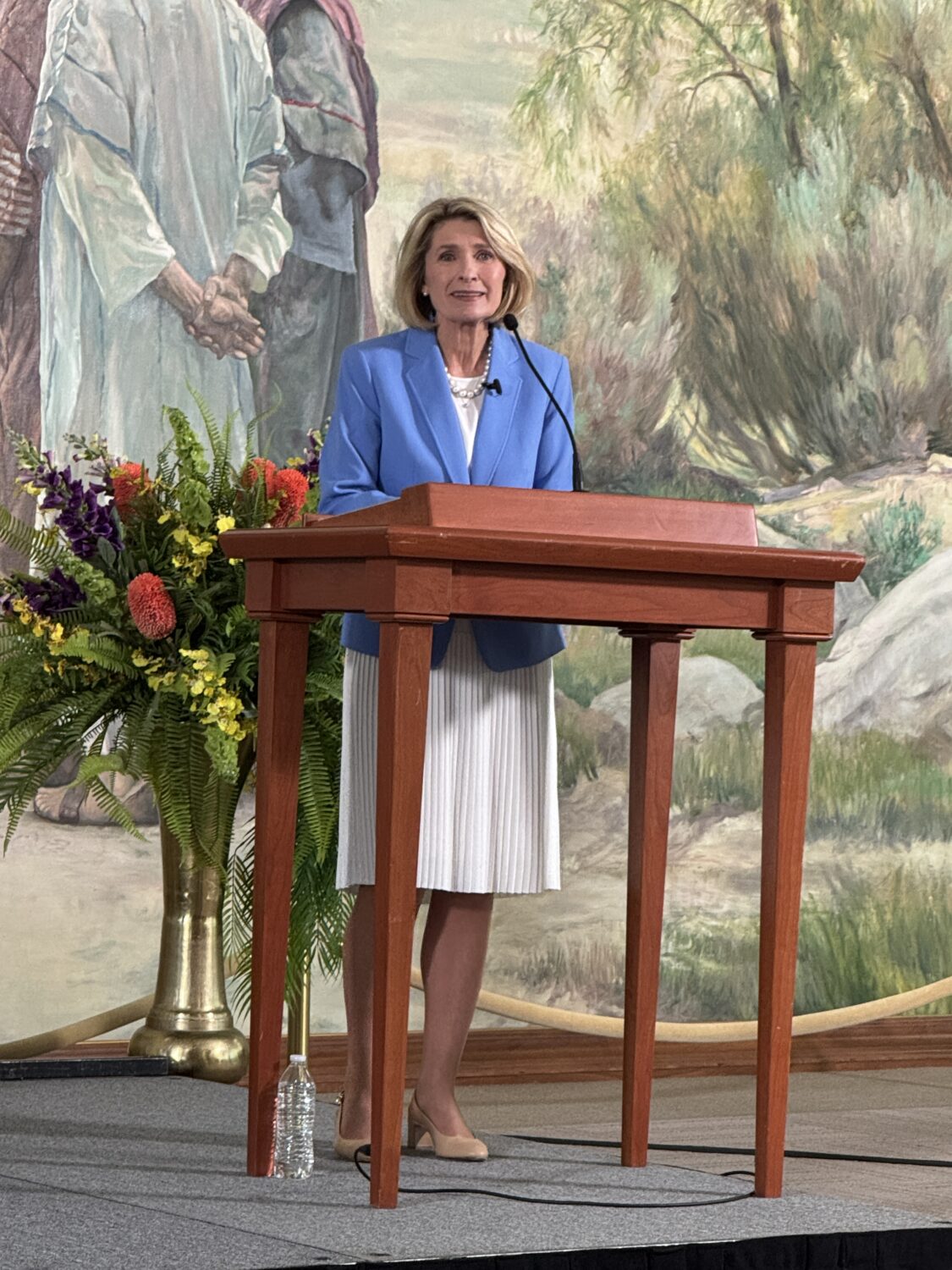
General Relief Society Pres. Camille N. Johnson announces an additional $65 million from The Church of Jesus Christ of Latter-day Saint to continue the work of the Caring for Women and Children Initiative Consortia. (Photo credit: Holly Richardson, KSL)
Following Pres. Johnson’s initial remarks announcing the latest donation on Friday, she joined a panel that included leaders of the partner organizations.
When asked about why collaboration matters, Heather Pfahl, Managing Director, Agribusiness and Sustainable Food Systems at CARE, compared collaboration to bees and beekeepers: Each one brings unique strengths to the hive and no one organization can have all the skills or reach.
The representative from Save the Children said that collaboration, including with local leaders, allowed for shared learning and then scaling. She also said she has hope for the future well-being of women and children around the world because of the sharing she sees happening. One person may receive training, but then she will train her community. This could be face-to-face individually, in groups, or even via WhatsApp groups.
Reed Peterson, the CEO of iDE, an organization focused on alleviating poverty through entrepreneurship, said he is excited and hopeful when he says efforts, all efforts, impacting women and children, because their research has shown that 90% of women’s income goes to three things: their children’s healthcare, their children’s education and their family’s nutrition.
“It’s community building, inspiring and hopeful,” he said.
During their three years of working together, the consortia members have impacted the lives of 52 million children and pregnant women who received essential vitamins. Five million children and pregnant women were screened for malnutrition and trained in healthy nutrition practices.
Nearly 250,000 families received seeds and training or now have home gardens with more nutrient-dense foods. Additionally, 85,000 health care workers have received additional training in supporting maternal and newborn care, 375,000 pregnant mothers received prenatal care, and 357 newborns were resuscitated at birth.
This year’s $65 million means The Church of Jesus Christ of Latter-day Saints has donated more than $184 million in the first three years of the initiative. In the first year, the Church announced it had donated $55.8 million to work with global nonprofit organizations.
In 2025, the Church announced an additional US$63.4 million and reported that first-year efforts nearly doubled initial projections.
At the conclusion of the panel discussion, Pres. Johnson said they had been able to reach 52 million “ones,” or individuals, and while the “grand and global work” of the consortia will continue, she had an invitation to “recognize the one.”
“There are women who cannot read in your community. And there are children who cannot read in your community. So if we will each look for the one, that is the way we address these challenges,” she said.