Antarctic fossil could have been the biggest flying bird ever, study finds
Oct 28, 2020, 6:13 AM | Updated: 6:13 am
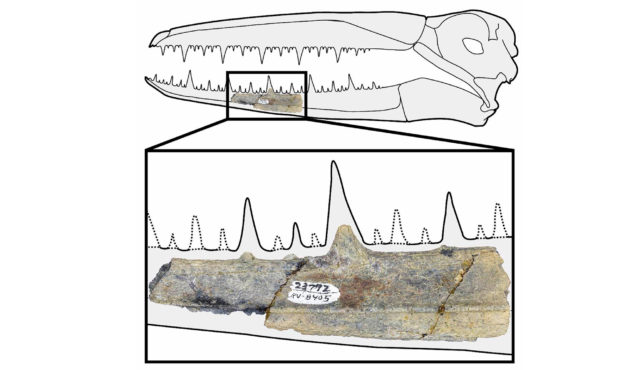
The 5-inch segment of fossilized jaw, which was discovered in Antarctica in the 1980s, dates from 40 million years ago. Credit: Peter Kloess/UC Berkeley

(CNN) — In the 1980s, paleontologists at the University of California Riverside visited Seymour Island, part of an island chain in the Antarctic Peninsula. They brought home a number of fossils — including the foot bone and partial jaw bone of two prehistoric birds.
For decades, the fossils sat in a museum at the University of California Berkeley — until a graduate student named Peter Kloess started poking around in 2015.
In a study published Monday in the journal “Scientific Reports,” Kloess identified the birds as pelagornithids, a group of predators that roamed the Earth’s southern oceans for at least 60 million years. They are known as “bony-toothed” birds because of their sharp teeth and long beaks, which helped them grab fish and squid from the ocean.
The birds were huge, with wingspans reaching up to 21 feet (6.4 meters). And the specific individuals that the fossils belong to may have been the biggest of them all, the study suggests.
Using the fossils’ size and measurements, the researchers were able to estimate the rest of the individuals’ size. The bird with the foot bone is “the largest specimen known for the entire extinct group of pelagornithids,” while the bird with the jaw bone was likely “as big, if not bigger, than the largest known skeletons of the bony-toothed bird group.”
“These Antarctic fossils … likely represent not only the largest flying birds of the Eocene but also some of the largest volant birds that ever lived,” said the study.
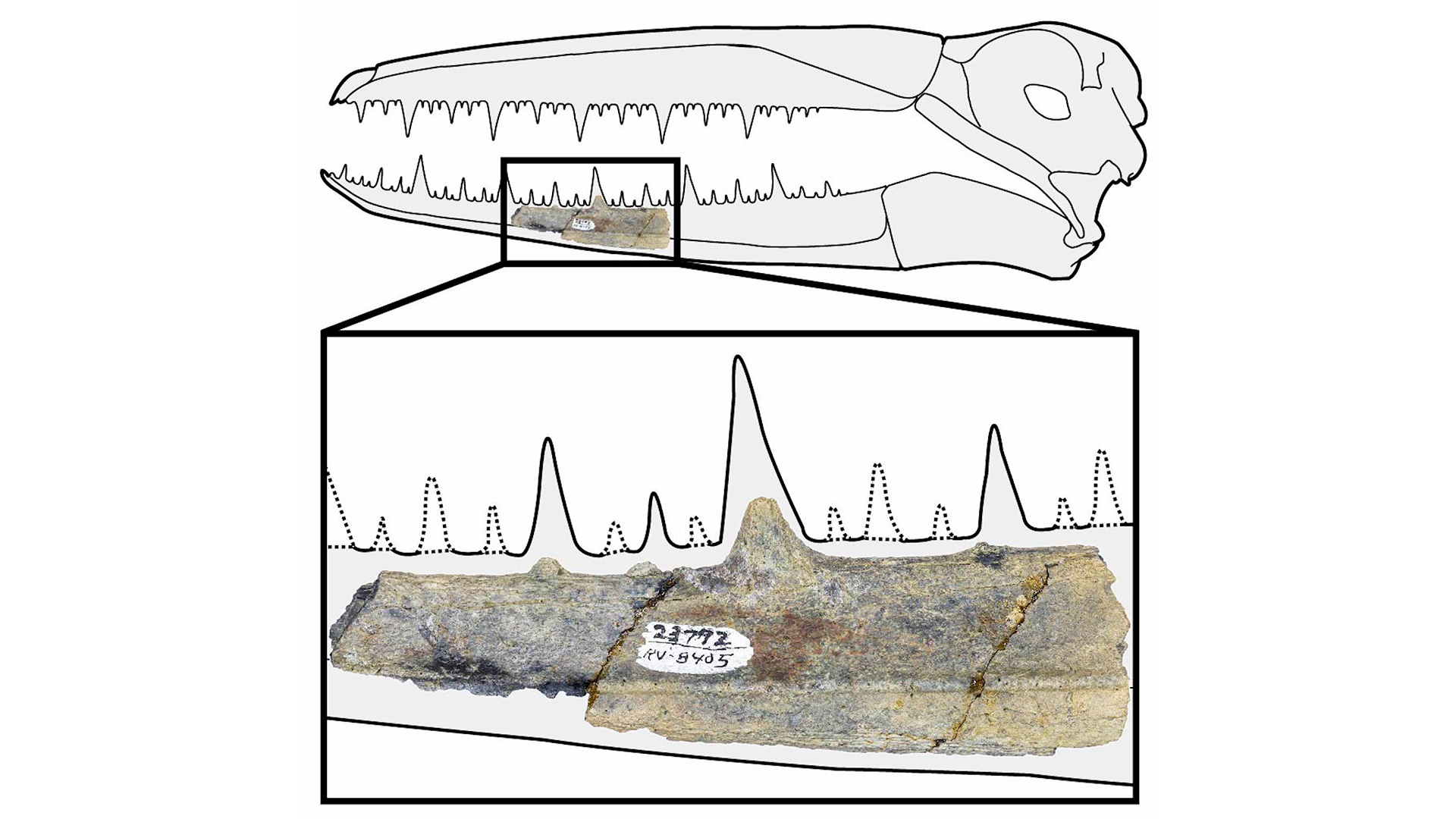
The 5-inch segment of fossilized jaw, which was discovered in Antarctica in the 1980s, dates from 40 million years ago.
Credit: Peter Kloess/UC Berkeley
Kloess and other researchers determined that the foot bone dates back 50 million years, and the jaw bone is around 40 million years old — evidence that the birds emerged in the Cenozoic Era, after an asteroid struck Earth and wiped out nearly all dinosaurs.
“Our fossil discovery, with its estimate of a 5-to-6-meter wingspan — nearly 20 feet — shows that birds evolved to a truly gigantic size relatively quickly after the extinction of the dinosaurs and ruled over the oceans for millions of years,” Kloess said in a news release by the university.
“The extreme, giant size of these extinct birds is unsurpassed in ocean habitats,” added study co-author Ashley Poust of the San Diego Natural History Museum.
Like albatrosses, the pelagornithids traveled widely over the world, and could have flown for weeks at a time over the sea. At the time, oceans had yet to be dominated by whales and seals — meaning easy prey for the giant birds.
“The big (pelagornithids) are nearly twice the size of albatrosses, and these bony-toothed birds would have been formidable predators that evolved to be at the top of their ecosystem,” said study co-author Thomas Stidham of the Chinese Academy of Sciences in Beijing.
The study also painted a portrait of what Antarctica might have looked like 50 million years ago. It would have been much warmer back then, home to land mammals like the distant relatives of sloths and anteaters. Antarctic birds also flourished there, including early penguin species and the extinct relatives of ducks and ostriches. Pelagornithids would have existed in this ecosystem alongside the others, potentially competing for foraging and nesting spaces.
Seymour Island, part of Antarctica closest to the tip of South America, has been the site of numerous other breakthroughs. A study of fossils discovered there found this April that a tiny species of frog once lived in the region — the first modern amphibian discovered in Antarctica. Fossilized cocoons of leeches have also been found on Seymour Island, as well as a handful of mammals.
“My guess is that (Antarctica) was a rich and diverse place,” said Thomas Mörs, a senior curator at the Swedish Museum of Natural History, in April. “We have only found a percentage of what lived there.”
The-CNN-Wire
™ & © 2020 Cable News Network, Inc., a WarnerMedia Company. All rights reserved.