
Astronauts harvest radishes grown aboard the International Space Station
Dec 4, 2020, 6:08 AM
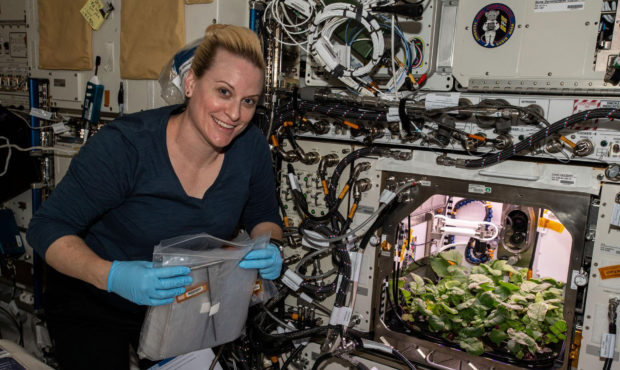
On Nov. 27, 2020, NASA astronaut and Expedition 64 Flight Engineer Kate Rubins checks out radish plants growing for the Plant Habitat-02 experiment that seeks to optimize plant growth in the unique environment of space and evaluate nutrition and taste of the plants. Credits: NASA

(CNN) — Astronauts are harvesting fresh radishes grown in space, a delicious prospect that also could help seed food production efforts for longer-term missions to the moon and Mars.
On Monday, NASA flight engineer Kate Rubins pulled out 20 radish plants grown in the space station’s Advanced Plant Habitat, wrapping them in foil for cold storage until they can make the voyage back to Earth next year.
Radishes are the latest type of fresh produce to be successfully grown and harvested in zero gravity, joining “Outredgeous” red romaine lettuce, green lettuce, Chinese cabbage, lentils and mustard, according to a NASA fact sheet.
“I’ve worked on APH since the beginning, and each new crop that we’re able to grow brings me great joy because what we learn from them will help NASA send astronauts to Mars and bring them back safely,” said Nicole Dufour, the Advanced Plant Habitat program manager at NASA’s Kennedy Space Center, in a news release.
Food for future space missions
Back on the ground, scientists at the Kennedy Space Center in Florida are growing radishes in a control group set for harvest on December 15. The researchers will compare the space-grown radishes to the veggies grown on Earth, checking on how space produce measures up on providing the minerals and nutrients astronauts need as they prepare for longer trips.
Meanwhile, astronauts will repeat the radish experiment in the heavens, planting and harvesting another round of radish crop to give scientists more data to draw from.
With their short cultivation time, radishes present potential advantages as a food source for future astronauts embarking on deep space missions in years to come. The radishes grow quickly, and they can reach full maturity in 27 days.
The root vegetables also don’t require much maintenance from the crew as they grow.
“Radishes provide great research possibilities by virtue of their sensitive bulb formation,” said Karl Hasenstein, a professor of biology at the University of Louisiana and the principal investigator on the project, in a news release.
Researchers will analyze the effects of carbon dioxide on the radishes as well as how the vegetables acquire and distribute minerals, according to Hasenstein, who has run plant experiments with NASA since 1995.
Astronauts have grown 15 different types of plants on the station, including eight different types of leafy greens. And NASA has already tested more than 100 crops on Earth, identifying which candidates to try out next in space.
“Growing a range of crops helps us determine which plants thrive in microgravity and offer the best variety and nutritional balance for astronauts on long-duration missions,” Dufour said.
Years of research with space crops
The latest experiments build upon ongoing research growing and harvesting plants in space.
Researchers at NASA began experiments using its Vegetable Production Systems growth chambers back in 2014 shortly after they were delivered to the space station.
Some of the early experiments with red romaine lettuce resulted in a paper, published this March in the journal Frontiers in Plant Science, showing that space lettuce was safe to eat.
In August 2015, NASA shared a video that features American astronauts Dr. Kjell Lindgren and Scott Kelly floating aboard the station, saying “Cheers” and eating the space-grown treat.
“Tastes good,” Kelly said.
Lindgren tweeted about how he put his lettuce into a space cheeseburger for dinner.
Getting space agriculture right matters because the nutrients in the prepackaged food that astronauts currently eat in space degrade over a period of time, NASA said.
Getting humans to Mars and back safely over a two- or three-year mission requires growing food along the way. That not only gives astronauts more of a vibrant supply of fresh nutrients on the voyage; it also serves an emotional need as they tend to crops that are both a figurative and literal taste of home, according to the agency.
The NASA Artemis program aims to land the first woman and next man on the moon in 2024, and to establish a sustained presence on the moon by 2028. From there, the agency will be poised to begin staging its next big leap, to Mars.
But before we make it to the red planet, we’ve first got to make a tasty green space salad.
The-CNN-Wire
™ & © 2020 Cable News Network, Inc., a WarnerMedia Company. All rights reserved.