KSL Investigates: Utah’s Death Row
Jun 22, 2021, 7:07 AM | Updated: 7:10 am

DRAPER, Utah — The Utah Department of Corrections has quietly ended a decades-long practice of housing Utah State Prison inmates who are under sentence of death in maximum security, allowing the majority of them to move into medium-security cell blocks.
In an interview for KSL’s investigative podcast series COLD, Corrections Director Brian Nielson denied the department has done away with death row.
“As far as the policy of death penalty, again, that’s the Legislature’s call,” Nielson said.
But families of the victims in those death penalty cases were not notified of the housing change for some of Utah’s most notorious killers, which now provides inmates who are sentenced to death far greater privileges than they’ve previously enjoyed.
“You call it what you guys want to, I call it the state of Utah’s getting rid of death row,” Matt Hunsaker told KSL’s Investigators.
Hunsaker’s mother, Maurine Hunsaker, was murdered in 1986 by a man who’s currently incarcerated under sentence of death.
Inmate Classification System
The Utah Department of Corrections uses a classification system to determine where inmates are housed and what privileges they are allowed. The system, first adopted in the 1980s, requires incoming inmates to undergo an assessment, during which prison staff review information about the inmate’s crime and behavior.
The assessment results in an inmate being assigned a “custody level” of 1 through 4. According to the department’s own prison operations manual, custody level 1 “denotes inmates that pose the highest threat to institutional security and the safety of staff, other inmates and/or self.” Level 1 inmates are to be housed in maximum security.
The manual says death row inmates should be automatically assigned level 1 status at intake. The classification protocol allows most inmates to undergo reassessment at regular intervals throughout the course of their incarceration. But the manual also says death row inmates do not need to be reassessed “unless circumstances change regarding their sentence.”
Corrections Director Brian Nielson told KSL the current version of the classification system, which was last updated in 2019, is currently under review.
Last Chance Policy
The classification system detailed in the prison operations manual does not describe any means by which an inmate sentenced to death can trigger a move off of level 1 status, other than having the death sentence overturned on appeal or commuted by the Utah Board of Pardons and Parole.
Nielson said what’s now allowing death row inmates out of maximum security is a 2005 department policy called “Last Chance.”
“They’ve really had to demonstrate that they can function in that setting ahead of time and then we test the waters in small incremental ways to help them get there,” Nielson said. “We’ve had a couple make it that far but it’s taken 13, 14 years to get there.”
KSL’s review reveals more than “a couple” death row inmates have taken advantage of the Last Chance policy. The department’s online offender search tool shows of the seven men currently under sentence of death in Utah, five are currently living in medium-security housing units, nicknamed Wasatch and Oquirrh, at the Draper prison.
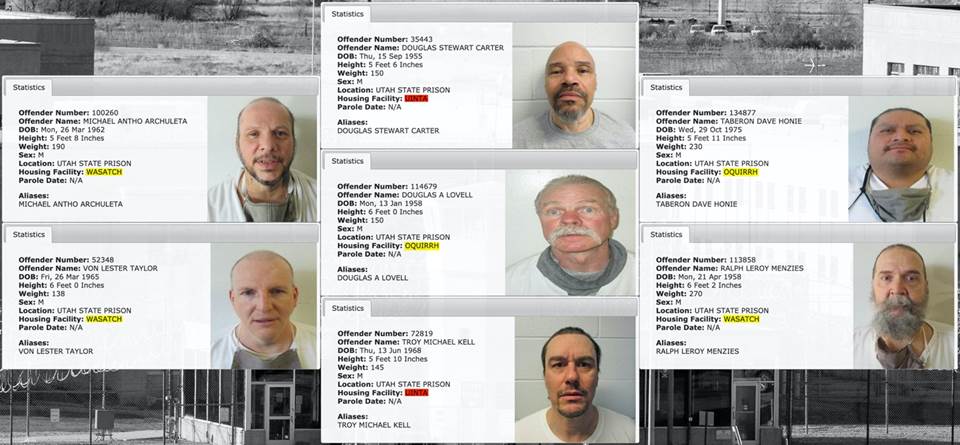
This photo illustration shows the seven men sentenced to die in Utah as of June 2021 and the location where each is housed at the Utah State Prison. Inmate photos courtesy Utah Department of Corrections. (Dave Cawley, KSL Podcasts)
KSL requested a copy of the Last Chance policy under Utah’s open records law in an effort to verify Nielson’s statements. The Corrections Department refused to provide it, claiming the policy was “protected.”
Life On Death Row
There are other indications the change that’s allowed death row inmates out of maximum security was a more recent development.
In 2011, the department posted a document to its website that included a list of the men who were at that time sentenced to die in Utah. The document included a page titled “Life on Death Row” that listed facts about living arrangements for condemned inmates.
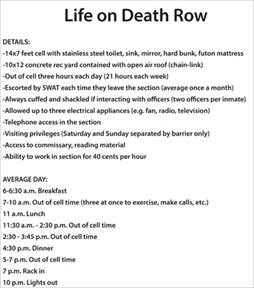
This page from a November 2019 Department of Corrections document about death row in Utah listed restrictions typical for maximum security. The page was removed without explanation from a 2021 revision of the document.
Those included only being allowed out of their cells for three hours each day, always being handcuffed and shackled when interacting with officers, only being allowed visits on weekends and then only through a barrier, always being escorted by SWAT officers when out of the section and other stringent restrictions.
The document was updated and republished in November of 2019, following the death of inmate Ron Lafferty from natural causes. The page describing life on death row remained in the 2019 update.
The link to the document from the department’s website went dead sometime thereafter. Following an inquiry from KSL in May of 2021, the department provided another updated version of the document. The 2021 update no longer includes the page about life on death row.
Uinta 1
A section of the department’s website that describes the different facilities at the Draper prison says the Uinta 1 building is the highest security facility in Utah’s prison system. That web page, first published in 2013, says Uinta 1 is home to death row. The website says inmates housed in Uinta 1 “have the ability to earn greater privileges and transition to other areas over time by demonstrating positive behavior.”
But the website goes on to says “death-row inmates are the only exception, requiring a sentence to be overturned or commuted to life.”
A department pamphlet for friends and family of inmates first published in 2013 also includes a breakdown of the level classification system described earlier in this article.
“Inmates are classified to place them in the proper housing unit and security level in an attempt to provide safety for the community, staff, and other inmates,” the friends and family pamphlet reads.
The pamphlet says level 1 is reserved for death row inmates, who are said to be housed in the Draper prison’s maximum-security Uinta facilities. It lists the restrictions for level 1 inmates as a “highly structured and supervised environment; typically confined to cell 23 hours a day; restrained in the presence of non-inmates.”
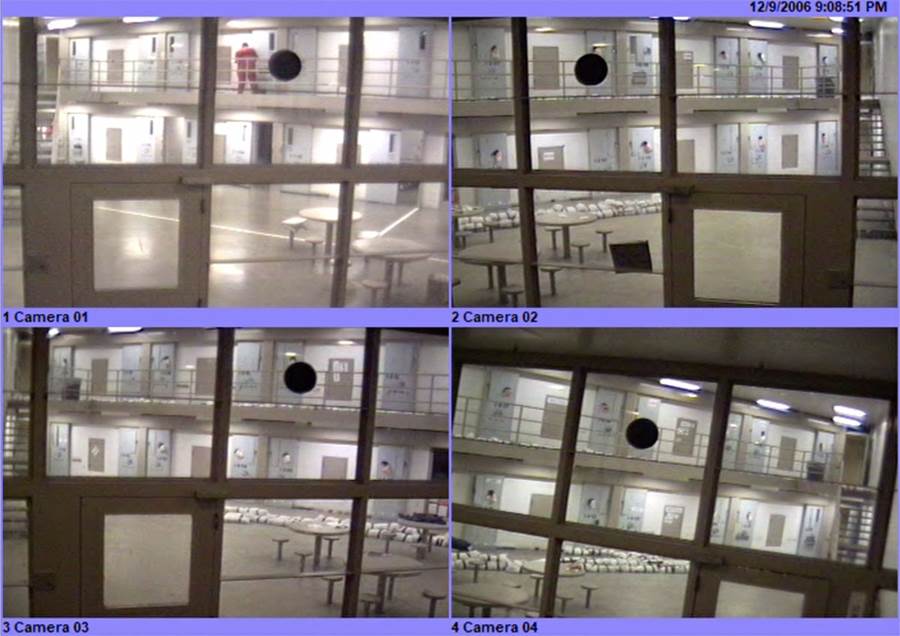
This Dec. 9, 2006, security camera view shows the interior of the Utah State Prison’s maximum-security Uinta 1 building. Inmates housed in Uinta 1 are single-celled and only allowed out in the common area for an hour or so per day.
Neither the department’s website nor its pamphlet for friends and family make any mention of a policy that would allow death row inmates a pathway out of maximum security, despite both having been published years after Nielson said the secretive Last Chance policy was enacted.
No Notification For Victim Families
Families of the victims of the men who are currently facing death sentences in Utah were not notified by the department of any policy change, past or present, that would allow those men out of maximum security.
“They’re not wanting this to get out because they don’t want somebody to have to be accountable for it,” Matt Hunsaker told KSL TV.
Ralph Leroy Menzies was convicted of capital murder and sentenced to death in March of 1988 for killing Hunsaker’s mother. For the majority of the more than 30 years since, Menzies has been housed in Uinta 1.
The Corrections Department’s offender search tool shows Menzies is currently housed in the Draper prison’s medium-security Wasatch facility.
Hunsaker only became aware Menzies’ housing situation had changed when informed by KSL. He expressed frustration, saying he’s been unable to get a straight answer from anyone in state government as to when or why the change was made.
“Why did you change now and why didn’t you give us the respect to call us,” Hunsaker said.
Safety & Security
In medium security, inmates are provided greater opportunities for employment and recreation. The majority are afforded much more out-of-cell time than maximum-security inmates. They’re able to more easily associate with one another.
“These men are extremely dangerous, they are manipulative and they have nothing to lose,” Kim Salazar said.
Douglas Lovell murdered Salazar’s mother, Joyce Yost, in 1985 to prevent Yost from testifying against him in a rape trial. Lovell had twice attempted to recruit other men he’d met during a previous stay in prison to kill Yost on his behalf, before finally killing her himself.
Lovell is among the five inmates under sentence of death who prison staff have moved out of maximum security. Salazar worries the change will allow Lovell to network with others whom he might enlist to settle scores on the outside.
“He is known to have paid people to do his heavy lifting,” Salazar said. “These folks they are housed with now will eventually get out.”
Brian Nielson, the Corrections Director, said those concerns were considered.
“There’s always a balance there,” Nielson said. “There’s always that risk and needs assessment that happens and the ongoing process to make sure that we’re providing for safety and security and also providing for opportunities for those that need them.”
Listen To The Full Series
Season 2 of the COLD podcast will take you inside the no-body homicide investigation triggered by Yost’s disappearance. Audio tapes never before made public will allow you to hear Yost, in her own voice, describe the events which preceded her death.
You will learn why police suspected one man, Douglas Lovell, yet were unable to arrest him at the time. And you will see how some individuals and institutions gave — and continue to give — Lovell every opportunity to evade the ultimate penalty.
Hear Joyce Yost’s voice for the first time in the COLD podcast season 2, available to listen free on Amazon Music.
Free resources and help with sexual abuse are available 24/7 at RAINN.org. You can also call 800-856-HOPE (4673).
For the children of Joyce Yost, justice is long-delayed