
Lawmakers push to amend state constitution, removing ‘exception of slavery’
Aug 28, 2020, 2:29 PM | Updated: Aug 29, 2020, 5:06 pm
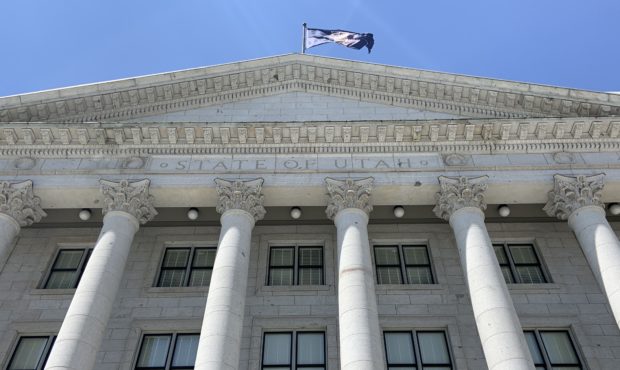
Utah State Capitol building in August 2020. (Credit: Paul Nelson)
(Credit: Paul Nelson)

SALT LAKE CITY, Utah — The Utah Coalition to Abolish Slavery launched a campaign Friday to amend the state constitution, removing the exception of slavery and involuntary servitude as crime punishments. This original language is included in both the state and federal constitutions under the 13th Amendment.
However, Utah lawmakers — along with representatives in five other states — are pushing to remove this language through a ballot initiative in November. The initiative, House Joint Resolution 8, would remove the exception if the majority of Utah voters supported it.
Slavery enshrined in the Utah constitution
“This language, copied from the 13th Amendment when Utah became a state, does not reflect Utah values,” said Rep. Sandra Hollins (D-House District 23), one of the resolution sponsors. “This antiquated and offensive language inflames the unjust racial disparities in our criminal justice system. No matter what your opinion is of what our prison system should be, we can all agree it should not be slavery.”
The initiative — named Amendment C — was unanimously passed by the state legislature in 2019, securing its place on the November ballot in 2020.
The 13th Amendment, ratified in 1865, virtually abolished slavery in the U.S. However, critics argue the original language contains a loophole that upholds the institution of slavery in modern-day.
Utah’s state constitution reads, “Neither slavery nor involuntary servitude, except as a punishment for crime, whereof the party shall have been duly convicted, shall exist within this State.”
Now, lawmakers are pushing to omit the wording of “except as a punishment for crime.”
If passed, Amendment C would get rid of that language, while leaving the rest of the constitution’s amendment intact.
“Is this who we are as a state?” Hollins said. “When people look at our constitution, do we want them to see this? I think that’s one of the questions [people] need to ask themselves when they decide whether they’re going to vote for this or not.”
That’s why she’s spearheading the campaign to get Amendment C passed in November, Hollins said. Although Amendment C is getting broad support from across the political spectrum, Hollins admits she has received a few negative comments.
However, she also believes it has got people talking about racial issues in Utah.
“I think part of us starting to have a conversation — and starting to heal some of the racial divide that’s right here in this state — is that we need to start having conversations about it,” Hollins said “I think this would be a good conversation starter.”
A growing movement
The campaign comes on the same day as the launch of the Abolish Slavery National Network: a coalition of several states dedicated to removing this language from state and federal constitutions. As part of the movement, three states will vote on the resolution in 2020 — including Utah, New Jersey and Nebraska.
In 2018, Colorado became the first state to remove “slavery” and “involuntary servitude” from its state constitution. Twenty-one states still uphold the original language.






