Sky high: Carbon dioxide levels in air spike past milestone
Jun 3, 2022, 2:35 PM
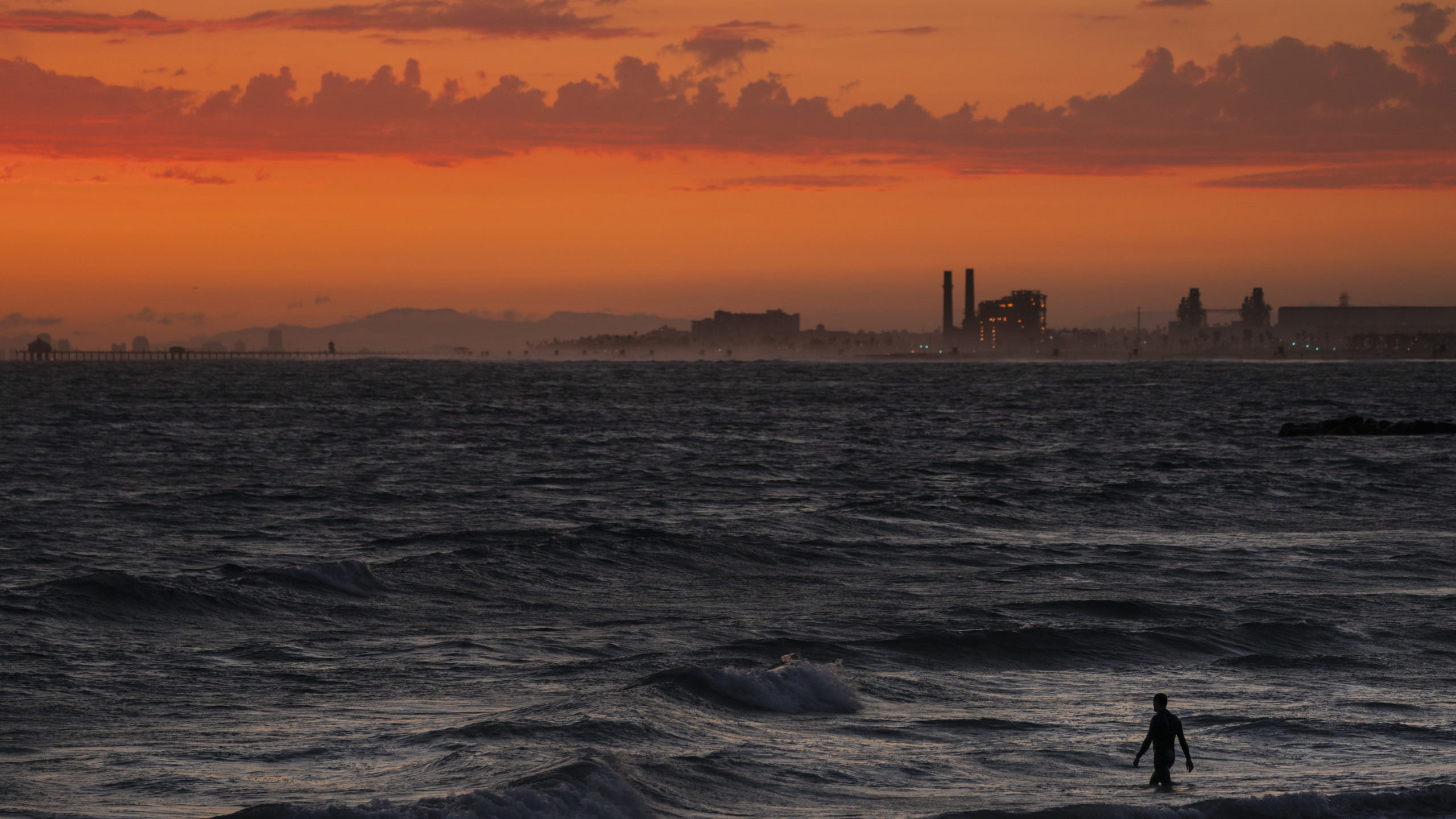
FILE - A man wades into the ocean at sunset on June 22, 2021, in Newport Beach, Calif. The National Oceanic and Atmospheric Administration announced Friday, June 3, 2022, that the amount of carbon dioxide in the atmosphere in May averaged 421 parts per million, more than 50% higher than pre-industrial levels. The NOAA said carbon dioxide levels in the air in May have reached a point last known when Earth was 7 degrees hotter, millions of years ago. (AP Photo/Jae C. Hong, File)
(AP Photo/Jae C. Hong, File)
The amount of heat-trapping carbon dioxide in the atmosphere has shot past a key milestone — more than 50% higher than pre-industrial times — and is at levels not seen since millions of years ago when Earth was a hothouse ocean-inundated planet, federal scientists announced Friday.
The National Oceanic and Atmospheric Administration said its long-time monitoring station at Mauna Loa, Hawaii, averaged 421 parts per million of carbon dioxide for the month of May, which is when the crucial greenhouse gas hits its yearly high. Before the industrial revolution in the late 19th century carbon dioxide levels were at 280 parts per million, scientists said, so humans have significantly changed the atmosphere. Some activists and scientists want a level of 350 parts per million. Industrial carbon dioxide emissions come from the burning of coal, oil and gas.
Levels of the gas continue to rise, when they need to be falling, scientists say. This year’s carbon dioxide level is nearly 1.9 ppm more than a year ago, a slightly bigger jump than from May 2020 to May 2021.
“The world is trying to reduce emissions, and you just don’t see it. In other words, if you’re measuring the atmosphere, you’re not seeing anything happening right now in terms of change,” said NOAA climate scientist Pieter Tans, who tracks global greenhouse gas emissions for the agency.
Outside scientists said the numbers show a severe climate change problem.
“Watching these incremental but persistent increases in CO2 year-to-year is much like watching a train barrel down the track towards you in slow motion. It’s terrifying,” said University of Wisconsin-Madison climate scientist Andrea Dutton. “If we stay on the track with a plan to jump out of the way at the last minute, we may die of heat stroke out on the tracks before it even gets to us.”
University of Illinois climate scientist Donald Wuebbles said without cuts in carbon pollution “we will see ever more damaging levels of climate change, more heat waves, more flooding, more droughts, more large storms and higher sea levels.”
The slowdown from the pandemic did cut global carbon emissions a bit in 2020, but they rebounded last year. Both changes were small compared to how much carbon dioxide is pumped into the atmosphere each year, especially considering that carbon dioxide stays in the atmosphere hundreds to a thousand years, Tans said.
The world puts about 10 billion metric tons of carbon in the air each year, much of it gets drawn down by oceans and plants. That’s why May is the peak for global carbon dioxide emissions. Plants in the northern hemisphere start sucking up more carbon dioxide in the summer as they grow.
NOAA said carbon dioxide levels are now about the same as 4.1 to 4.5 million years ago in the Pliocene era, when temperatures were 7 degrees (3.9 degrees Celsius) hotter and sea levels were 16 to 82 feet (5 to 25 meters) higher than now. South Florida, for example, was completely under water. These are conditions that human civilization has never known.
The reason it was much warmer and seas were higher millions of years ago at the same carbon dioxide level as now is that in the past the natural increase in carbon dioxide levels was far more gradual. With carbon sticking in the air hundreds of years, temperatures heated up over longer periods of time and stayed there. The Antarctic and Greenland ice sheets melted over time, raising sea levels tremendously and making Earth darker and reflecting less heat off the planet, Tans and other scientists said.
Scientists at the Scripps Institution of Oceanography calculated levels a bit differently based on time and averaging, and put the May average at 420.8 ppm, slightly lower than NOAA’s figure.
___
Follow AP’s climate coverage at https://apnews.com/hub/climate
___
Follow Seth Borenstein on Twitter at @borenbears
___
Associated Press climate and environmental coverage receives support from several private foundations. See more about AP’s climate initiative here. The AP is solely responsible for all content.