USU researchers want you to carry bear spray
Sep 26, 2025, 11:52 AM | Updated: 1:00 pm
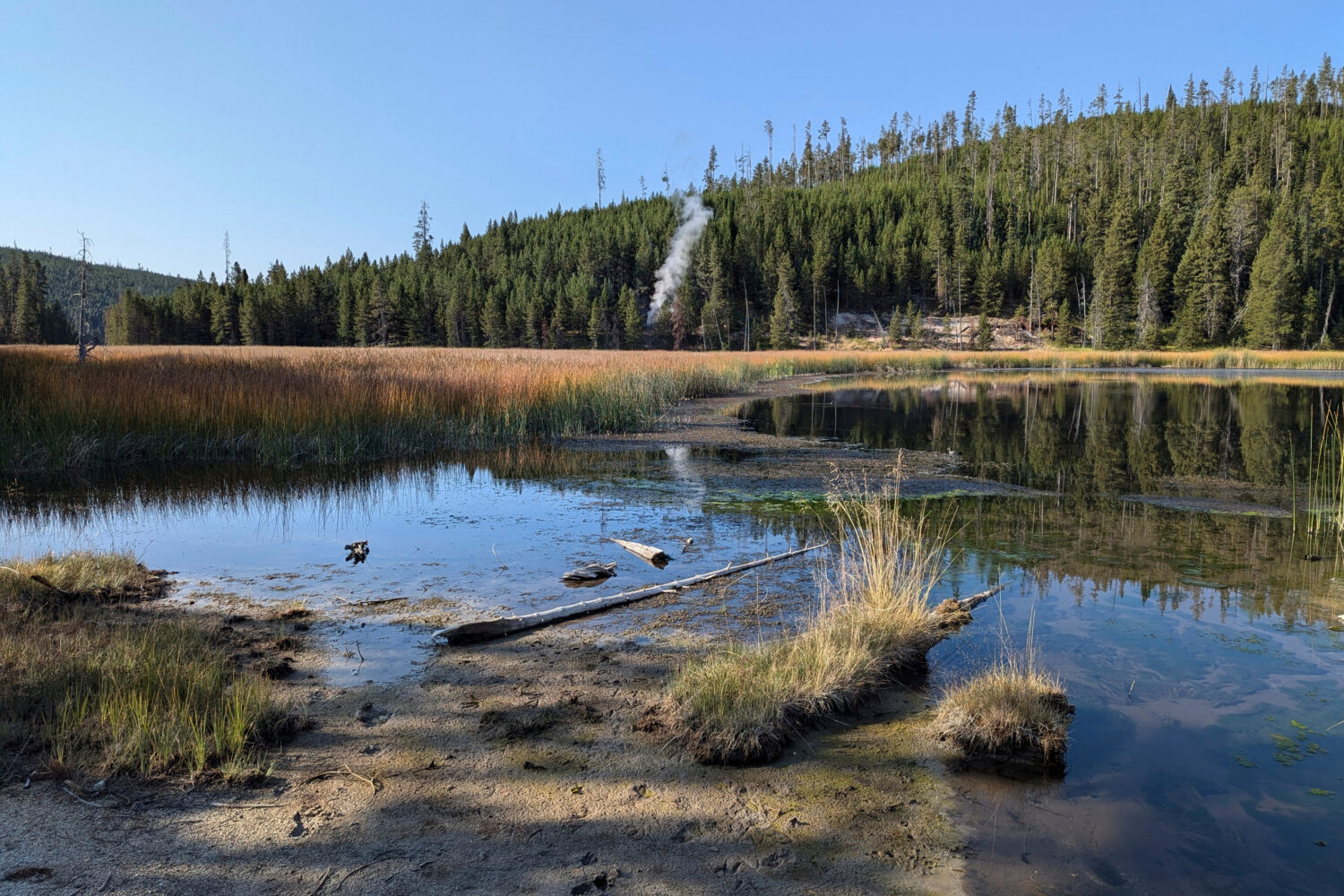
A plume of steam is seen rising from a newly discovered thermal feature near Nymph Lake in Yellowstone National Park, Sept. 1, 2024, near Mammoth Hot Springs, Wyo. (Mike Poland/USGS via AP)
(Mike Poland/USGS via AP)

SALT LAKE CITY — There are a lot more people running into bears around Yellowstone National Park, and a Utah researcher said people need to seriously consider carrying bear spray.
Assistant Professor Anna Miller and her team at Utah State University found that between 2012 and 2019, the number of bear encounters more than doubled. But despite that, only one in four hikers carry bear spray.
When asked why they don’t, some said the spray is just too expensive or they might have a hard time finding it. Others said they didn’t even know until they got to the park that they needed it.
Common but incorrect assumptions
One big issue the researchers ran into is that people tend to think that easily accessible park areas, like Jenny Lake in Grand Teton or Old Faithful in Yellowstone, are safer.
“I think there’s also sometimes kind of the idea that ‘I’m hiking in a really front-country area,'” Miller said. “‘There’s a lot of other people around. Some of them might have bear spray or, you know, collectively we can scare a bear away.’ Or, you know, ‘there’s park staff around here that will help me out if I get into trouble.’ But that’s really not always the case.”
She pointed out that these areas often attract the most bears.
“There are human food sources like dumpsters or picnics, or coolers left in pickup truck beds and that sort of thing,” Miller said. “So it’s not that you’re less likely to run into a bear in a front-country or developed area with a lot of other visitors in it. Sometimes you’re more likely to run into a bear in that situation.”
When bears get used to people and people food, they can often become nuisance bears,” Miller said. “If these bears get aggressive often, they have to be relocated or, in some cases, euthanized.
Miller also found in their survey data that some people are afraid of hurting the bears, so they don’t carry the spray.
“You know, it’s a pretty potent pepper spray, essentially. But I think the caveat is that it would hurt the bear more if it does become habituated to humans,” she said.
Advice for national parks
Miller said what parks can do is make their messaging clear and early. People should see on the park website and in trail descriptions that bear spray is highly suggested, and then have that messaging repeated through the park and on the signs. They shouldn’t be learning about it once they get to the trailhead — by then it’s a little late.
She also suggested finding ways to provide affordable and accessible bear spray options for visitors who won’t be able to take the spray back home with them.
“Putting in something like a vending machine or a loaning service that’s pretty low cost that is accessible at the trail to [address] a piece of that puzzle,” Miller said.
She said parks carry a majority of the responsibility to educate visitors on what the rules are, and what is expected.
“A lot of that is just like making it really easy for the visitors to do, rather than asking them to go out of their way to learn about why they should carry bear spray and where to get it and that sort of thing before they get to the site,” Miller said.
Learning at the trailhead that the spray is needed might be a little late in the game. Miller laughed, thinking about the scenario:
“Am I gonna drive all the way back out to civilization and buy some bear spray?” she said.