Care for your hummingbird feeder as temperatures rise
Jul 5, 2024, 2:00 PM
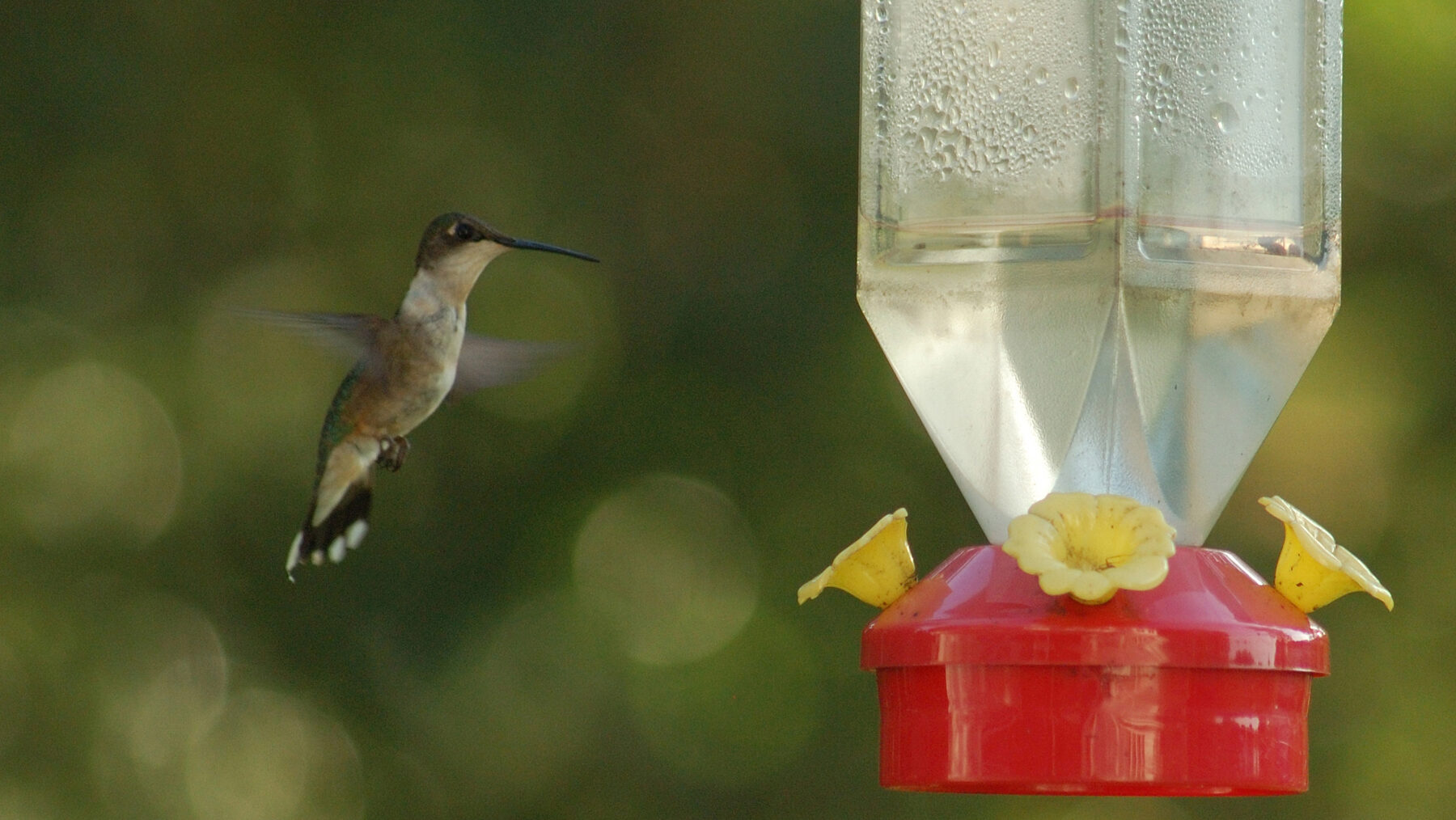
FILE: As the temperatures warm into triple-digits, wildlife officials remind those who feed hummingbirds to keep the feeder clean. (Chris Rickard)
(Chris Rickard)
SALT LAKE CITY — When we provide a hummingbird feeder in a state like Utah with persistent drought, we’re helping those tiny migrating creatures get to their eventual destination. But as temperatures rise, there are a few things to know about the feeders we use and the sugar water.
The sugar water
It’s easy to make nectar for hummingbirds. It’s just a matter of boiling water and, importantly, white sugar.
“You should never feed [hummingbirds] anything other than white sugar,” said Tonya Kieffer-Selby, conservation outreach manager for the Utah Division of Wildlife Resources.
“Never use honey, or any other brown sugar, molasses, artificial sweeteners. Sugar is as close to a nectar source as can be found.”
And the ratio of sugar to water is important.
“Always use a four-to-one ratio. [For example,] if you’re going to use a cup of water, use a fourth a cup of sugar,” Kieffer-Selby said. “if you’re going to use four cups of water, use a whole cup of sugar.”
Get the water and sugar to a boil, let the mixture cool to room temperature and then fill your feeder. You can make a larger batch and refrigerate the extra, but mark your calendar.
“You should never keep it longer than a week at a time,” Kieffer-Selby said.
Is the hummingbird feeder clean?
It turns out that some of the hype from social media influencers, about getting rid of the mold that can grow in feeders, is true.
So check for cleanliness when you’re adding more sugar water.
“When you’re putting your food out, if it’s a really hot day or if your feeders are in the sun, you’re going to want to clean them pretty often,” Kieffer-Selby said. “You’re going to want to clean it every two to three days.”
That means emptying the water, detaching the reservoir from the feeder, and using hot tap water with a bottle brush to reach inside the feeder’s nooks and crannies.
You can use a weak vinegar solution if the feeder is especially dirty, according to the National Audubon Society.
Think about feeder cleanliness this way
Do you share your water bottle with others, or drink from their glasses? Kieffer-Selby says that’s exactly what hummingbirds do, and that’s the reason for being vigilant about feeder cleanliness.
“As soon as one hummingbird takes a drink of that hummingbird feeder, it’s already contaminated. So think about you drinking after someone, and then someone coming in and drinking after you. It’s going to get kind of gross.”
“I know it seems tedious but [cleaning several times a week] is good practice and it does keep our hummingbird safe.”
Suggested other reading:
- Wild About Utah: An auto tour of the Bear River Migratory Bird Refuge
- Utah’s Tracy Aviary creating love stories for endangered kea, who like to choose life partners
- Pelicans return to nest at Great Salt Lake island for 1st time in 81 years