Utah parents navigate conflicting advice on when to vaccinate children against measles
Jul 15, 2025, 8:00 AM | Updated: 8:18 am
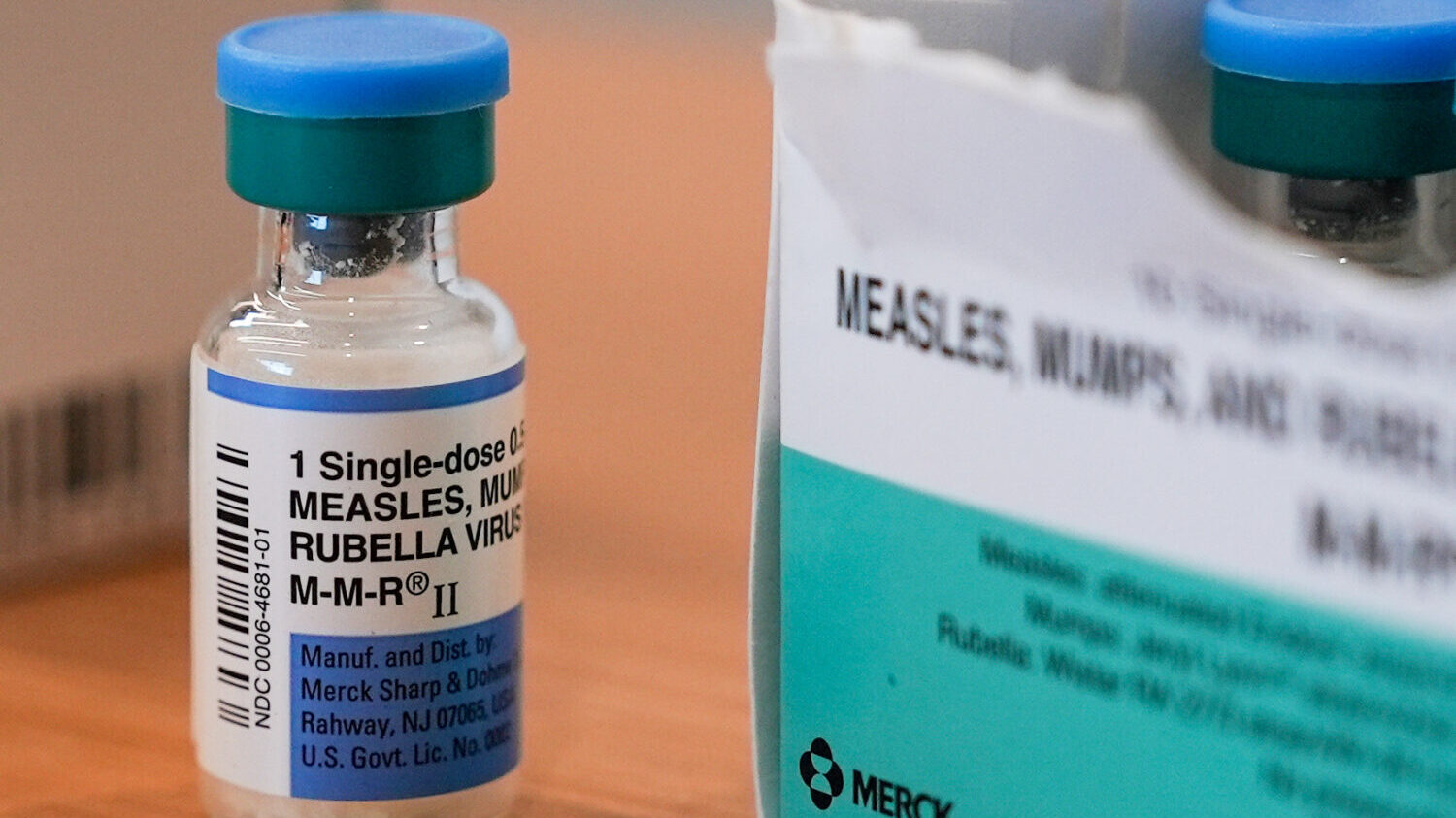
FILE - A vial of the measles, mumps and rubella vaccine on display at the Lubbock Health Department (Mary Conlon/Associated Press)
(Mary Conlon/Associated Press)
SALT LAKE CITY — As the number of measles cases in Utah rises slowly, parents of young children are navigating an unclear path to vaccination. Many pediatricians are recommending a vaccination schedule that differs from the state health department’s.
Kids as young as 12 months old can be vaccinated for measles, and many in Utah are. The measles vaccine is a two-shot regimen, and some say they are confused about when to get that second dose.
Simone Munton has two children: Emily is almost 5, and Zeke is almost 2. She said.
“When the outbreak happened in New Mexico, we were already on track for his 15-month shots,” Munton said.
The Utah Department of Health and Human Services recommends the first dose of the measles vaccine for kids between 12 and 15 months. Some pediatricians recommend the second dose to follow right after, some at 2 years old and others at 4 years old.
“But now with outbreaks here, I’ll just call his pediatrician and see,” Munton said.
Dr. Stacey Bank is the executive medical director for the Utah Department of Health and Human Services.
“The current recommendation is what it has been, which is that first dose at the 12 to 15-month mark, and that second dose at the 4 to 6-year mark,” Bank said.
The first dose of the measles vaccine is 93% effective at preventing measles. A second dose of the measles vaccine raises that protection to 97%.
“These are unprecedented times. Many of our providers and our medical team have never seen measles, haven’t learned about measles, (or) how we treated measles before,” Bank said. “So, this is something that we are really trying to help guide everybody through together.”
She said that pediatricians have the flexibility to make case-by-case decisions, and patients with questions should feel free to ask.
“We’re working on trying to give our clinicians a little bit more guidance, a little bit more help, so that they feel supported as they’re talking to patients and making these decisions,” Bank said.
Munton told KSL TV she’s not feeling any sense of panic about measles just yet.
“We’re just going to keep our kids as healthy as we can in the meantime, because, you know, a vaccine is just part of the puzzle,” Munton said.
Related: Measles is one of the world’s most contagious viruses. Here’s what to know and how to avoid it