Opinion: ARDS symptoms, now seen in COVID patients, are rough
Apr 7, 2020, 5:25 PM | Updated: Apr 10, 2024, 3:57 pm
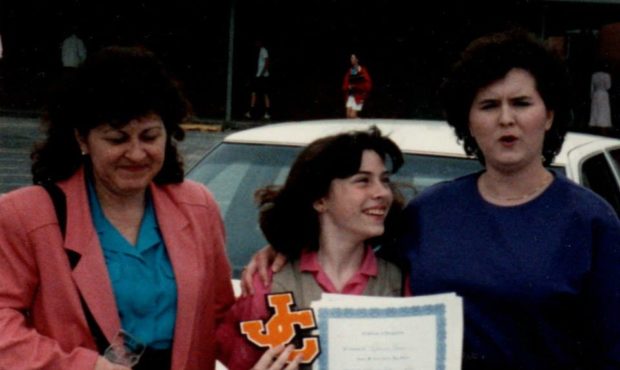
Producer Becky Bruce, in the middle at age 12, with her mom Rosemary, left, and sister Brooke, right, in 1990. (J.D. Hughes)
(J.D. Hughes)
This is an editorial piece. An editorial, like a news article, is based on fact but also shares opinions. The opinions expressed here are solely those of the author and are not associated with our newsroom.
Acute respiratory distress syndrome, or ARDS, probably didn’t kill my mother, but it likely shortened her life, and she experienced her symptoms long before the coronavirus pandemic.
Most of us probably never heard of ARDS or its symptoms before 2020. I’m hearing it more and more often, though, because of the COVID-19 coronavirus outbreak. Some patients develop this debilitating lung condition while infected with COVID-19. I’ve heard people describing it as a very severe form of pneumonia. I feel like that really undersells just how truly damaging ARDS really is – and how life-threatening.
RELATED: What COVID-19 can do to your lungs, from the Cleveland Clinic
It feels a little weird to be writing this. As executive producer of digital content at KSL NewsRadio, I spend most of my time writing about other people, about other events. In the third person. Never first person.
But I shared a story about my family’s experience with ARDS and its symptoms on social media recently, and I realized the message could be worth sharing with a larger audience.
Buckle in. You’re about to go on a multiple-state journey into my personal past.

Rosemary holds an infant Becky in late 1977. (Bruce family photo.)
A serious but routine operation
Our story begins in Lexington, Kentucky, my hometown.
In spring, 2002, my mom, Rosemary, entered the hospital — the same one where I was born — for a very routine but also serious operation. She needed to have one of her heart valves replaced.
She’d known for about ten years at that point that it would need to happen, but that winter and spring, she started to get short of breath just going up a flight of stairs and sweating for no good reason while resting. The valve in question didn’t quite close all the way — she was likely born with it. One of her siblings, my uncle Jim, wound up having the same surgery a few years before — evidence of a likely genetic component.
Open heart surgery, naturally, comes with inherent risks. And my mom could reasonably be considered a high-risk patient: her mother died of heart disease. Her sister died of heart disease. My uncle needed a heart valve replacement and later suffered a stroke. She’d already had two heart attacks herself, in 1995 and 1997. She smoked most of her adult life. And so on.
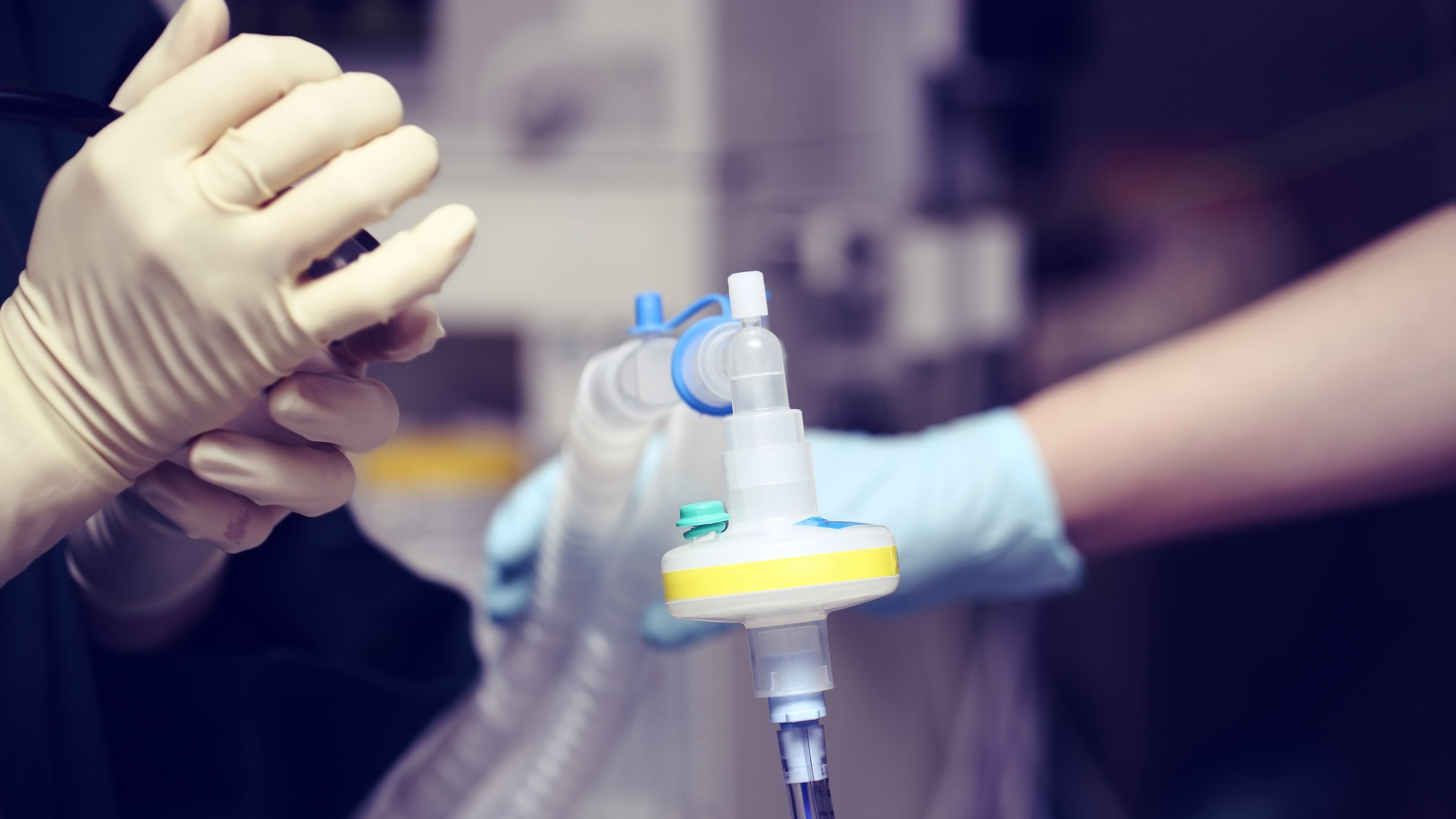
Ventilators like this one are commonly used to help assist patients with ARDS, whose lungs may stiffen or even scar. Photo: Getty Images
But after outlining all the risks and the odds, her cardiologist felt he could replace the heart valve in question without too much trouble.
Our first hint that something was not quite right came after surgery.
“We’re having a hard time getting her off the ventilator,” the cardiologist told us as he stepped out to update my stepdad, my siblings and me.
But within a few hours, they had managed to get her breathing on her own and off the ventilator and moved her into a post-op unit.
The first time I’d ever heard of ARDS
The next few days brought a lot of stress. I’d make the 75-mile drive from the hospital in Lexington to my job at a Louisville radio station, only to get a phone call that my mom’s condition required me to hurry back home. Over and over, this played out.
We didn’t really understand what was going on. Honestly, I don’t think Mom’s doctors did at first, either. She just wasn’t breathing right, and they couldn’t understand why.
At one point, she improved enough to be transferred to a rehab hospital for physical and occupational therapy. It lasted less than a week before the breathing problems returned — and much more severely. I rode along as we went back to the hospital in an ambulance. A tech accompanied my mom in the back and I rode up front with the driver, with instructions to stomp on the foot-activated horn every time we approached an intersection.
Was it pneumonia? Was it some kind of weird rejection of the pig valve now in her chest? No one seemed to know.
Days turned into weeks. April became May. Mom went on and off the ventilator. She hated it — every time they intubated her, it robbed her of the ability to speak to her loved ones.
Someone decided to call in a consult with pulmonology. Yet another scrub-wearing guy with a clipboard entered the room, but this time, he had answers instead of a puzzled expression.
Mom had symptoms consistent with something called acute respiratory distress syndrome: ARDS.
ARDS and its symptoms explained
Like pneumonia, ARDS is characterized by fluid in the lungs, according to the Mayo Clinic. In 2002, the pulmonologist told us that it was something he didn’t commonly see in civilian populations unless they’d been through some kind of significant trauma. It was something he described as being much more of an issue among combat veterans with severe wounds, or people who survived particularly brutal car accidents, etc.
We know more about it now than we did then. The Mayo Clinic says ARDS is more common among people, like the pulmonologist described, who suffered severe injuries, but also among people who are pretty seriously sick. Basically, most people who develop symptoms of ARDS are already in the hospital for some other reason, anyway.
Usually, we learned, the main symptoms of ARDS begin with a tell-tale shortness of breath that can be very severe. It typically develops within hours or days of the initial injury, infection or traumatic event.
Fluid builds up in the air sacs inside the lungs of a patient with ARDS, preventing enough oxygen from entering the bloodstream. Patients can also suffer from confusion or exhaustion because they don’t have enough oxygen. They may have low blood pressure, too.
Now that we knew what Mom had, we could figure out a game plan to treat it.
A new plan to address symptoms of ARDS
The first part of the plan of action was a closer relationship with the ventilator. The pulmonologist wanted to give her lungs a chance to rest and heal without making things harder for her.
Additionally, we discussed putting Mom in a medically-induced coma. She was sort of “fighting” against the ventilator — struggling and making things harder on herself, without even meaning to. She agreed to let them put her under so her lungs could do what they needed to do.
It was supposed to be a short-term deal: ventilator time with sedation for a few days or a week, and we’d bring her back out of the coma and see how her lungs were doing.
Nothing within this experience went according to plan, and this was no different. Like the attempts after the initial heart valve replacement surgery, the medical staff struggled to get my mom off the ventilator and breathing independently. They continued the medically-induced coma.
My brother and sister and I took turns visiting, talking to Mom and holding her hand. We didn’t know if she could hear us or not, but it made us feel better thinking that she might know we were there.
Mother’s Day
She improved enough by Mother’s Day in May, 2002, that the doctors were able to reduce the sedation. She woke up, still on the ventilator, but with one quality-of-life improvement: a tracheotomy, a small incision in her neck, allowing the ventilator to go into her airways without blocking her mouth.
A lot had happened in the weeks between Mom’s original surgery and that Sunday in May. I’d accepted a job in Virginia — one with better health insurance, better hours — but significantly, a much longer distance from family.
I agonized over the decision to move, especially in light of everything that was happening. I’d applied and interviewed under much different circumstances. Should I still go? Should I stay?
I decided to go. I could still come “home” on weekends — Roanoke was just a six-hour drive away. Mom seemed to have turned a corner.
Mother’s Day was the last time I would see her awake for four months. Her last memory of me before the long sleep ahead would be finding out I was expecting.
Complications on top of complications
After I moved, I traveled back home pretty much every chance I could.
The visits were never anything but grim.
On one early trip, we learned Mom was fighting a serious infection on top of everything else — MRSA, methicillin-resistant Staphylococcus aureus. Because people with ARDS typically have an opening in their neck area for the ventilator, they tend to be more susceptible to hospital-acquired infections.
Her condition deteriorated at the hospital in Lexington. Deciding she was unlikely to recover, let alone wake up, they transferred her to a long-term care facility in Louisville.
This place scared the crap out of me. I couldn’t honestly describe it to you as a nursing home. It represented despair to me. I don’t think I saw a single patient there I could have described as ambulatory — it was a place where hospitals sent people they’d given up on saving. Nearly everyone languished in a vegetative state.
More than once, I got a phone call from a family member asking me to come home as soon as possible if I wanted to say goodbye. I got to the point that I jumped when the phone rang.
Never give up
What saved my mom’s life in 2002? I’m pretty sure my stepdad did. Most everyone else in my family accepted that we needed to let go because Mom wouldn’t be with us much longer. My stepdad just couldn’t.
He paid, out of his own pocket because insurance also gave up on my mom, to airlift her via fixed-wing from Louisville to Nashville, Tennessee. This included hiring a nurse willing to serve as a manual ventilator for her during the flight. To this day, I don’t have any idea what he spent to do that. It must have been astronomical. I feel positive it wiped out their savings and then some.

This is probably the last photo Becky’s family has of her mom, her son Samuel, and her grandfather, Ray Pridemore, together. It was taken after another scare in the hospital and another stint of ventilator time related to surgery to remove Rosemary’s gallbladder. Because the hospital knew about her history with ARDS, though, they were able to help her recover more quickly. (J.D. Hughes)
My stepsister, also a nurse like my sister, happened to live in Nashville at the time, where she worked at the Vanderbilt University Medical Center. She put my stepdad in touch with some experts there.
Vandy featured something the hospital in Lexington and the long-term care facility in Louisville didn’t have: experience with ARDS and a willingness to keep trying until something worked. They had special beds that allowed her to be ventilated in different positions so her lungs could get stronger. The team there changed up her medication and started moving her limbs.
It worked.
Five months after heart valve replacement surgery, and four months after Mother’s Day, I got the phone call I’d waited so long for: Mom was awake.
My sister and I made plans to meet in Nashville to see for ourselves. My stepsister let us crash on her futon. For the first time in months, I saw the brown of my mom’s eyes and felt her squeeze my hand in return. She didn’t need the ventilator anymore!
After ARDS
Even after she woke up and they took out the tubes, Mom’s lungs were never the same again. The pulmonology team at Vandy explained that ARDS scarred her lung tissue, leaving her with lingering symptoms that might improve and might not. It turned what should have been spongy tissue into something more like leather: stiff, difficult to move.
She required a couple more months of physical and occupational therapy in a rehab hospital on the campus of Vanderbilt’s medical center. Next, she continued to need therapy at home as she slowly worked to do normal things again: driving, walking, talking, eating. Mom did improve. It just wasn’t quite the same as it was before.
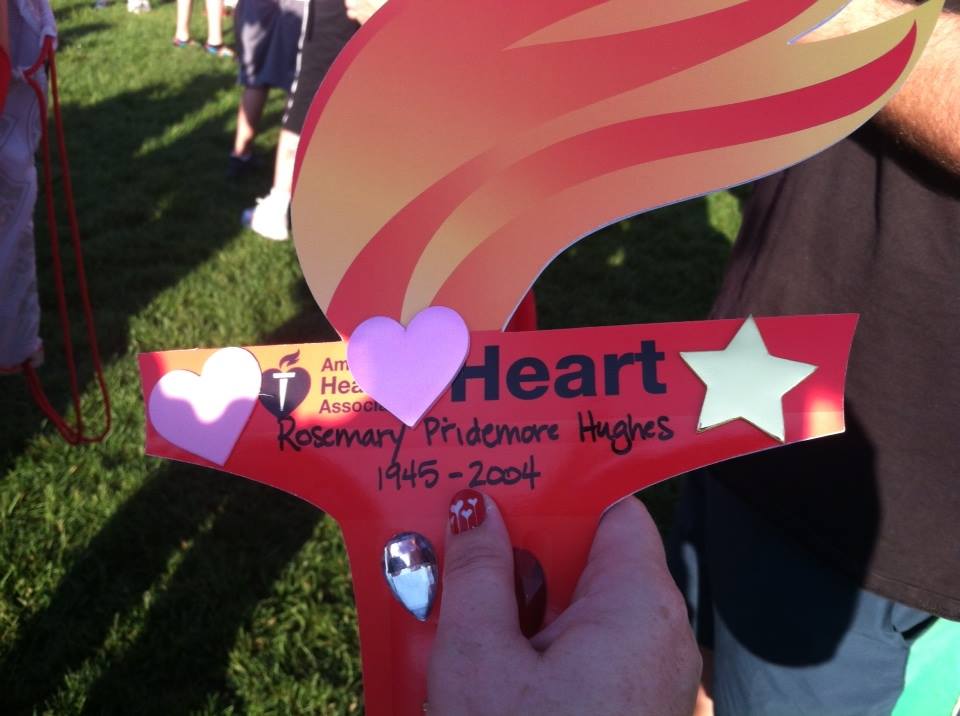
In 2014, ten years after Rosemary died, Becky and her son walked with the American Heart Association in her memory at Sugar House Park. Photo: Becky Bruce
There were long-term effects. After my son’s birth in 2003, Mom needed to have her gallbladder removed. Once again, her lungs went into acute respiratory distress syndrome. But knowing her history, the hospital knew better how to respond, and her time on the ventilator was a matter of weeks instead of months.
We don’t know why my mom got ARDS in the first place. There are several different possibilities. One is that she may not have been completely honest with her cardiologist about how much she smoked and when she quit. She did quit before surgery, but I suspect she quit a lot closer to the surgery than she let on. Another is that she may have had a freak reaction to a medication that pretty much every heart patient ever gets. And the third is just the trauma and underlying conditions themselves. We’ll probably never know.
Because my stepdad went to such lengths not to give up on her, I got another two years with her. She got to meet my son, who was born in January 2003. A fatal heart attack took her from us in July 2004.
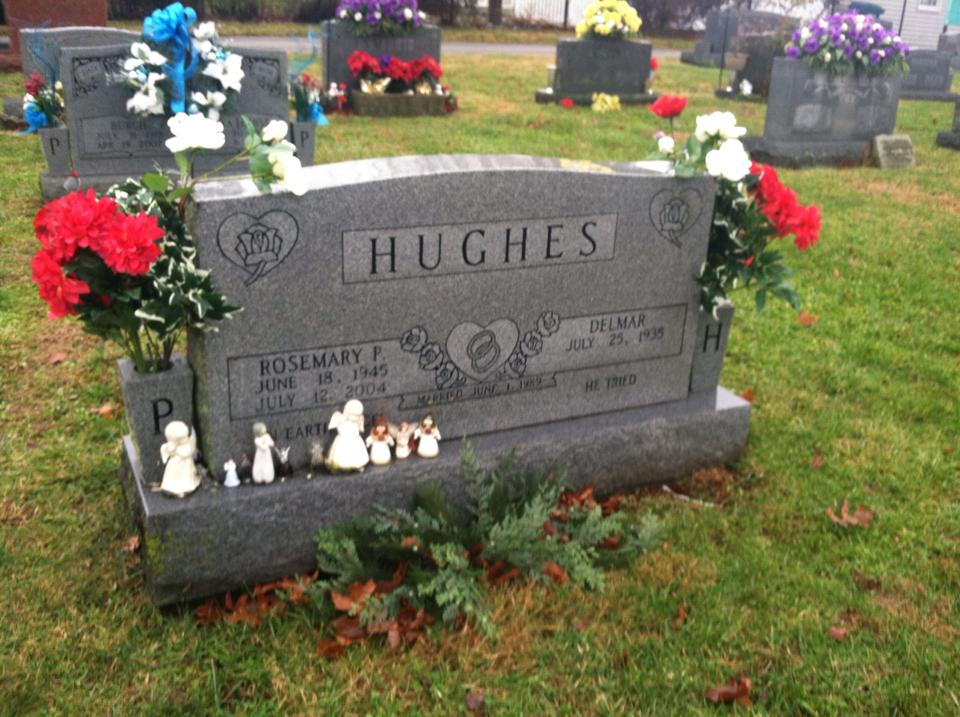
Rosemary’s grave at Maple Grove Cemetery in Nicholasville, Kentucky. Photo: Becky Bruce
ARDS and COVID-19: Shared symptoms?
I’m confident ARDS didn’t kill her. I know her lifelong smoking and other issues, including a genetic predisposition to heart disease, were part of a much more complicated picture. In the past, I’ve frequently raised money and awareness in her memory for the American Heart Association, and I do everything I can to lower my own risk of heart disease. But I do think ARDS robbed her of the ability to fight any additional heart disease symptoms or problems.
Here’s the thing: ARDS is what people who succumb to coronavirus, or COVID-19, really fight. And you can’t predict ahead of time if you will be one of the people who has a mild case of the virus or if you will develop ARDS.
Don’t gamble with your life or those of your loved ones.
According to the Mayo Clinic, “Many people who develop ARDS don’t survive. The risk of death increases with age and severity of illness. Of the people who do survive ARDS, some recover completely while others experience lasting damage to their lungs.”
How To Prevent the Spread of COVID-19 Coronavirus
People transmit COVID-19 coronavirus to each other. It is a virus that is similar to the common cold and the flu. So, to prevent it from spreading:
- Wash hands frequently and thoroughly, with soap and water, for at least 20 seconds.
- Don’t touch your face.
- Keep children and those with compromised immune systems away from someone who is coughing or sneezing (in this instance, at least six feet)
- If there is an outbreak near you, practice social distancing (stay at home, instead of going to the movies, sports events, or other activities.)
- Get a flu shot.
Local resources
State of Utah: https://coronavirus.utah.gov/
The Church of Jesus Christ of Latter-day Saints
Utah Coronavirus Information Line – 1-800-456-7707
National Resources
Centers for Disease Control and Prevention
Commonly asked questions, World Health Organization