HEALTH

Science Says: How risky is that virus? Your mind may mislead

Mar 5, 2020, 5:26 AM | Updated: Mar 12, 2020, 9:25 am
virus...

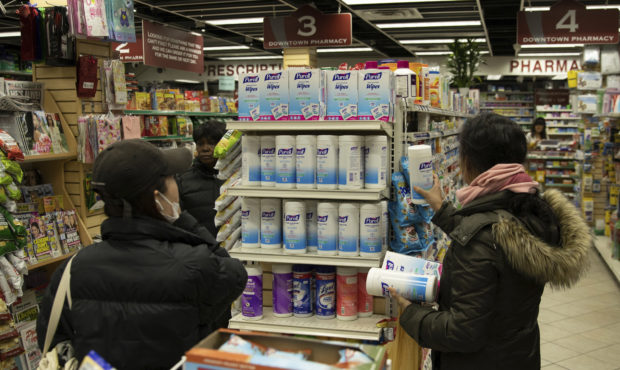
Customers look at sanitizing wipes on the shelves of a pharmacy in New York on Wednesday, March 4, 2020. As coronavirus infections spread across the globe, everybody has to make a decision: How worried should I be about getting infected, and what should I do about it? (AP Photo/Marshall Ritzel)

(AP Photo/Marshall Ritzel)

NEW YORK (AP) — Anna Alexander, a property manager in Virginia Beach, Virginia, started the day Monday thinking that she might avoid shaking hands because of the coronavirus outbreak. Then somebody stuck out a hand to shake.

She took it.

“I’m a business person,” Alexander, 65, explained. “But if somebody else does it next time, I might try to be careful because of the coronavirus.”

As the viral infections spread across the globe, everybody has to make a decision: How worried should I be about getting infected, and what should I do about it?

Those decisions can have wide impacts. “Seriously people — STOP BUYING MASKS!” tweeted U.S. Surgeon General Dr. Jerome M. Adams on Feb. 29. He explained masks aren’t effective in protecting the general public “but if healthcare providers can’t get them to care for sick patients, it puts them and our communities at risk!”

The right degree of concern for somebody who lives near a coronavirus hotspot might very well differ from that of somebody who lives far from one. In any case, say experts in how people gauge risk, it’s not a simple, cold statistical calculation. Instead, it is colored by our emotions and other psychological factors.

“Emotions are the filters through which we see the facts,” says David Ropeik, a retired Harvard instructor on risk communication.

And this virus outbreak presents a list of “hot buttons … that ramp up our perception of risk” and sometimes make those perceptions differ from the evidence-based conclusions of medical officials, says Paul Slovic, a psychology professor at the University of Oregon.

For example, it’s new and unfamiliar, unlike the usual seasonal flu that kills a lot more people every year than coronavirus has. It doesn’t appear to be fully understood. And it seems hard to control, either by public health authorities or our own actions.

“We see there is no vaccine that can prevent it,” he said. It can spread through airborne droplets released by infected people, but we can’t be sure the people we meet are truly healthy, which also undercuts any sense of personal control, he said.

As Ropeik put it, in the face of a new and poorly understood threat “we start feeling like we don’t know what we need to do to protect ourselves, and that feels like powerlessness, a lack of control, like driving down the road but with your eyes closed.”

Meanwhile, the information people get from the news and social media is “not particularly reassuring,” Slovic said. “The geographic risk of this seems to be rapidly expanding” and within any country the case numbers start relatively small and then grow, without any known upper bound, he said. And reports focus on people getting sick and dying, not those who’ve become infected and had only mild symptoms, he said. “We’re getting only the scary information.”

What’s more, Ropeik said, “everybody is telling everybody about it” in news and social media, which amplifies the perceived risk.

Ropeik said the coronavirus triggers thinking about years of warnings about lethal pandemics. “This idea of the new disease being a major killer is an idea that has been burned into our recent fear memory,” he said.

Vincent Covello, director of the Center for Risk Communication, based in New York, provided a list of 17 psychological factors that he said can influence how individuals gauge the risks of coronavirus. For example, he said, people are often more concerned about events if they don’t trust the authorities or institutions in charge. They’re more concerned about involuntary things, like exposure to an infected person, than voluntary ones, like smoking or sunbathing. And they’re often more concerned about risks that have delayed effects, like the lag time between infection and symptoms, than those with an immediate effect, like poisoning.

So how can people minimize the risk of overreaction in themselves and others? Don’t spread the word about every little development, including minor missteps by government authorities, Ropeik says. And “don’t just share the scary parts,” but also include things like infection usually causing only mild to moderate symptoms.

Finally, “don’t be a 24/7 information victim,” he said. “Log off, put your phone down, pick up a book … Shut down your risk radar screen for a while…. You’re probably just as much at risk or safe tomorrow as you are now, whether you stay online all the time or not.”

___

Ben Finley in Norfolk, Virginia, contributed to this story.

___

This Associated Press series was produced in partnership with the Howard Hughes Medical Institute’s Department of Science Education. The AP is solely responsible for all content.


We want to hear from you.

Have a story idea or tip? Send it to the KSL NewsRadio team here.

Health

Taylor Farms Mexico's facilities in Doctor Mora, Guanajuato state, Mexico, Monday. The facility was...

Siddhi Mahatole, Reuters

Taylor Farms temporarily shuts Mexico facility as US cyclosporiasis cases rise, source says

Taylor Farms on Thursday temporarily closed its Mexico facility linked to cyclosporiasis cases. The CDC has reported 4,173 cases across 41 states.

4 days ago

Utah Deaf mentor and performer Jojo Savea is one of the American Sign Language performers bringing ...

Eric Cabrera

Deaf Utah performer, interpreter, helps kids experience favorite shows in a new way through ASL

Utah mentor and performer Jojo Savea is one of the American Sign Language performers bringing popular children's programming, including "CoComelon," to deaf audiences.

5 days ago

Secretary of Health and Human Services Robert F. Kennedy Jr. and President Donald Trump at the Whit...

Ahmed Aboulenein, Reuters

US pauses $1B in Medicaid payments to California, Minnesota

The Trump administration is pausing $1 billion in Medicaid payments to California and Minnesota ​over "suspected fraud and noncompliance," Health Secretary Robert F. Kennedy Jr. said on Tuesday.

5 days ago

Paris Hilton protests outside the Provo Canyon School, where she says she suffered abuse as a teen,...

Logan Stefanich, KSL

State revokes license of Provo Canyon School’s Provo campus amid lawsuit, abuse allegations

Provo Canyon School's Provo campus license was revoked Friday by the state of Utah following continued allegations of abuse and numerous compliance citations.

10 days ago

A Taco Bell fast food restaurant is shown Tuesday, July 14, 2026, in Taylor, Mich. Federal health o...

Bill Barrow and Mike Stobbe, Associated Press

Lettuce at Taco Bell in 5 states confirmed as a source of diarrhea-causing parasite

Federal health officials have identified lettuce from Mexico served at Taco Bell locations across five U.S. states as a source of the widespread outbreak of diarrhea-causing parasite cyclospora.

10 days ago

Walid Mawad arranges berries at a fruit stand in Cleveland, Ohio, July 16, 2025. Produce that has n...

Lois M. Collins, Deseret News

CDC warns of ‘very big shift’ as cyclosporiasis cases surge

Cyclosporiasis cases have surged in the US, and the CDC said states are reporting an "unusually high number" of circulating cases. The agency also said that outbreaks in four states are likely linked.

12 days ago

Sponsored Articles

...

Bear Lake

Road trip ready: How Bear Lake became the go-to destination for Western U.S. travelers

Whether you are chasing pristine beaches, fresh raspberry shakes, or endless water sports, this sponsored guide—brought to you in partnership with Bear Lake —uncovers everything you need to plan the ultimate getaway.   There’s nothing quite like the thrill of hopping in the car with your favorite snacks in tow and heading out for a […]

...

Harper Clinic

A new standard of care: How Harper Clinic’s IOP is changing the face of mental health treatment in Utah

This article is sponsored by Harper Clinic, a Utah-based clinic offering FDA-approved TMS therapy for treatment-resistant depression.    Utah’s mental health crisis is leaving many residents caught in an uncomfortable middle ground: struggling too much for weekly therapy alone, but unable to step away from work, parenting or daily life for inpatient treatment. As demand […]

...

Harper Clinic

Breaking free from depression: How Harper Clinic’s TMS Therapy can help

This article is sponsored by Harper Clinic, a Utah-based clinic offering FDA-approved TMS therapy for treatment-resistant depression.    The weight of depression is real. Many people spend years fighting it, adjusting medications, managing side effects and wondering if this is simply how life is going to feel.   According to the World Health Organization, depression affects […]

mental health...

Andrew Adams, KSL

Library discussions bring men’s mental health to the surface

Therapists say it’s common for men to repress things like trauma, grief, stress and anxiety. Now, a new weekly series of discussions aims to help men bring it all to the surface.

...

Bear Lake Convention & Visitors Bureau

Cozy up in Bear Lake: Discover the magic of a winter getaway

SALT LAKE CITY – The holiday season shines brightest when time slows down and loved ones gather. Gifts, decorations and festive music come and go, but shared experiences tend to last much longer. Research supports that idea. Dr. Theresa E. DiDonato told Psychology Today that vacations can strengthen relationships by creating meaningful time away from daily […]

...

Harper Clinic

Rewriting the path to healing: Inside Harper Clinic’s whole-person mental health model

OREM — A few decades ago, you’d have had a hard time finding a doctor to treat both your mind and body; And a century ago, you’d have been hard-pressed to find a doctor to treat your mind at all. Today, medical professionals are understanding more and more the undeniable connection between the body and […]

Science Says: How risky is that virus? Your mind may mislead