USU researcher focuses on keeping ‘forever chemicals’ out of our water, food
Mar 3, 2025, 8:25 PM | Updated: 8:39 pm
LOGAN, Utah — A research project at Utah State University is targeting so-called ‘forever chemicals’ that often end up in our groundwater and ultimately in some food sources.
The harmful compounds are more commonly known in the science community as polyfluoroalkyl substances, or PFAS. Dr. Ryan Dupont, a professor in civil and environmental engineering, said PFAS are found just about everywhere.

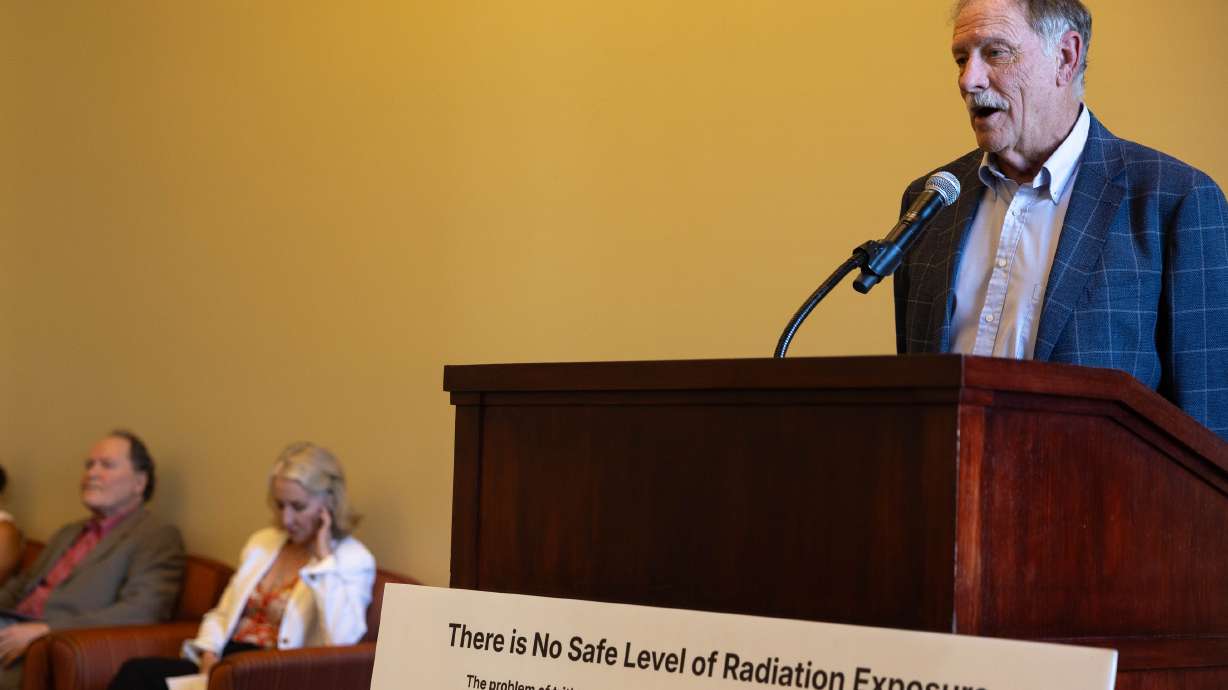
Dr. Ryan Dupont, a professor in civil and environmental engineering at Utah State University. (Mike Anderson, KSL TV)
“You don’t have to be in a highly industrialized community in order to see them in the wastewater,” Dupont said. “They come from nonstick pans, they come from fast food containers, because they have properties that keep the grease from getting into the containers.”
Researchers on Dupont’s team are targeting the sludge that wastewater treatment plants often turn into compost. He said the compost, in turn, feeds plants that animals eat, which then end up in our food chain. The PFAS also seep into our groundwater, making them unavoidable. Dupont points to studies that show that even very small amounts of the compounds can negatively impact liver function and how our bodies take in vaccines.

Researchers on Dupont’s team are targeting the sludge that wastewater treatment plants often turn into compost. (Mike Anderson, KSL TV)
“And then some of the compounds are suspected or known carcinogens,” Dupont added.
Researchers at USU are using biochar, kind of like activated carbon, to help break down the PFAS or at least immobilize them, and so far, Dupont said the approach seems to be working.

Researchers at USU are using biochar to help break down the PFAS or at least immobilize them. (Mike Anderson, KSL TV)
“What it appears is that the doped biochar materials in the compost are speeding up the the loss of these compounds in the composted material,” Dupont said.
Right now, the researchers are also closely analyzing the process to see if it is in fact effective, which can take some time.
“The analysis is really difficult to do,” Dupont said “It’s relatively expensive.”
If it works however, Dupont said wastewater treatment plants should be able to duplicate the process at very low expense. It won’t however eliminate the PFAS. That will require much more dramatic change in our everyday lives.
“Until we stop putting these materials in our consumer goods, they’re going to be there, we’re going to get exposed,” Dupont said.
Related: PFAS chemicals found in Park City water, ski wax to blame