Beyond the parade: Needs of veterans extend past the day that honors them
Nov 11, 2025, 8:00 PM | Updated: Nov 12, 2025, 4:31 pm
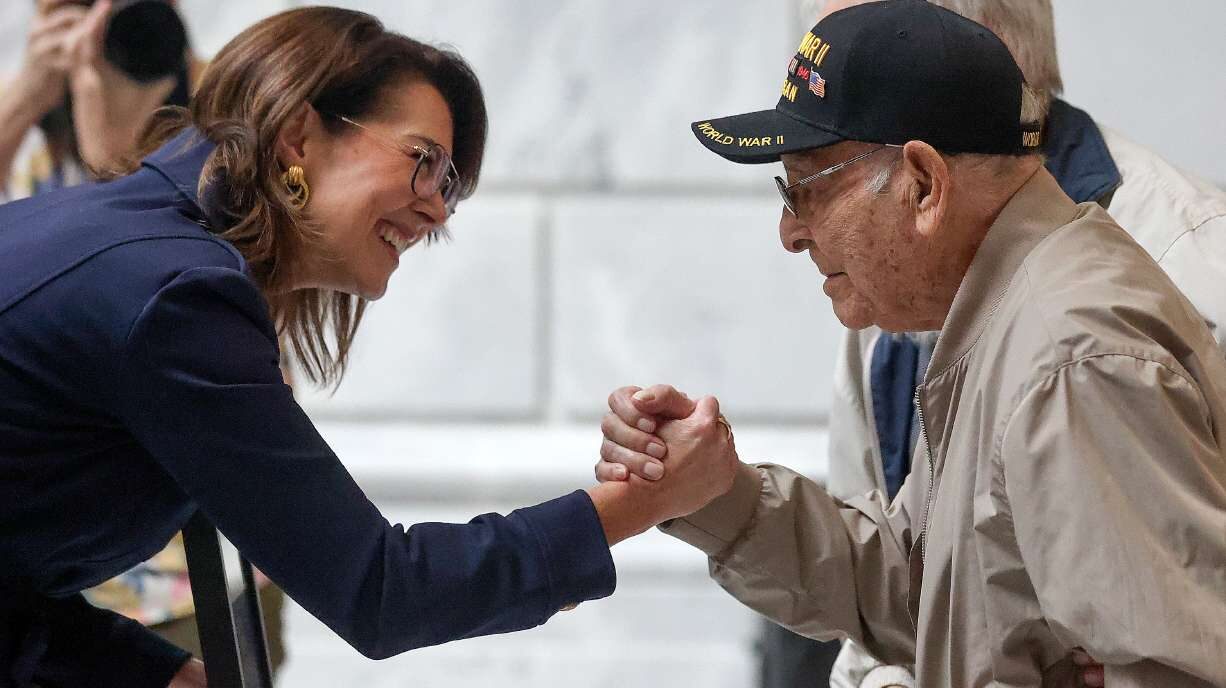
Utah Lt. Gov. Deidre Henderson shakes hands with WWII Army veteran and Purple Heart recipient Julian Lovato, age 101, during a celebration of Utah veteran centenarians at the Capitol in Salt Lake City. (Kristin Murphy, Deseret News)
(Kristin Murphy, Deseret News)
SALT LAKE CITY — Veterans Day allows a grateful nation to honor the veterans in their lives, lifting them up with recognition and special events.
But long after the parades pass by, the unique needs of American veterans remain. Experts say these challenges can require special resources and help.
It’s the experience of living a military and then a civilian life that makes a veteran’s life unique, said Corey Pearson, Deputy Director of Veterans Services with the Utah Department of Veterans and Military Family Affairs.
“Veterans, at one point in their life, only understood civilian life … and then they go and join service and they have to learn a whole other lifestyle … And then … if they retire or they decide to leave early, they have to make another adjustment in life,” Pearson said. “They adjust back to civilian life, and they have to relearn that.”
Getting back into the swing of “normal” life is difficult, Pearson said. Some vets don’t have a physical home to come home to.
Related reading: National nonprofit distributes holiday meal kits to hundreds of local military families on Veterans Day
An issue that is more prevalent in Utah and other western states is veteran suicide.
“We really have been trying to understand that and engage with our communities and come up with strategies that we can help them with as they struggle with some of those suicide ideations,” Pearson said.
In 2022, the U.S. Department of Veterans Affairs, along with other entities, including the CDC and DOD, reported on veteran suicide rates across the United States. In Utah, 68 veterans committed suicide that year. The VA determined the rate was significantly higher than the national Veteran suicide rate.
Preventing veteran suicide
Josh McConkey is an emergency room doctor who also commands the 459 Aeromedical Staging Squadron in the U.S. Air Force Reserve. He attests to the difficulty involved in coming home.
“Coming back home is the most difficult part,” McConkey said. “Because when you find yourself in a combat zone, everyone has that innate sense of survival, like ‘I’m going to want to survive; you do what you need to do.’ You can make that transition to the combat mindset very quickly. But coming home is very, very difficult,” he said.
McConkey encourages people to speak with their veteran friends and family. And he encourages veterans to do the same thing.
“My personal leadership ethos is (to) be the weight behind the spear. Be a part of something or someone that matters. Build that support structure around you, and that really helps insulate from some of those mental health issues,” he said.
How to help a veteran
Helping somebody maneuver through a difficult return to civilian life can be as simple as talking to them.
But there are larger challenges that demand more than talk, including continuing government shutdowns.
“There’s just continuing resolution after continuing resolution … It really hampers everyone’s ability to do their job. And you see the recent government shutdown over 40 days. People aren’t getting health care,” McConkey said.
“You’ve got deployed military families, where one member is deployed to Syria or somewhere overseas, and then you’ve got the one parent at home trying to run the whole ship and, oh, by the way, there’s no money in the bank account,” he said.
Aside from Congress, veterans have more traditional resources at their disposal.
“There’s healthcare resources, there’s employment resources, there’s education resources … again, benefits that can help them through the federal VA if they have an injury or something might have happened,” Pearson said.
For help connecting with veterans’ benefits, call (801) 326-2372. Or visit the Utah Department of Veterans & Military Affairs website.