Right On The Money: Should parents pay their kids for good grades?
Apr 22, 2019, 9:21 AM

A Harvard economist ran an experiment to see if paying money for grades improved achievement. The results are complicated. (Photo: Shutterstock)
(Photo: Shutterstock)

Would you pay your kids to get good grades in school?
If you asked your kids whether they think it’s a good idea to start giving them $50 for every A, we’re willing to bet most of them would say it’s nothing short of brilliant — but would it actually help them learn, or just leave Mom and Dad’s wallet a little emptier?
Harvard economist Roland Fryer asked that very question. From 2007 to 2011, he worked with schools across the nation to see what would happen if we bribed our kids into academic success.
The results? Well — they’re a little complicated.
The “Green for Grades” program

Crispus Attucks Public School, an underperforming school in Chicago, shortly after being shut down in 2013. (Photo: Steven Kevil / Wikimedia Commons)
Each school that signed up for Fryer’s study rewarded their students a little bit differently. To explain how it works, however, we’ll take a look at a fairly typical one: Chicago’s “Green for Grades” program.
The program was run at 20 of Chicago’s lowest-performing schools. The situations in these schools were rough — on average, they saw 50 percent of their students drop out before graduation. They were desperate to turn that around.
Here’s what they did: they promised every freshman and sophomore that, after every report card, they would get paid $50 for every A, $35 for every B, and $20 for every C. The only catch was that they’d only get half of the money right away. To get the other half, they’d have to graduate.
The kids really did get their money. The average student in the Green for Grades program earned almost $600 each year, while, nationwide, Fryer’s experiment paid out a grand total of $9.4 million to 36,000 students over the course of four years.
But academically, the results weren’t exactly what Fryer was hoping to see. The study saw little to no change in the students’ grades; in fact, Fryer wrote in his study that, when it came to academic achievement, there was “statistically zero” impact.
In other ways, results were inconsistent. Some schools saw improvements in attendance, but not all of them did. Likewise, some schools saw improvements on test scores in certain subjects, but usually it was just in one subject per school, and the subjects that saw results were completely different some school to school.
All that might make it sound like the study was a failure — but as bad as it sounds, Fryer’s still not convinced it doesn’t work.
Could paying for grades work?
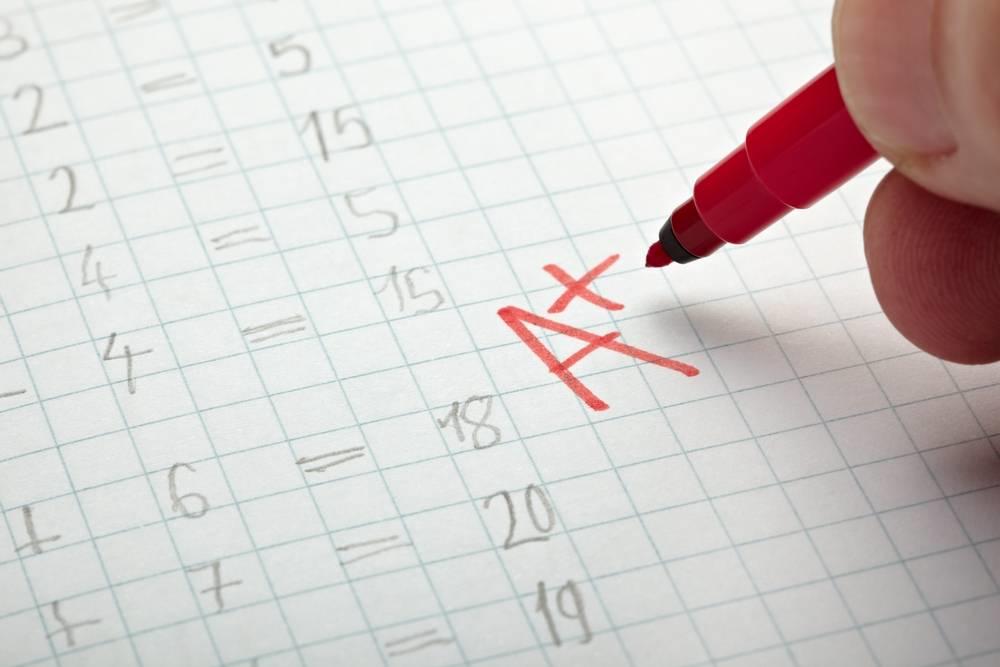
Fryer’s results might sound bad, but some studies have actually shown very positive results for paying for grades. (Photo: Shutterstock)
Just throwing money at every kid who gets good grades, Fryer’s study seems to show, doesn’t exactly work out. Still, in the details of Fryer’s study and other studies like it, there are a few slivers of hope. Paying kids for grades actually could work, he and others have argued. You just have to do it the right way.
Here are a few key takeaways on how this could actually work:
1. Use clear, achievable goals
Not every school in the experiment just paid cash for grades. In Dallas, the schools paid 7 and 8-year-old children $2 for every book they read, instead, and they had far better results.
The reason Dallas did better, Fryer believes, is that every student who put in the effort got a tangible reward, whereas, in schools that just paid for grades, the kids’ hard work didn’t always pay off.
When kids failed tests, Fryer learned, a lot of them said they didn’t have a clue how they could do better next time. Many of those who did poorly seem to feel like all their studying had been a total waste of time. In surveys he took after their grades came in, they would complain that their tests were “arbitrary” or “unfair”.
In other words, if their hard work didn’t pay off, they came out of the experience feeling frustrated and hopeless. But if they got a reward just for putting the work in, it kept them motivated.
2. Give meaningful rewards
Fryer’s results weren’t great, but the results for experiments by other researchers in poorer parts of the world have been incredible.
In Bogota, Columbia, a school expermiented with paying $300 to any student who graduated high school. That much money wouldn’t go far here – but in Bogota, at that time, it was enough to pay for their college fees.
The impact was huge. Where Fryer’s experiment in the US had barely affected student achievement, the experiment in Bogota increased their graduation rate from 22 percent to 72 percent.
The money meant more to the people of Bogota than it did to kids in the U.S. They were offered a reward that meant something to them, and when they could see the benefit, they worked for it.
3. Stay consistent
One of the theories behind Chicago’s “Green for Grades” program was that, if kids improved their habits early on, they’d keep those good habits for the rest of their lives. But they only paid kids during the first two years. They figured that, as long as they got them on the right track early on, they’d keep working hard in the junior and senior years.
It didn’t pan out. Chicago didn’t see big results for anybody, but even the city that saw the best results – Dallas – found that they didn’t really last.
The positive effects of the program started to fade nearly as soon as it ended. A year after payments stopped, the students only showed half their previous improvement, and with year, the impact got weaker and weaker.
That might be a sign that the biggest worry parents have about paying their kids for grades is right on the money. If you teach a child to work for money, it seems, you can’t count on them working any harder for anything that doesn’t pay.