Why is my lawn turning brown? A guide to diagnosing the problem
Jun 29, 2026, 5:28 PM

In example of what a lawn suffering from drought stress looks like. (Taune Beddes, host, The KSL Greenhouse Show)
(Taune Beddes, host, The KSL Greenhouse Show)

SALT LAKE CITY — With summer heat arriving early across Utah, many homeowners are noticing brown patches developing in their lawns.
While drought is certainly a major factor, a brown lawn doesn’t always mean your grass simply needs more water. In fact, there are three primary causes of brown lawn during the summer months:
- Drought stress
- Insect damage
- Fungal diseases
Here’s a quick guide to help you diagnose the problem, understand what’s happening beneath the surface, and determine the best course of action before the damage spreads.
More content from The KSL Greenhouse
How to check
Approximately twelve hours after an irrigation round, push a long screwdriver into your lawn. The screwdriver will penetrate into the earth as far as the water has dispersed through the soil, an ideal result is around 6 inches.
If the screwdriver struggles to penetrate or doesn’t go that far, your lawn is likely experiencing drought stress, and you are probably not watering that area enough.
Please consider the executive order issued on May 21, 2026, by Gov. Spencer Cox concerning the current drought conditions.
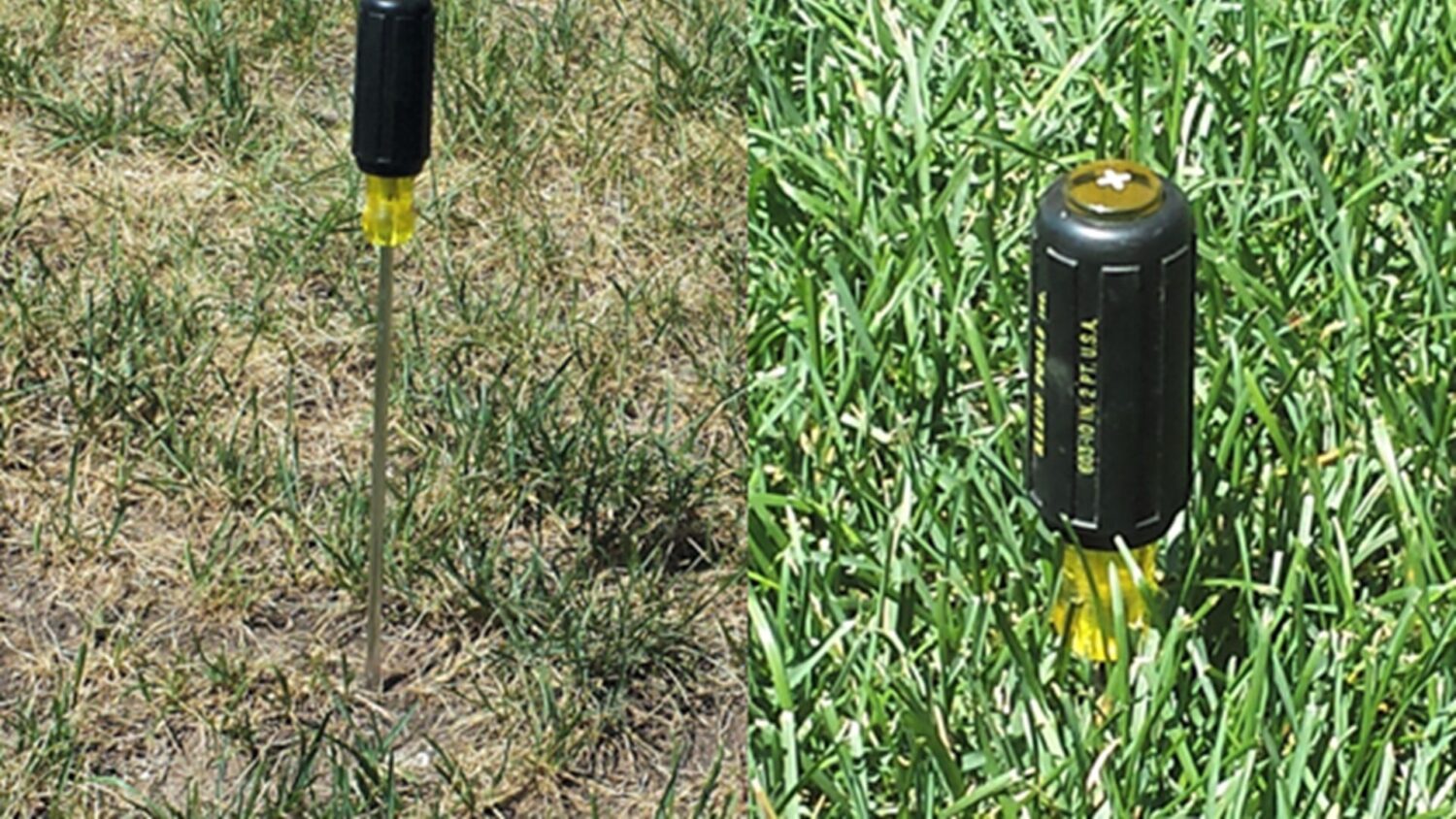
What a lawn suffering from drought stress in Utah looks like (and how you check). (Taun Beddess, KSL Greenhouse host)
What drought stress looks like
Grass turns dull gray-green before becoming brown. Footprints remain visible after walking across the lawn.
An example of what a lawn suffering from drought stress looks like. (Taune Beddess, The Greenhouse Show host)
Brown areas often appear in sunny spots, slopes, along sidewalks, near the south and west sides of buildings, and areas with poor irrigation coverage.
How to fix drought stress
A weekly lawn watering schedule helps you remember how often to apply water:
- Water early in the morning or at night to reduce evaporation
- Spot-water drought-stressed areas with a hose-end sprinkler once weekly to supplement your automated sprinkling system
How to prevent drought stress
Cutting your lawn too short can result in multiple avoidable problems, including sending the lawn into shock and leaving the lawn vulnerable to heat stress.
Mow at the recommended height for your grass type. For example, Kentucky bluegrass and fescue, Utah’s most common lawn grasses, should be mowed to 3- to 3 1/2 inches.
Regularly check your irrigation system for any maintenance issues.
Annual hollow core law aeration improves water penetration into the soil, especially clay soils.
Consider adding compost annually to vegetable gardens and flowerbeds to improve soil health and water retention.
Does your lawn have insect damage?
Pull back a section of turf and inspect the soil and thatch layer, if the dead grass lifts up without many roots or crowns attached, it has likely been damaged by insects.
In some cases, the grass lifts up like a rug. Utah State University Extension provides a turf insect guide that can help identify the insects that may be eating your lawn.
Several lawn insects become active during the heat of summer. The most common include sod webworms, white grubs, and billbugs.
What a lawn damaged by insects looks like
- Sod webworms
- Chew grass blades near the surface.
- Large brown spots.
- Look for small caterpillars or silky tunnels (burrows are silk-lined).Small, off-white moths often fly up in as you walk on your lawn.
- White grubs (potentially, the most damaging to lawns)
- Spongy, soft turf.
- Higher than usual animal activity from skunks, raccoons, and birds feeding on the grubs in the soil.
- Turf lifts like a carpet.
- Visible C-shaped larvae in the soil, with small appendages on the front half of the body.
- Irregular dead spots that appear in July through October.
- Billbugs
- Billbugs are the most common lawn pest in Utah.
- Newly hatched larvae feed inside stems and roots, moving to feeding outside as they mature.
- Grass stems will break easily and may contain sawdust-like material when damage first appears.
- Grass is easily pulled due to root and crown feeding.
How to fix insect-damaged summer lawns in Utah
- Always confirm which pest is causing the problem by pulling on brown grass to see if it easily lifts up before treating.
- Apply the appropriate insect control product for the identified insect.
- Water treatments into the soil according to label directions.
- Repair damaged areas once the infestation is controlled.
How to prevent insects from damaging your lawn
Monitor your lawn regularly during peak insect activity, which in Utah is late June through August.
Maintain healthy turf through proper mowing, fertilization, and irrigation.
Keep in mind, lawn pests are attracted to lawns that are over-fertilized, mowed too short, and over-watered. Lawns that are mowed high, fertilized on an as-needed basis, and watered deeply once or twice a week attract far fewer insect pests.
Fungal diseases
If you have confirmed that drought stress is not the cause of your lawn problems, and that the turf is firmly rooted and does not pull up easily (indicating that root-feeding insect pests are unlikely), a fungal disease may be responsible.
Hot temperatures combined with high humidity, excessive moisture, or prolonged overnight leaf wetness create ideal conditions for many lawn diseases. These environmental conditions can promote fungal growth and increase disease severity.
Carefully inspect individual grass blades for spots, discoloration, lesions, or visible fungal growth. Unlike drought stress or root-feeding insect damage, fungal diseases often produce symptoms directly on the leaves, but not always. The most common lawn diseases in Utah include necrotic ring spot, summer patch, and ascochyta.
How to fix your lawn if it has fungal disease
As with so many issues in Utah during the summer, the answer involves water. You can mitigate a fungal disease in your lawn if you reduce excessive irrigation and water only in the early morning.
Improving the airflow in your lawn can also bring results when fighting a fungal disease. Do this reducing thatch and pruning surrounding vegetation.
Finally, apply proper fungicides when the disease is severe or recurring.
Preventing a fungal problem in your Utah lawn
- Avoid watering in late evening and at night, especially if you have had prior problems.
- Follow proper fertilization schedules.
- Improve drainage through hollow core aeration.
- Reduce thatch if your thatch layer is greater than ½ inch.
Here’s the bottom line on lawn health in Utah (time is of the essence)
When your lawn starts turning brown, don’t immediately assume it needs more water. A simple inspection can often reveal whether you’re dealing with drought stress, insect activity, or a fungal disease. The sooner you identify the cause, the faster you can take action and prevent minor issues from becoming major lawn problems.
Always examine the roots, inspect the grass blades, and look for signs of insects before making a treatment decision. A proper diagnosis is always the first step toward a healthy, green lawn.
If that diagnosis eludes you, Utah State University will test and diagnose your soil samples.
Listen to the KSL Greenhouse show live every Saturday from 8 to 11 a.m., or anytime on-demand by searching “KSL Greenhouse” in your podcast player. Text in your questions to 57500 during show hours only.