Data centers could initially lower some Utah property taxes – then create a ‘boomerang effect’
Aug 10, 2026, 5:27 PM
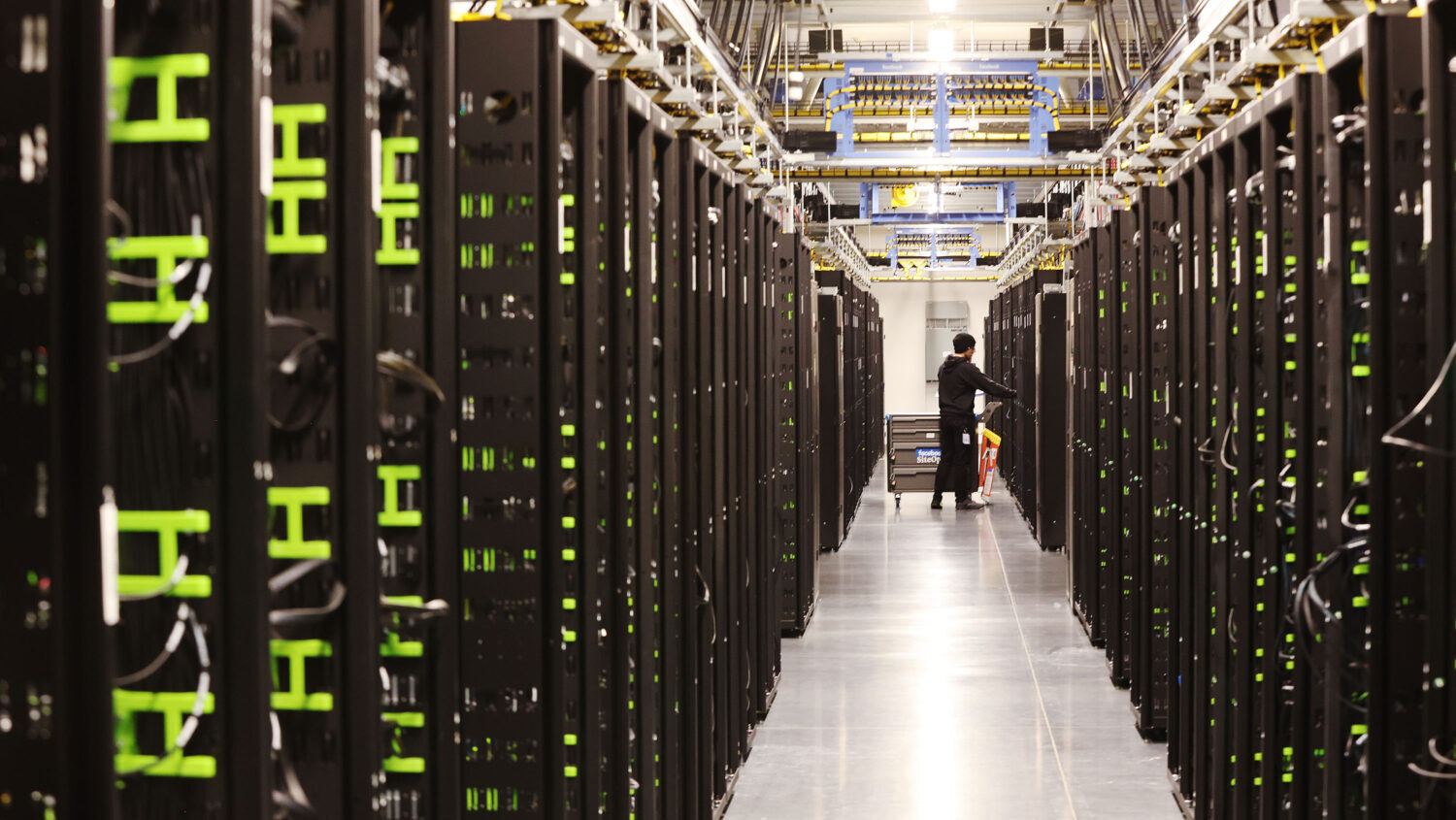
Work is performed on servers at Meta’s Eagle Mountain Data Center in Eagle Mountain on Friday, Sept. 30, 2022. Meta is expanding the data center, increasing the total investment to over $1.5 billion. Once completed, the center will be a 4.5-million-square-foot campus. (Jeffrey D. Allred, Deseret News)
(Jeffrey D. Allred, Deseret News)
SALT LAKE CITY — A multibillion-dollar data center moving into a Utah community could initially lower property taxes for existing property owners.
But that relief may not last.
A new analysis from the University of Utah’s Kem C. Gardner Policy Institute found that the enormous amount of computer equipment inside modern data centers could create significant swings in property tax rates as that equipment rapidly loses taxable value.
Researchers describe the potential cycle as a property tax “boomerang” or “yo-yo effect.”
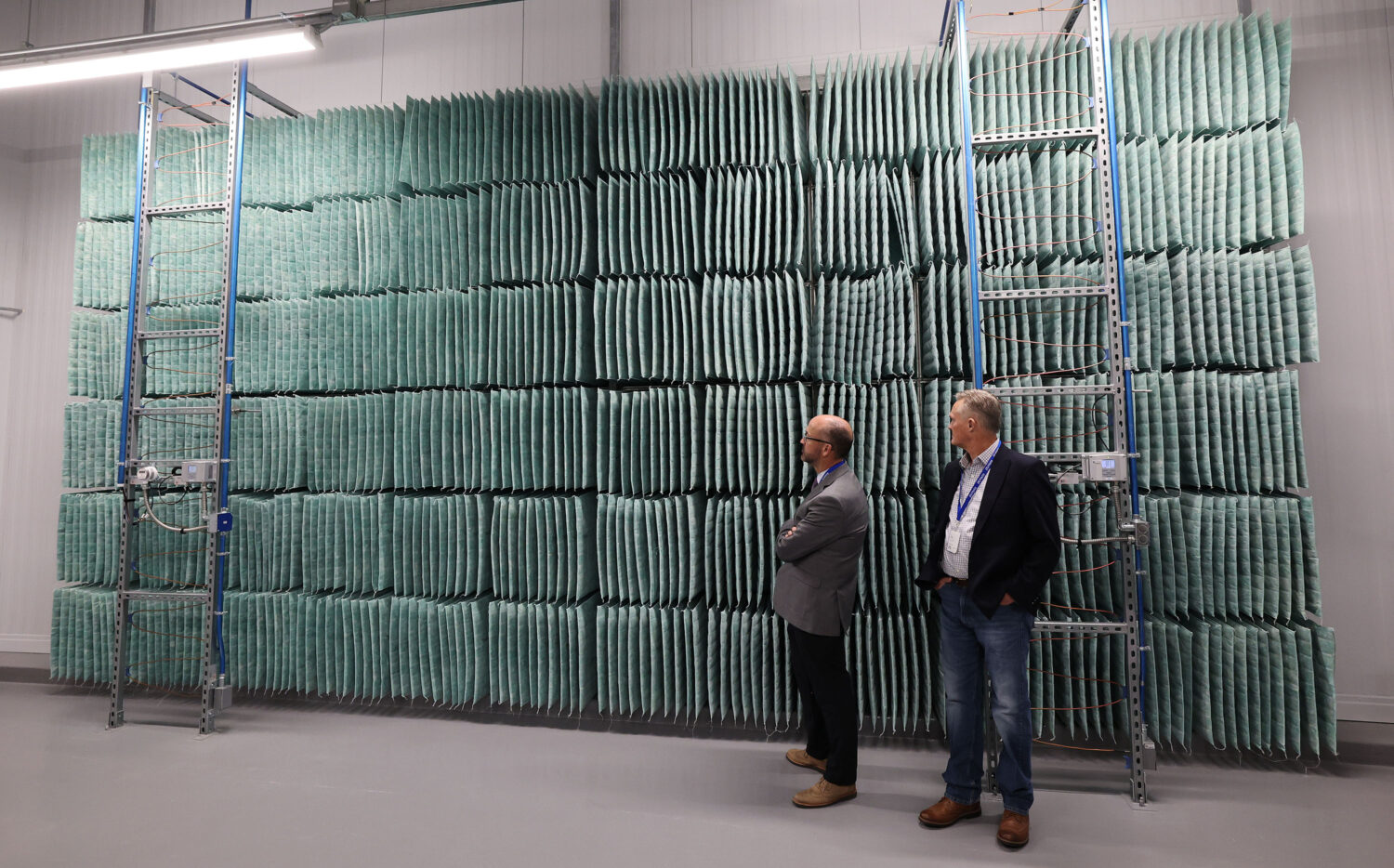
Large air filters from outside air are looked over at Meta’s Eagle Mountain Data Center in Eagle Mountain on Friday, Sept. 30, 2022. Meta is expanding the data center, increasing the total investment to over $1.5 billion. Once completed, the center will be a 4.5-million-square-foot campus. (Jeffrey D. Allred, Deseret News)
The impact could be particularly significant in Utah’s smaller counties.
A hypothetical $2 billion data center would represent more than 20% of the existing property tax base in 21 of Utah’s 29 counties, according to the analysis. In six counties, it would be worth more than the county’s entire existing property tax base.
The institute modeled the $2 billion facility because that is comparable to recent data center announcements. Novva announced plans in 2025 for a $2 billion data center in West Jordan, according to the report. A facility of that size would typically require 100 to more than 300 megawatts of electrical capacity and occupy roughly 50 to 200 acres.
Read the full Kem C. Gardner Policy Institute analysis: “Data Centers and Utah’s Property Tax”
Why a data center could initially lower the tax rate
Understanding the tax effect starts with Utah’s Truth in Taxation system.
“In Utah we have what’s called the Truth in Taxation property tax system,” Maddy Oritt, director of public finance research at the Gardner Institute, told KSL. “As property values go up, what’s called the certified tax rate drops. It’s a revenue-neutral system.”
Under Utah law a taxing entity generally can collect the same amount of property tax revenue as the previous year unless it gains qualifying “new growth” or goes through a public process to increase revenue.
As the value of existing property rises, the certified tax rate adjusts downward to keep revenue roughly constant.
Data centers complicate that calculation because they contain two very different kinds of property.
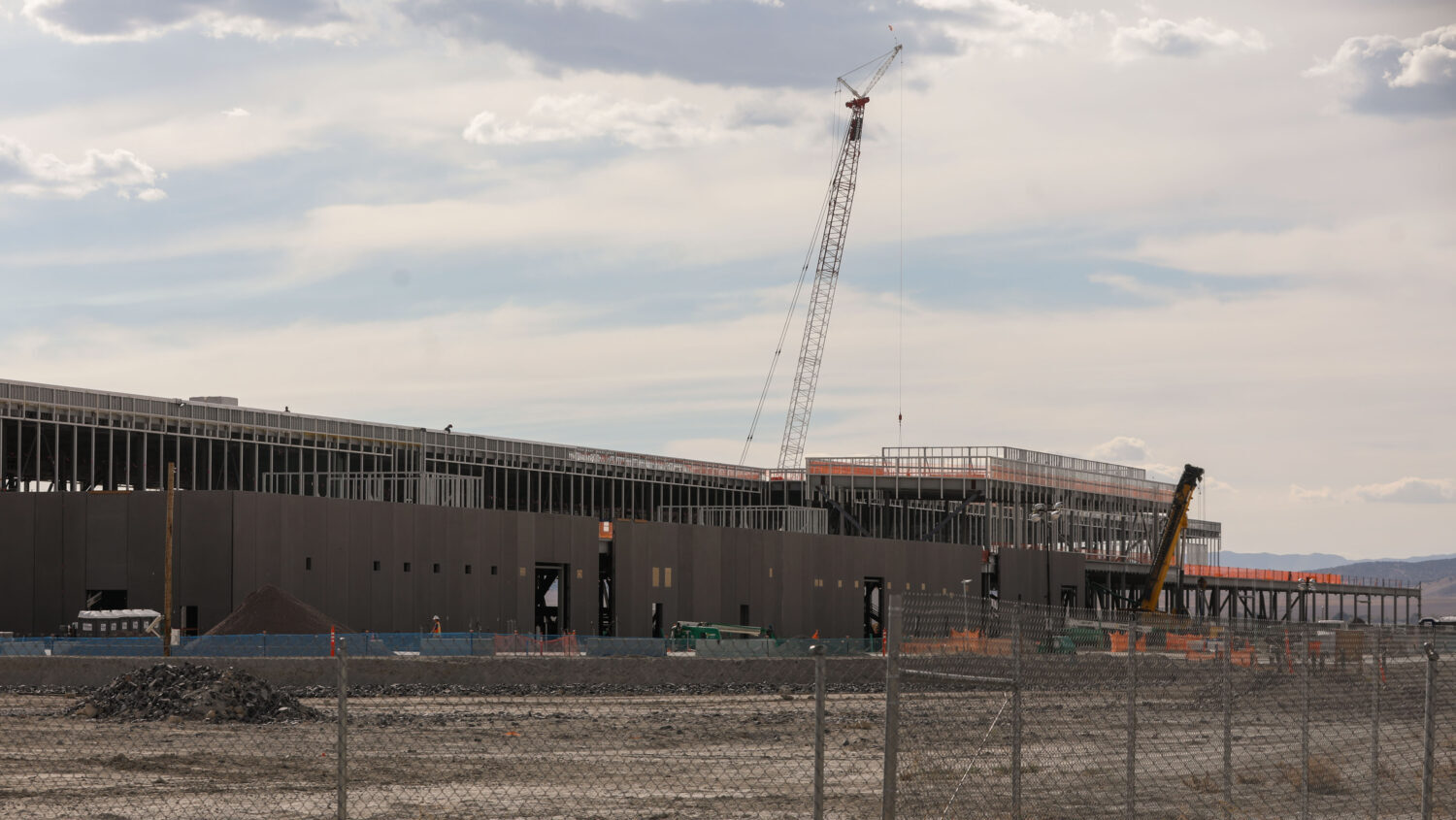
A Facebook data center under construction in Eagle Mountain is pictured on Monday, Oct. 4, 2021. Google on Monday announced it has acquired land for a potential data center across the street from the Facebook facility. (Shafkat Anowar, Deseret News)
Their buildings and land are considered real property, while the servers, computer chips and other equipment inside are personal property.
Unlike most traditional commercial developments, the equipment inside a data center can be substantially more valuable than the building.
Related: Cache County Council joins other Utah counties by placing a hold on data center approval
The Gardner Institute says a data center’s personal property can be worth three to four times as much as its real property.
That’s important because Utah treats the two differently for property tax purposes.
New real property can count as “new growth” and generate additional revenue for local governments. Personal property does not fall under that definition.
Absent a Truth in Taxation increase, a huge influx of new computer equipment therefore doesn’t necessarily give local governments a corresponding windfall. Instead, it can shift how the existing tax burden is divided among taxpayers.
What could that mean for a homeowner?
The Gardner Institute modeled a hypothetical $2 billion data center consisting of $500 million in real property and $1.5 billion in personal property.
Oritt said putting that facility into a theoretical county with a relatively small property tax base could produce noticeable savings for existing homeowners in the first year.

Cattle graze on land proposed to be used for the Stratos Project data center in the Hansel Valley area of Box Elder County on Tuesday, May 12, 2026. This swath of land is the more eastern of the two largest sections of land proposed to be used for the data center. (Isaac Hale, Deseret News)
“A $2 billion data center locating in a theoretical county with a small property tax base could lead to a drop in that first year — maybe even about $500 for a property owner with a median-priced home,” Oritt said.
In the institute’s model, that home is valued at $500,000.
Oritt said the initial reduction could be around 20% in the small-county scenario. In a theoretical midsized county, the first-year effect could instead be roughly 8% to 10%, potentially amounting to a couple hundred dollars.
Related: Data centers have to report water usage, under new Utah law
Those figures are hypothetical examples rather than forecasts for any particular county in Utah.
The institute’s model assumes, among other things, a $2.5 billion starting tax base for its small-county example and a $12.7 billion base for its midsized example. It also assumes other property values grow by 5% and that taxing entities do not undergo a Truth in Taxation increase during the modeled period.
Then comes the ‘boomerang’
The reason that initial relief may not stick is depreciation.
Most graphics processing units, servers and similar data center equipment are classified as computer hardware for Utah property tax purposes and depreciate on a five-year assessment schedule.
Consider $1 billion worth of GPUs.
Under the 2026 Utah State Tax Commission valuation schedule cited by Gardner, that equipment retains 62% of its taxable value in its second year, 46% in its third, 21% in its fourth, 9% in its fifth and 7% in its sixth.
That takes the taxable value of the original $1 billion investment from $1 billion to $620 million, $460 million, $210 million, $90 million and eventually $70 million.
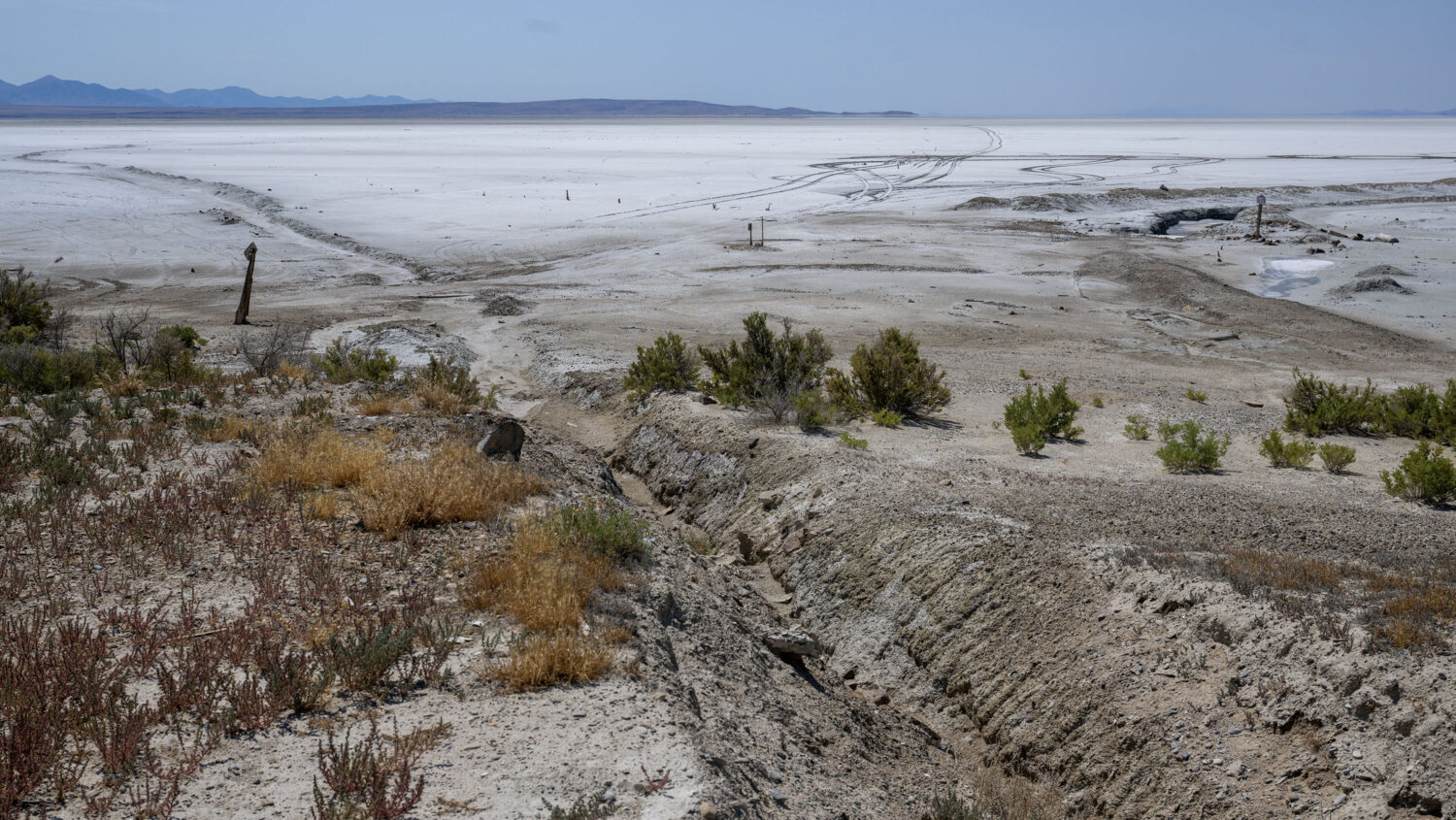
Several members of the media and other interested parties take a tour of the Hansel Valley and surrounding areas near the proposed data center in Box Elder County on Monday, July 13, 2026. The project is facing mounting public scrutiny over its unprecedented scale, fast-tracked approval process and unknown impacts. (Scott G. Winterton, Deseret News)
Actual data centers may replace GPUs every one to five years because of heavy use and the rapid pace at which technology becomes obsolete, the researchers said.
As that taxable value falls, Utah’s certified tax rate can move in the opposite direction.
“As the value goes down, as that equipment depreciates, the certified tax rate is going to then start creeping back up to account for the drop in value,” Oritt said.
Those fluctuations affect all property owners within the taxing entity, according to the study, potentially creating greater year-to-year volatility for homeowners and businesses.
How often a data center replaces its computers matters
There is another major variable: Data centers don’t necessarily replace billions of dollars worth of equipment at the same time.
Gardner modeled both scenarios.
If equipment is replaced all at once, the swings in taxable value — and therefore the potential effect on other taxpayers — are greater.

Michael Smith, center, and others yell after Box Elder County Commissioners approved a data center during a meeting Monday, May 4, 2026, in Tremonton. (Photo courtesy: Eli Lucero, Herald Journal)
Replacing equipment in phases, such as replacing 20% of its personal property value each year, would substantially reduce the boomerang effect.
Counties with larger existing property tax bases would also experience more muted effects.
Oritt made the same distinction during her interview with KSL.
If a large data center were built in a place such as Salt Lake County, she said, the impact would likely be less noticeable because the facility would become one piece of an already enormous property tax base.
“But if that data center is locating in an area that has a very small property tax base — so, for example, a small rural county — that effect is likely going to be bigger,” Oritt said.
A $1.5 billion equipment investment doesn’t mean $1.5 billion in new tax growth
The study also illustrates a counterintuitive feature of Utah’s system.
In Gardner’s hypothetical example, the data center adds $500 million in real property and $1.5 billion in personal property.
The real property produces nearly $3.4 million in new-growth property tax revenue in the model.
Related: Another data center project ruffles feathers just south of Utah’s border
The $1.5 billion in personal property produces $0 in new-growth revenue under Utah’s definition — although the data center still pays taxes on that equipment. Those taxes instead affect the distribution of the overall tax burden.
That’s why the announcement of billions of dollars in data center investment does not necessarily translate dollar for dollar into new property tax revenue for the city, county, school district or other taxing entities hosting it.
Project areas can change the equation
There is another significant exception.
If a data center is located within certain economic development project areas, some of the additional property tax revenue can be used to fund the project itself through tax increment financing.
The report says new and replacement personal property within such a project area does not produce the same boomerang effect on other taxpayers while the project area is in effect because the increased revenue, or tax increment, goes back toward the development rather than producing the same tax shifts.
Those arrangements can last years or even decades.

A portion of the land that Google acquired for a potential data center in Eagle Mountain is pictured on Monday, Oct. 4, 2021. (Shafkat Anowar, Deseret News)
The institute notes that when a project area eventually expires, increased business personal property valuations would become part of the existing tax base rather than new growth, meaning some tax shifts could occur at that point. Researchers say the long duration of project areas makes those future effects uncertain.
Even figuring out what a data center is worth can be difficult
The report identifies another potential source of volatility: valuation appeals.
Assessors typically use a cost-based approach to value data centers because the highly specialized facilities aren’t commonly bought, sold or leased on the open market in ways that provide enough comparable sales or income data.
But technology and data center construction are evolving rapidly, including chips, power systems and cooling systems.
Gardner researchers describe valuation as a “moving target” that could lead to more appeals from data center developers.
Related: O’Leary Digital, Box Elder County press court to dismiss data center foes’ lawsuit
Because individual facilities can be worth billions, a successful appeal that significantly lowers a facility’s assessed value could create another major property tax shift toward other taxpayers.
Again, the institute says smaller counties could be particularly exposed.
Researchers say every project needs its own analysis
The Gardner Institute isn’t concluding that data centers will universally raise or lower Utahns’ taxes.
Researchers say the outcome depends on the individual project — including its size, location, real versus personal property value, how quickly equipment is installed and replaced, the existing local tax base and whether the development is located within a project area.
“Every single proposed data center is going to have its own unique situation,” Oritt told KSL. “The size of the data center is going to matter. Where it’s locating (being built) is going to matter.”
Oritt also pointed to questions outside the scope of this particular analysis, including water and energy use and whether a facility generates its own electricity.
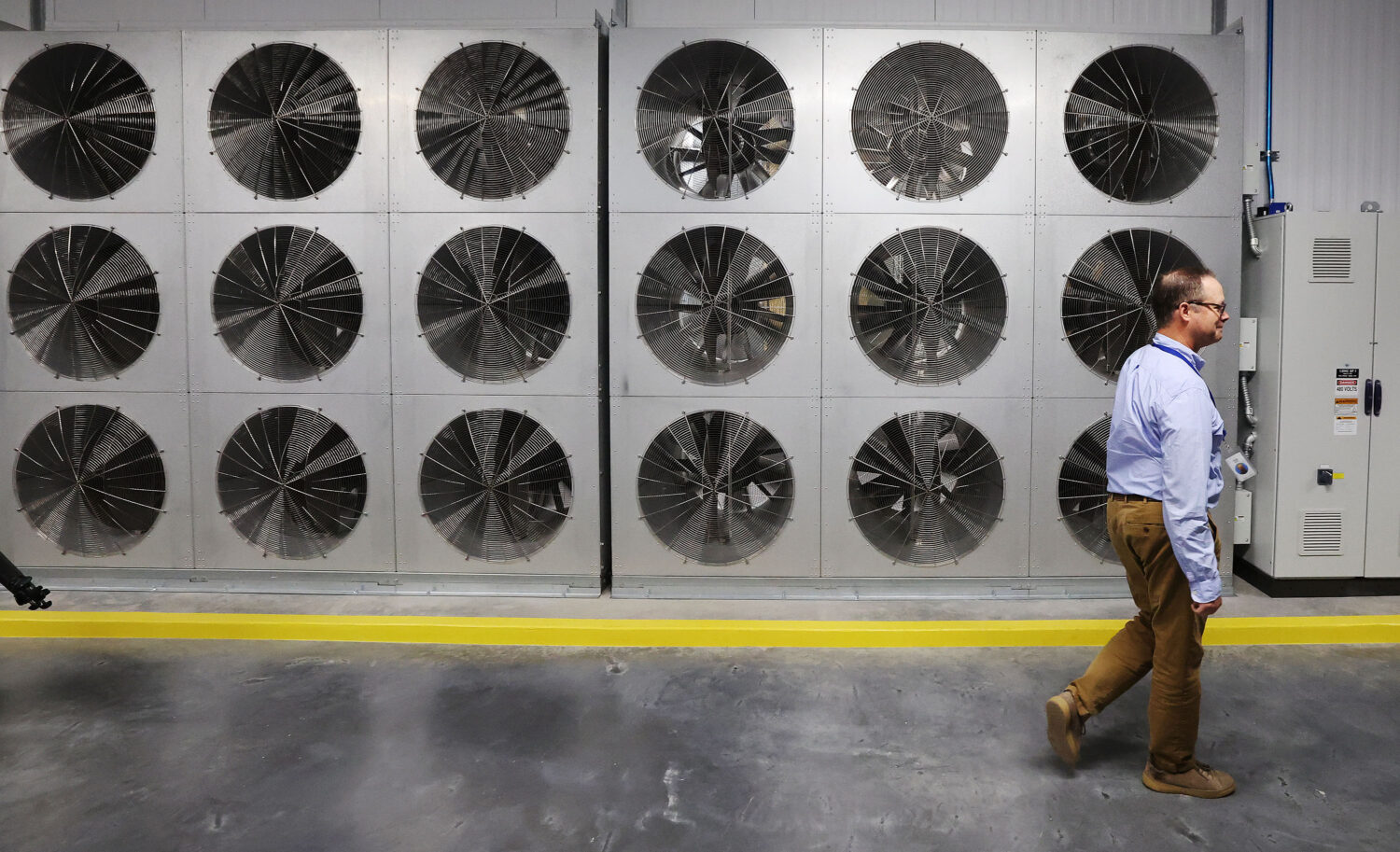
Data facilities manager Scott McLain walks past a fan wall used to cool servers used at Meta’s Eagle Mountain Data Center in Eagle Mountain on Friday, Sept. 30, 2022. Meta is expanding the center, increasing the total investment to over $1.5 billion. Once completed, the center will be a 4.5-million-square-foot campus. (Jeffrey D. Allred, Deseret News)
She said those considerations need to be weighed alongside the fiscal impacts when local leaders consider a proposal.
“What we’re trying to get at in this report is that every single data center decision should be weighed carefully, and the fiscal benefits and the fiscal drawbacks should be weighed by those local decision makers,” Oritt said.
For Utah homeowners, the takeaway isn’t simply that data centers will make property taxes go up or down.
It’s that adding billions of dollars in rapidly depreciating computer equipment to a community’s tax base can change who carries the tax burden — and when.
And according to Gardner’s analysis, the smaller the community’s existing tax base, the more noticeable those changes could become.