Here’s what you need to know about fall bird hunting permits
Jul 1, 2025, 5:00 PM | Updated: 8:36 pm

A sharp-tailed grouse takes flight. Hunting the species in Utah requires an extra permit, according to the Division of Wildlife Resources. (Steven Earley via Utah Division of Wildlife Resources)
(Steven Earley via Utah Division of Wildlife Resources)

SALT LAKE CITY — Applications for fall bird hunting permits open on Wednesday. Permits are required to hunt some species.
Although a standard hunting license allows hunting of many species, the Utah Division of Wildlife Resources said the following species require an additional permit:
- Band-tailed pigeon
- Greater sage-grouse
- Sandhill crane
- Sharp-tailed grouse
- Tundra swan
- Turkey
- White-tailed ptarmigan
It should be noted that in Utah, it’s illegal to hunt trumpeter swans. Per the DWR, the rule was established due to low population numbers in the area.
Utah is among only nine states that allow swan hunting. In previous years, the DWR closed the swan hunting season early to help protect trumpeters.
Permits for sage-grouse species, sandhill cranes and tundra swan hunting
Between July 2 and July 16, applicants can enter the bird hunting drawing for a chance to hunt greater sage-grouse, sandhill cranes, tundra swans, and sharp-tailed grouse. Applications open at 8 a.m. on July 2 and close at 11 p.m. on July 16.
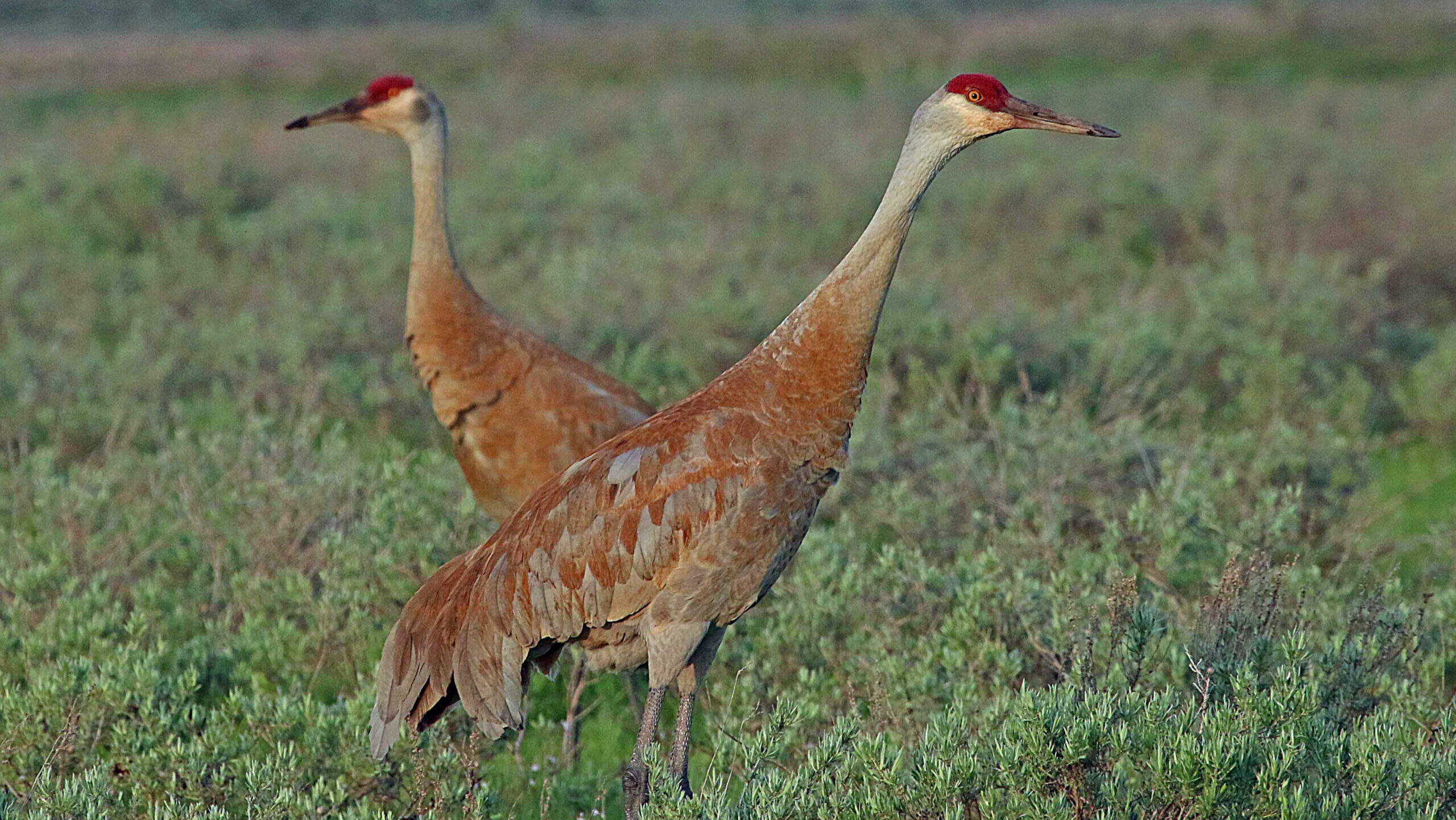
Sandhill cranes stand in a field. (Utah Division of Wildlife Resources)
Application results will be available on July 31 at 12 p.m.
Fees apply to this permit. Information can be found on the DWR website.
“Utah is one of only nine states that allows swan hunting, and sage-grouse can only be found in the western United States. It’s a great chance for people to do something different and have an incredible experience in the outdoors,” DWR Migratory Bird Coordinator Jason Jones said.
Those who aren’t hunting the aforementioned species this year can apply for a preference point. The DWR explained that those holding preference points “have a better chance of obtaining a permit for the following year.”
Extra requirement for tundra swan hunting
Before applying for a tundra swan hunting permit, the DWR said the swan hunting orientation course must be completed. It’s required annually for anyone wishing to hunt the species.
It was designed to help hunters distinguish trumpeter swans from tundra swans, avoiding accidental hunting of the wrong type. Killing a trumpeter swan, even accidentally, can lead to fines, the course says.

Tundra swans sit in snow. (Utah Division of Wildlife Resources)
According to the American Bird Conservancy, trumpeter swan populations experienced a sharp decline at the beginning of the 1900s. Although they’ve since recovered, they’re still threatened by a number of factors.
“Trumpeter swans are not currently listed as endangered. They are, however, relatively rare and you should avoid shooting them,” read the DWR tundra swan hunting course content.
Distinguishing the swans from one another can be tricky at times, but the DWR course provides hunters with key information on spotting physical and sonic differences.
To legally hunt tundra swans, participants over the age of 16 must obtain four things: a hunting license, a tundra swan permit, a Harvest Information Program number and a federal duck stamp.
Hunters younger than 16 do not need to obtain a duck stamp, but need the other materials, according to the DWR.
Free bird hunting permits for other species
Those looking to get a permit to hunt band-tailed pigeons and white-tailed ptarmigan can do so beginning at 8 a.m. on July 31 by visiting the DWR website or a licensing agency. They are free.
More bird hunting information can be found in a guidebook published by the DWR.
“These permits provide a unique opportunity to pursue species that aren’t found everywhere,” Jones said.
Migratory bird hunting
The DWR provided a list of other species that require registry into the Migratory Bird Harvest Information Program:
- American crows
- Band-tailed pigeons
- Coots
- Ducks
- Geese
- Mourning doves
- Sandhill cranes
- Snipes
- Tundra swans
- White-winged doves
Signing up is free.
Similar to tundra swan hunting, anyone over the age of 16 who is planning to hunt waterfowl of any kind, is required to buy a federal duck stamp.
The DWR explained that they help pay for conservation efforts across the country.