‘It hits home’: State’s first Palestinian-American lawmaker on conflict between Israel and Gaza
May 9, 2025, 12:34 PM | Updated: 3:54 pm

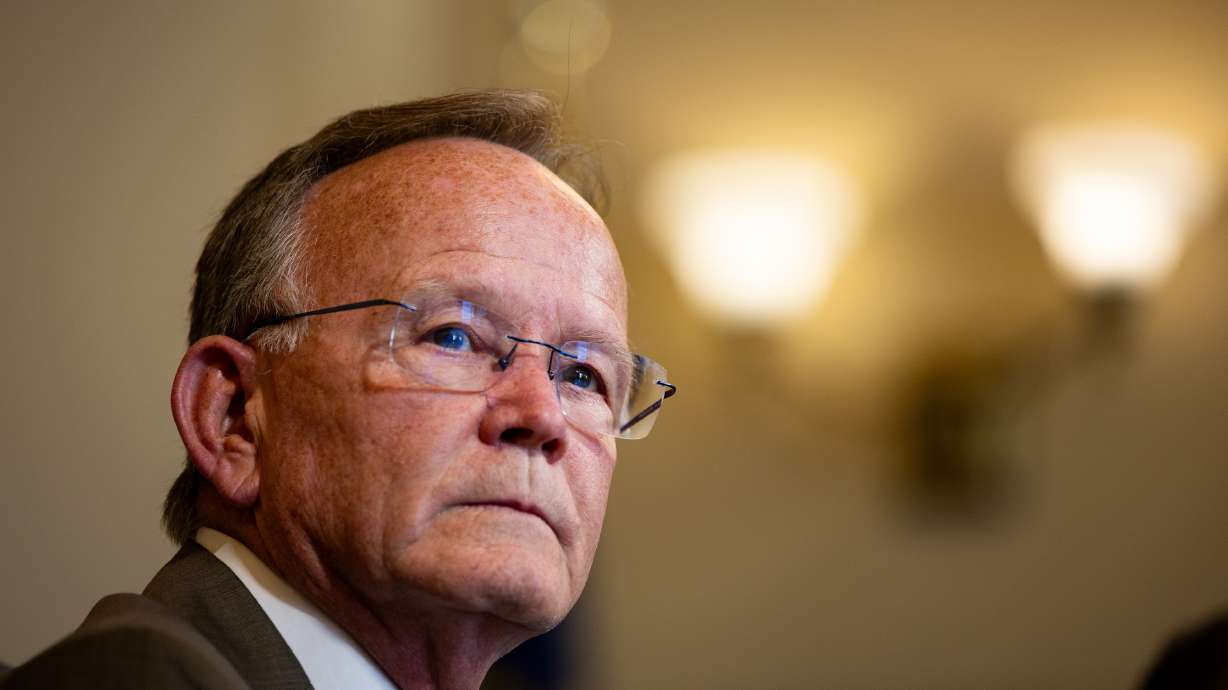
Rep. Grant Miller, D-Salt Lake City, in the Senate Committee room at the Capitol in Salt Lake City on Friday, Jan. 24, 2025. (Tess Crowley/Deseret News)
(Tess Crowley/Deseret News)

SALT LAKE CITY — In November, Salt Lake County constituents elected the first Palestinian-American lawmaker in Utah.
Democratic House Rep. Grant Amjad Miller said he’s seen the impacts of the conflict between Israel and Gaza firsthand since he was elected to office.
“Whenever there’s an escalation of violence in Gaza, in Israel, it hits home. As a state representative, I represent House District 24 in downtown Salt Lake City. It’s a very diverse place. We have a significant Muslim contingent. We have a mosque in my district. We also have a significant Jewish contingent. We also have a synagogue in my district.”
There are few statistics on how many Arab and Jewish people are in Utah.
Statistics from the U.S. Census estimate about 17,000 Arab Americans in the state in 2017, with the highest residency in Salt Lake County. The number of Palestinian Americans in the state is just a small fraction of that. There are an estimated 6,000 Jewish people in the state.
Despite both groups being a minority in the state, Miller said every time there’s an escalation of violence in the Middle East, it “ripples over to Utah.” There’s an increase in “threats, scrutiny and ridicule” for both Jews and Arabs.
“I talk to a lot of my friends who are Jewish, and their concerns are always almost identical to mine. They’re worried about the future of Israel and their friends and family in Israel, and that’s the same thing that I have. I’m worried about my family, and the few connections I still have in Palestine, and I wonder whether or not I personally will outlive any semblance of Palestine, whether or not any memory of Palestine.”
Anticipating more displacement
This week, Israeli Cabinet ministers voted to seize and occupy the Gaza Strip for an indefinite period of time.

An Israeli army tank maneuvers in the Gaza Strip is seen from southern Israel, Sunday, May 4, 2025. (AP Photo/Ariel Schalit)
The Associated Press reports Israel’s offensive has displaced more than 90% of Gaza’s population. Something that Miller thinks will only be exacerbated by Israel’s recent vote and help to continue to add to the growing number of Palestinians scattered across the globe by the conflict.
“There are about 6-7 million Palestinians in the diaspora, and I’m a product of that,” Miller said.
‘It’s pretty much the grace of God that I’m here in Utah’
Rep. Miller’s mother was born in the West Bank and fell in love in Wisconsin while visiting her brother, who was pursuing higher education in the United States. Miller moved to Utah when he was 1 year old to the district he now represents.
“It’s not too hard for me to imagine a world where I didn’t grow up here in Utah, where I grew up in the West Bank. That is certainly something that was conceivable or possible, and it’s pretty much the grace of God that I’m here in Utah and have the privilege of serving as a state representative, and I didn’t grow up in a place that is subject to such extraordinary violence.”
He said he’s mostly had a positive reaction since he decided to get involved in politics.
“I remember I was walking with my family in Liberty Park, and there was this guy on a scooter, came by, saw me and shouted, ‘All Palestinians deserve to die.’ There’s a lot of vitriol and epithets on the internet, on my Instagram, that sort of thing.”
But it wasn’t all bad. During his campaign, Miller said Jewish community members reached out to help him host events and knock on doors.
“I’d say, ‘Hey, you know I’m Palestinian, right? You’re Jewish.’ And they said, ‘it’s not about that. What we’re worried about is anti-Semitism. You’re Palestinian, you’re not anti-Semitic, there’s a huge difference.’”
What binds us together is more powerful than what tears us apart
As the war continues in the Middle East, Miller asks that people continue to self-educate and to seek out communities that are different from their own.
“If you have a friend who’s Palestinian or Jewish, reach out to him and check up on them,” Miller said. “This is hard on everybody, and a lot of this is becoming a contest of who’s suffering more. And that’s not what it’s about. It can’t be what it’s about.”
Related:
- Hundreds of new Utah laws have taken effect. Here’s what that means for you
- Trump weighs in on Utah GOP chair race by endorsing incumbent
- Rep. Maloy proposes selling more than 10,000 acres of Utah’s public lands