‘It’s run its course’: Utah ready to sell Lake Powell ferry as reservoir hits new low
Aug 19, 2026, 4:37 PM
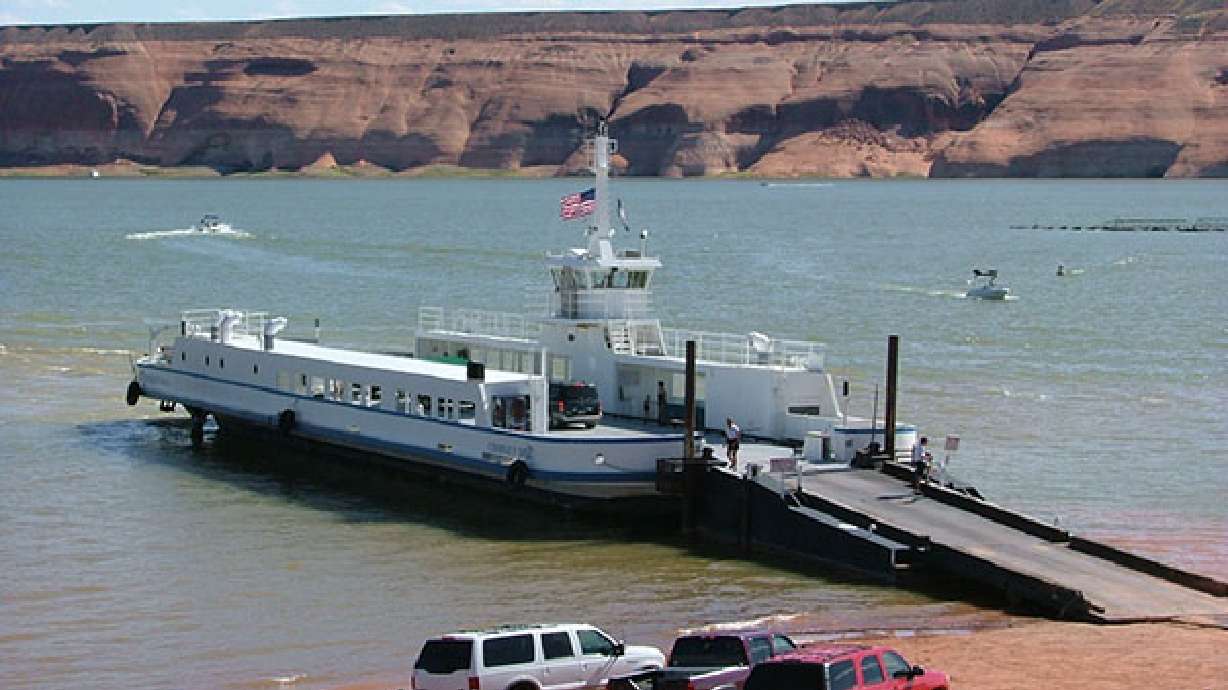
FILE: The Charles Hall Ferry in 2016. Citing diminishing use due to low water levels, Utah lawmakers voted unanimously this week to begin permanently discontinuing the Lake Powell ferry.(National Park Service)
(National Park Service)
SALT LAKE CITY — Utah transportation officials launched a ferry in the 1980s to drastically reduce the travel time between Bullfrog and Halls Crossing at Lake Powell.
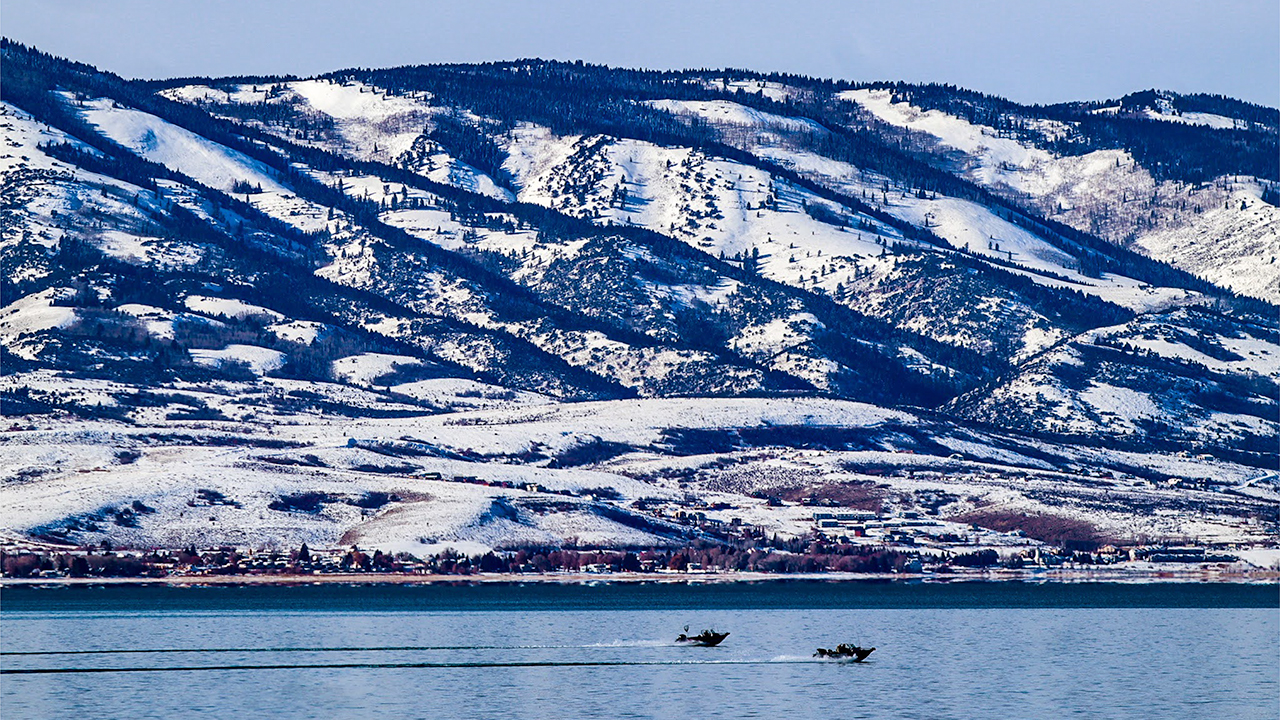
However, as the nation’s second-largest reservoir has fallen to its lowest point again this month, the third time it has happened in the last five years, it’s been inoperable more often than not lately. With projections that it may not be serviceable again anytime soon, state leaders and transportation officials say they’re ready to move on.
Members of the Utah Legislature Transportation Interim Committee voted unanimously on Wednesday to begin permanently discontinuing the service. They tasked the Utah Department of Transportation to return to the committee later this year with a proposal to sell the ferry, with the proceeds potentially going back to transportation needs in southeast Utah.
‘It’s run its course,” said Rep. Michael Petersen, R-North Logan, before the vote, adding that he doesn’t believe prolonging the service is a good use of taxpayer dollars.
The ferry, when in service, takes 25 to 30 minutes to complete a journey that typically takes about two hours to complete via roads. It costs between $25 for vehicles to ride or more for larger vehicles, and $10 to $15 for motorcyclists, bicyclists and pedestrians.
UDOT owns the vessel and contracts Aramark to operate it, but it’s been out of service since Feb. 10, 2025. Wednesday’s meeting came less than a week after the reservoir between Utah and Arizona broke a record for its lowest point previously set in 2023, which followed a new low hit in 2022.
Reservoir levels are now approximately 46 feet below the minimum level to make the existing ramps operable, said UDOT Region 4 Deputy Director Jared Beard.
“There’s definitely some challenges operating a ferry in a very remote location in a lake with massively fluctuating (water) elevations,” Beard said.
Unsurprisingly, ridership has plummeted alongside the reservoir’s downfall. Nearly 7,500 vehicle crossings were reported in 2018, which itself was a decent drop from the previous decade. All of the years combined since then fail to match what was recorded that year, because of mechanical issues and then poor water levels that have kept it largely out of service in 2022, 2023, 2025 and now 2026.
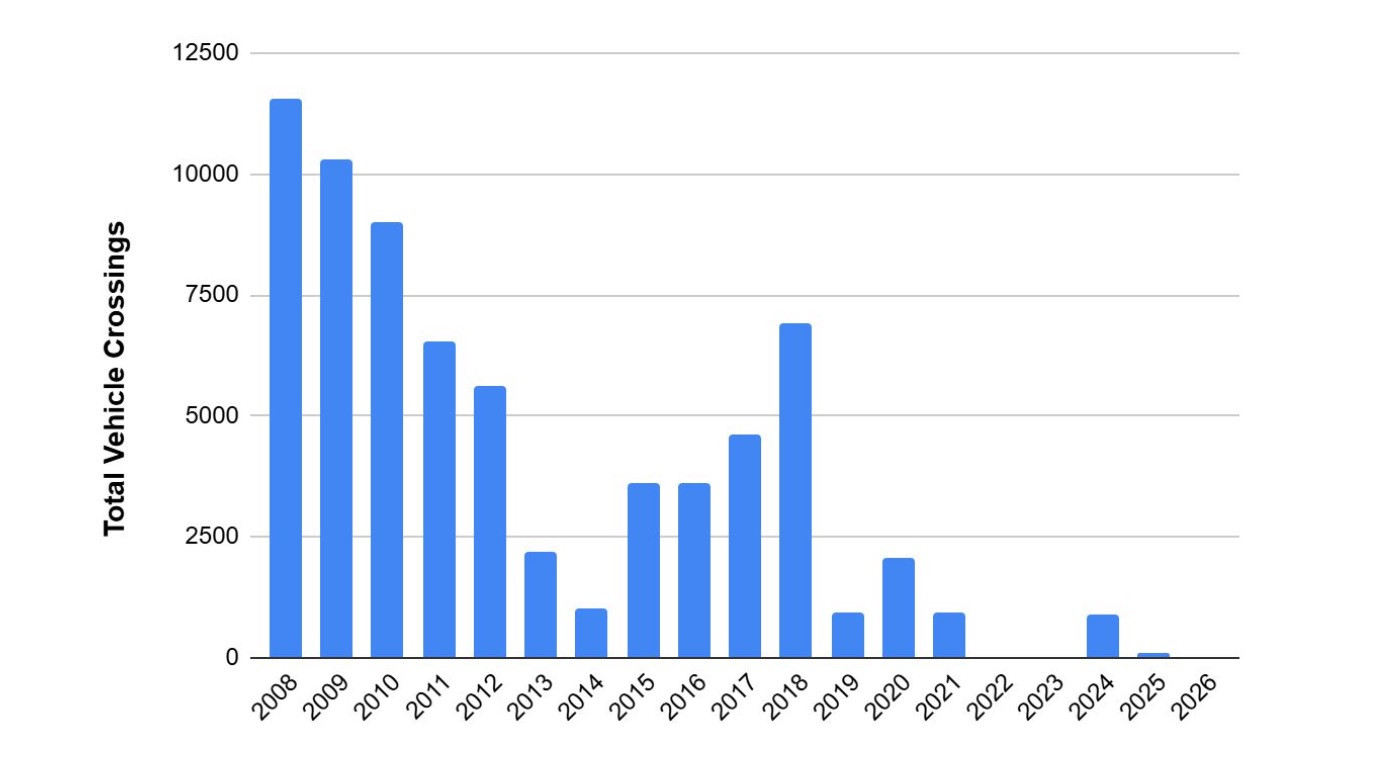
This graph shows all vehicle crossings on the Charles Hall Ferry since 2008. Ridership has significantly dropped since 2018, largely because water levels have kept the vessel inoperable, state transportation officials said. (Photo: Utah Department of Transportation)
Back-to-back quality snowpacks in 2023 and 2024 helped service return briefly in 2024, but that lasted only a little more than seven months.
This year’s record-low snowpack and spring runoff may have been the final nail in the service’s coffin. Barring an unforeseen uptick in reservoir levels, matched with maintenance needs, UDOT doesn’t expect service to return until at least 2030.
While Beard contends it’s a service, not a “money-making operation,” it has struggled to break even over the years, too. After presenting the findings, he suggested that the best option might be to complete any remaining boat maintenance and then shut down the route.
“This is a nice-to-have that doesn’t seem to make sense to me,” added UDOT commissioner Carlos Braceras.
The agency offered the committee two other alternatives outside of selling the ferry. One called for committing $20 million to $25 million over the next four years to extend the Halls Crossing ramp again, while repairing the boat.
The other option is to build a bridge to connect the two points, which is preliminarily estimated to cost $650 million before any operation and maintenance costs. The state received federal funds for a feasibility study, which began at the start of this year.
Committee members sided with UDOT, with the only debate being between immediately selling the ferry or asking the agency to come back to state leaders with a plan to sell it. They ultimately agreed on the latter to sort out logistics.
“I wish the ferry was more successful, but I can’t support it with this price tag,” said Sen. Kathleen Riebe, D-Cottonwood Heights.
The committee and UDOT agreed that money from the sale of the boat should go toward transportation infrastructure near Lake Powell. A complete proposal to sell the ferry, along with community feedback, is expected this fall.