OpenAI is launching a browser, Reuters reports. Here’s what Utah’s Office of AI says about it
Jul 11, 2025, 4:11 PM | Updated: 5:51 pm
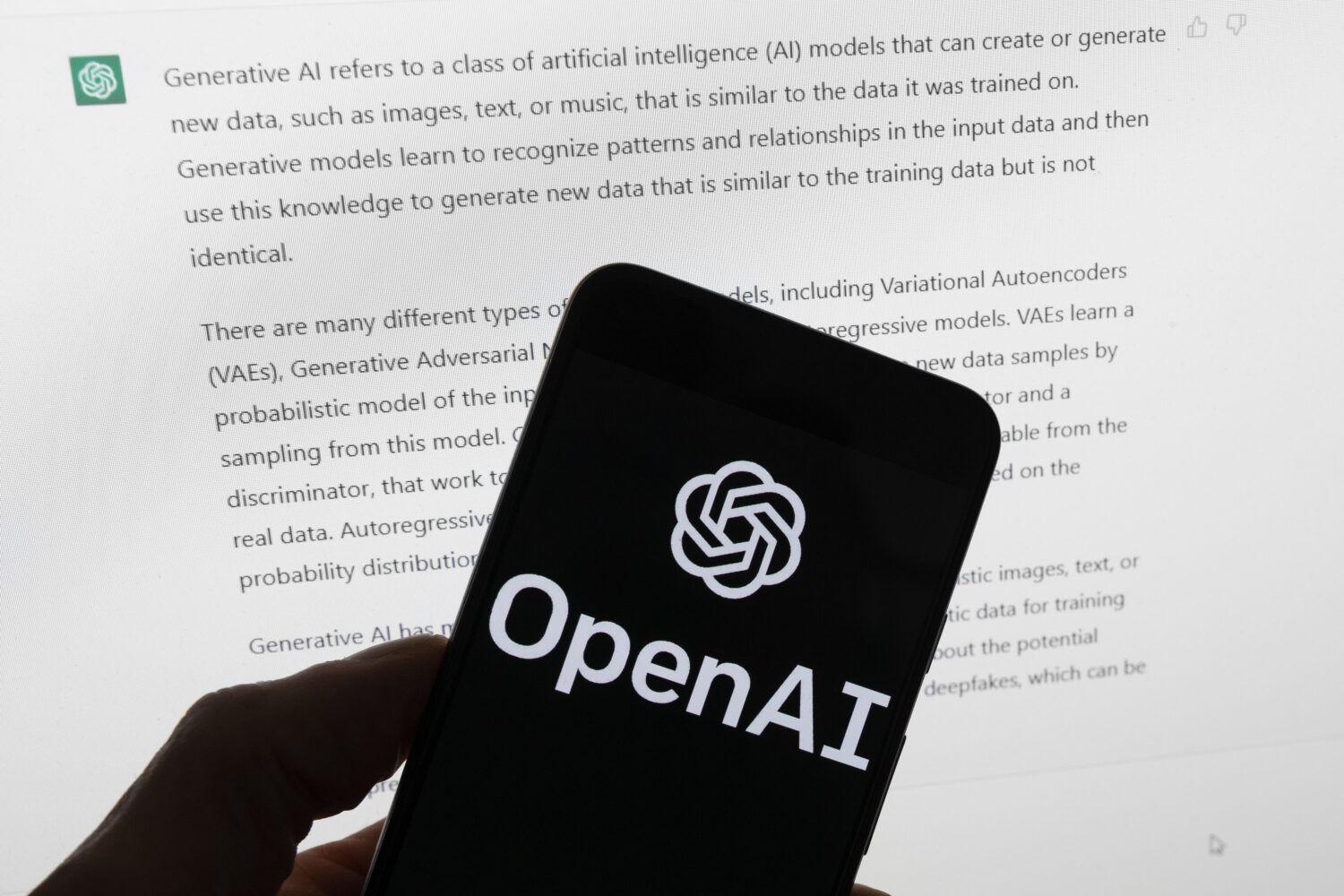
FILE - The OpenAI logo is seen on a mobile phone in front of a computer screen displaying output from ChatGPT, March 21, 2023, in Boston. (Michael Dwyer/Associated Press)
(Michael Dwyer/Associated Press)

SALT LAKE CITY — After a recent Reuters report said OpenAI is planning to release a browser that will challenge Google Chrome, Utah’s Office of Artificial Intelligence is weighing in.
“I think this is pretty much inevitable that something like this is going to come,” said Dr. Zach Boyd, director of Utah’s Office of AI, “whether OpenAI ends up being the winner or another company we know of multiple other AI first browsers that are coming.”
The biggest difference between Google Chrome and an AI browser will be its ability to act more like a personal assistant. You can ask it to book a flight or fill out a form. However, Boyd, said there will be a learning curve.
“A lot of people are really used to technology being kind of infallible, like a calculator,” Boyd said. “I expect we’ll see some mistakes made when people rely on AI to do things and it doesn’t do it correctly.”
For example, someone could ask for a flight to Paris, France, and instead you find yourself on a flight to Paris, Arkansas, he said.
Boyd suggested a few reasons why OpenAI might want to get a browser up and functioning quickly. First, it’s just the natural progression of the technology, he said — people like asking questions and getting quick answers.
Second, OpenAI would likely obtain some of Google’s ad revenue.
But Boyd said the largest benefit would be using the new browser to collect data. He theorized OpenAI would utilize the browser as “a means to an end.”
“The fundamental breakthrough that made us able to go from computers that could not understand natural language to computers that are good at natural language was the entire internet to train our (AI) models on,” he said.
Therefore, Boyd said, OpenAI has an opportunity to utilize its new browser to better model its AI technology off of.
He made the analogy of delivery types — with models like ChatGPT acting as an “information delivery.” But the new iteration of AI would go further than take questions and deliver answers, it would do as much as book your flight for you. He called it a “cyber action vehicle.”
“OpenAI having access to intensive browser data from all of us would be really helpful to them in pursuing their goals of monetizing data,” he said.
This might be a concern for people who are wary of large businesses collecting their data. However, Boyd believes Utah has positioned itself very well to create policies to protect users — and even went as far as describing the state as “leading the nation in thoughtful deployments of AI the the school system.”
“You know, we’re taking an approach of trying to open regulatory doorways for early experiments,” he said, “while keeping an eye on emerging consumer protection problems that really should be nipped in the bud before they become major societal issues.”