Should the Roadless Rule be rescinded? The USDA wants your opinion
Aug 27, 2025, 4:54 PM | Updated: 4:55 pm

Snow-covered pine trees are pictured in the Wasatch-Cache National Forest in Millcreek on Thursday, Jan. 12, 2023. (Laura Seitz/Deseret News)
(Laura Seitz/Deseret News)

SALT LAKE CITY — The United States Department of Agriculture announced the opening of a public comment period as part of the process to rescind the 2001 Roadless Rule on Wednesday.
This is the latest move in an ongoing effort to rescind a rule protecting national forests from roadway development and excessive logging. On June 23, the USDA announced its intention to undo the rule.
A June 30 report from Utah News Dispatch said rescinding the rule could open up nearly 4 million acres of Utah national forests to logging and road building.

A map provided by Defenders of Wildlife shows the forest areas that could be impacted if the Roadless Rule is rescinded. (Defenders of Wildlife)
The policy prohibits road construction and restricts timber harvesting in certain areas of national forests. It was signed in early Jan. 2001 by former President Bill Clinton, as a conservation effort.
At the time, the policy was popular. A comment period preceding the enactment of the policy drew 1.6 million comments, 95% of which were in favor of protecting lands from roads.
President Donald Trump’s administration has been working to undo the rule, as it stands in the way of increased commercial logging. The current administration views it as a barrier to economic development.
Administration officials have also argued that the Roadless Rule limits wildfire suppression efforts.
However, a 2025 study found that logging and road building disrupts forest ecosystems, leading organic materials to become more flammable.
On Wednesday, USDA Secretary Brooke Rollins said opening the comment period puts the department “one step closer to common sense management of our national forest lands.”
“Today marks a critical step forward in President Trump’s commitment to restoring local decision-making to federal land managers to empower them to do what’s necessary to protect America’s forests and communities from devastating destruction from fires.”
Rescinding the Roadless Rule could have consequences, opponents say
According to the Sierra Club, an environmental group that opposes rescinding the Roadless Rule, there are already 380,000 miles of roads on U.S. Forest Service lands.
“The Trump Administration’s move will likely cost taxpayers more through increased tax revenues that would be needed to subsidize more roadbuilding across the country,” the Sierra Club wrote in a press release.
Per the Forest Service website, there was an $8.6 billion backlog of deferred maintenance in 2023. Limited resources, aging infrastructure and increased public use were cited as factors.
Wildfire risk could also increase, according to a report from The Wilderness Society, which found that areas near roads are more likely to ignite.

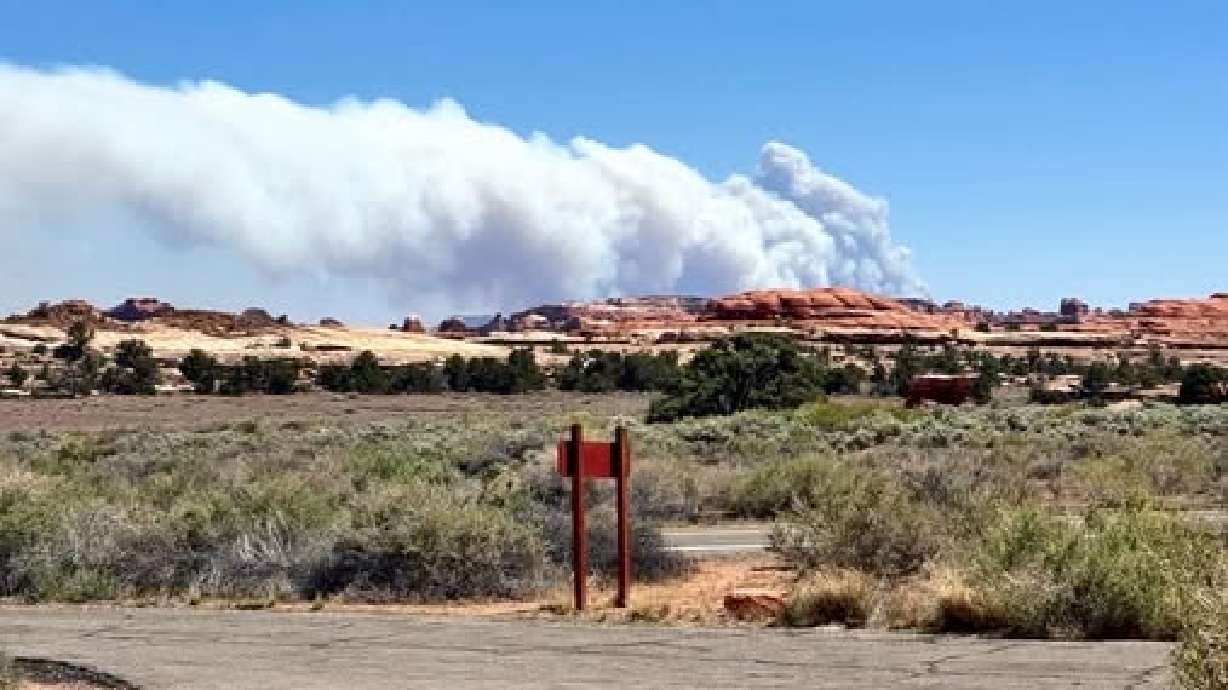
In this photo provided by the Hurricane Valley Fire District, the Monroe Canyon Fire blazes near Monroe, Utah, July 16, 2025. (Hurricane Valley Fire District via Associated Press)
Per the Forest Service, approximately 1.5 million acres of national forests and grasslands are consumed by wildfires each year.
Impacts on wildlife
Trout Unlimited, a nonprofit that focuses on conservation of rivers and streams, said rescinding the Roadless Rule could also have negative impacts on trout and salmon populations.
“Numerous studies have demonstrated that roads negatively impact trout and salmon populations by causing water quality degradation from increased sediment and pollutants, as well as altered stream channels, fragmented habitat and fish barriers,” the organization wrote in a press release.
Waterways can become polluted when water washes over roadways, picking up substances like oil and heavy metals. When they enter water, toxins can deplete oxygen, disrupt food chains and harm aquatic life’s ability to reproduce.
Additionally, toxins stuck in the bodies of fish caught and consumed by humans can continue up the food chain.
Per the Defenders of Wildlife, an increased number of forest roads will harm more than fish—it could devastate threatened and endangered species.
“For the last quarter century, the Roadless Rule has effectively protected habitats from excessively dense road networks that characterize much of our national forest system outside of roadless and wilderness areas,” said Keats Conley, the senior planning and policy specialist at the Defenders of Wildlife.
Roadless Rule comment period to last until Sept. 19
The USDA said the public comment period will open on Aug. 29 and last until Sept. 19. Comments can be submitted through the Federal Register.
More public lands reading: Adventure app launches new map displaying potentially sellable public lands