Salt Lake City could break another temperature record on Monday
Jul 27, 2026, 3:43 PM | Updated: 4:27 pm
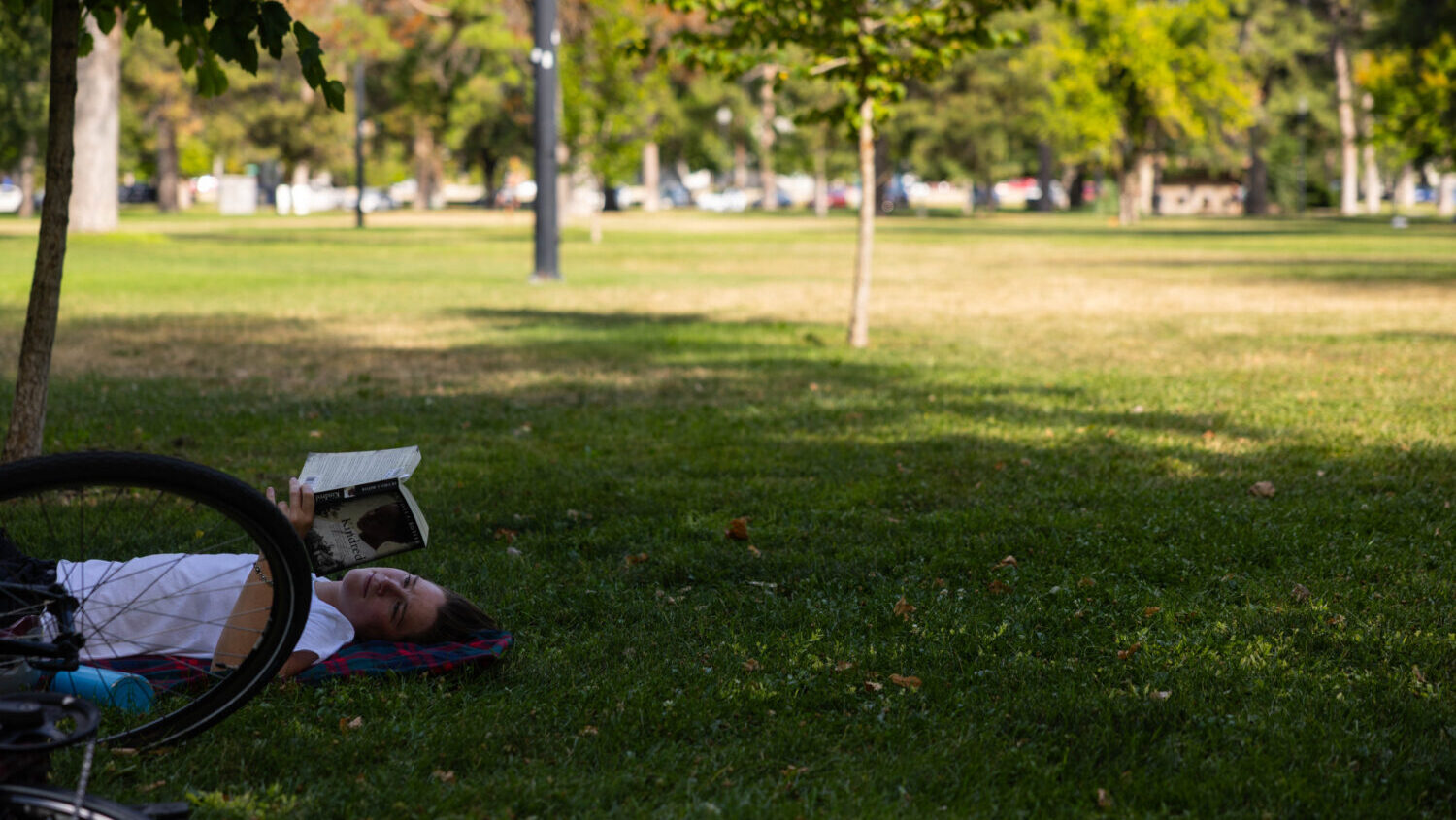
Alexa Dlouhy, 30, reads a book in the shade during a city-wide heat advisory at Liberty Park in Salt Lake City on Sunday, July 26, 2026. (Lukas Katilius, Deseret News)
(Lukas Katilius, Deseret News)
SALT LAKE CITY — Utah’s capital city has already broken its all-time hottest maximum temperature this month, reaching a blistering 109 degrees on July 13, but it’s poised to break another record as the latest heat dome sets over the state.
Salt Lake City’s overnight low early Monday fell to 84 degrees, which could be the highest minimum low temperature ever recorded since the National Weather Service began tracking the city’s weather data in 1874. The current record is 82 degrees, first set on July 13, 2021, and matched on July 23, 2023.
A few factors led to overnight conditions ending up abnormally warm, said Sam Webber, a meteorologist for the National Weather Service.
Salt Lake City reached a maximum high temperature of 104 degrees on Sunday, ending up just 3 degrees shy of a daily record set in 1960, which was also the previous all-time hottest temperature ever recorded. That heated the ground before clouds formed Sunday night, trapping the heat in the valley, he explained.
“That certainly helped us stay on the warmer side,” he said. “Anytime you have cloud cover overnight, it’s going to help trap a lot of that radiant heat that’s coming off the Earth, which would otherwise just radiate out into space.”
Temperatures at the official Salt Lake City site near the airport didn’t break away from 90 degrees until after 4 a.m., with a brief dip to 84 degrees shortly before 7 a.m., as the clouds finally began to break apart. Temperatures began to rise again shortly after that, though, as the sun rose over the valley.
The National Weather Service estimates there’s about an 85% to 90% chance the record stands on Monday, given the length it’s taken to cool down. The only thing that could prevent that is a chance of isolated thunderstorms that could create a cold pool over the city, potentially cool enough to drop temperatures below 82 degrees.
A storm that developed Monday afternoon drove the temperature to as low as 86 degrees.
The potential new record plays into a trend that’s emerged with urbanization, Webber said. Research has long pointed to asphalt, concrete and other development holding more daytime heat longer than a natural landscape. That, combined with hotter daytime temperatures partly from stronger high-pressure systems, have helped increase minimum temperatures.
It’s not just a Salt Lake City issue. Many parts of the world have had higher low temperatures, leading to hotter average temperatures.
Eleven out of Utah’s 13 warmest minimum temperature years have occurred since 2000, and this year’s average minimum temperature is on track to top them all, according to the National Centers for Environmental Information. Its database, tracking multiple sites across the state, dates back to 1895.
Handling the heat
That has a human toll. The weather service issued extreme heat warnings and heat advisories this week for the Wasatch Front and northern Utah, as well as a large chunk of southern Utah.
Those warn there’s a higher risk of “little overnight relief,” compounding concerns of daytime high temperatures forecast to remain in the 100s this week. It could impact people experiencing homelessness or who are prone to heat-related illness, Webber said.
The weather service recommends that people drink plenty of fluids, stay out of the sun and remain in an air-conditioned room instead, if possible.
Salt Lake County has “cooling zones” set up for the daytime for people who don’t have access to air conditioning. Officials discussed improvements to messaging about those facilities on Monday, a spokesperson for the county told KSL.
They added that the county has also directed people experiencing homelessness to resource shelters, which also have air conditioning and can help them stay out of the heat during both the day and night.
Salt Lake City has also been working to get people experiencing homelessness to shelters or its “community corner” (702 W. 200 South), where water, snacks, and connections to other resources are available, said Amy Stock, manager of the city’s Homeless Engagement and Response Team.
State lawmakers considered a “code red” bill to help unsheltered Utahns access shelters during the heat, but it ultimately failed in 2025. It would have mirrored the winter “code blue” status, which gets people indoors when it’s considered too cold.
That would help in this situation, where resources can be limited overnight, Stock told KSL. In the meantime, she said there is still some expanded bed capacity that can help bring people indoors when it’s warm overnight.
“It is really hard, but I think there’s a sense of urgency with our resource providers and anyone who is engaging with this community to make sure what their plan is and talk through some options with them,” she added.