Provo fire captain, four family members found dead after Wayne County flash flood
Jul 18, 2026, 12:14 PM | Updated: Jul 20, 2026, 3:05 pm
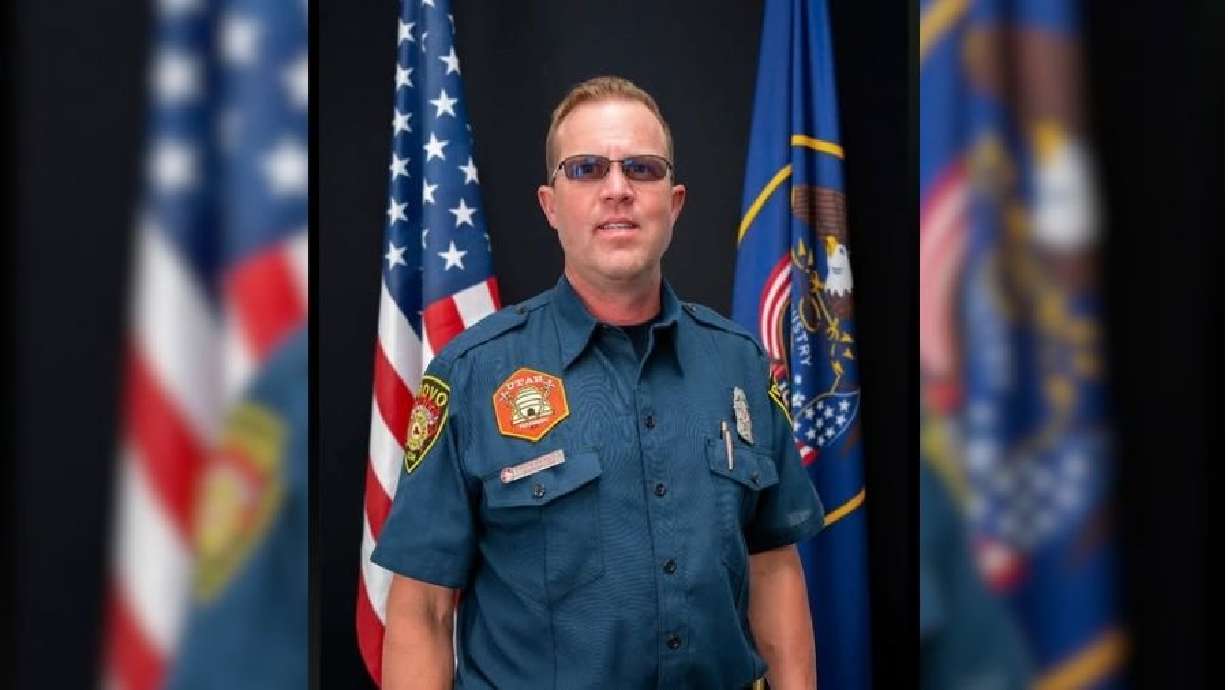
Captain Spencer Long of the Provo Fire Department, along with four members of his family, died in a flash flood accident near the Sunglow campground in Wayne County Friday. (Picture credit: Provo Fire and Rescue Facebook page)
(Picture credit: Provo Fire and Rescue Facebook page)
BICKNELL, Utah — Five people have been found dead after flash flooding swept through a dry wash near a campground outside of Bicknell, Utah, in Wayne County, on Friday.
Provo Fire and Rescue has confirmed the identity of one of the family members killed as Captain Spencer Long of the Provo Fire Department. Long was off-duty on a camping trip when the flash flood arrived. It is suspected all five family members drowned.
Read more: Family members remember mom, kids killed in flash flood
According to a release from the Wayne County Sheriff’s Office, deputies were first called in around 5 p.m. on Friday night because of a body that had been found in a dry wash near Bicknell’s Sunglow Campground. The body was described as a young male.
That discovery led them to search for more possible victims, and eventually two more bodies, also identified as male.
Later in the day on Saturday, the sheriff’s office said two remaining missing people had been found, though the report did not say whether the final two victims were male or female.
Flash flood video from same Wayne County area
KSL followers shared video of a flood in the same area on Friday with KSL Meteorologist Matt Johnson; it was not immediately clear if this was the same flood. The video appeared to show a fast-moving debris flow filling a dry wash. Johnson described the location of the flash flood in the video as a dry riverbed leading to Sunglow Canyon in Wayne County.
View this post on Instagram
The Wayne County Sheriff’s Office says a family went to the Sunglow Campground area on Friday “to go hiking and canyoneering.”
“At this time, it is believed the family fell victim to flooding caused by heavy rains,” the office said in a release attributed to Sheriff Micah Gulley.
Investigators did not immediately identify the victims after announcing the remaining victims had been found. But Wayne County Sheriff Micah Gulley said that would happen once their identities were confirmed and family notified.
Flash flood dangers persist statewide
Multiple flash flood warnings were issued this week, especially in central and southern Utah, with monsoon-generated thunderstorms dropping large amounts of water in a short period of time.
The danger was particularly pronounced below recent burn scars, such as that left by the Cottonwood Fire in Beaver County. Videos shared to social media showed ash-filled mud, water and debris flooding the Beaver River earlier this week.
According to the National Weather Service, a flash flood is “the most dangerous kind of floods,” because of the speed with which they can sweep through an area, leaving little time for warning.
Related: Eureka residents fill sandbags to prepare for potential flooding after fires
Wayne County experiences flash flooding periodically, in part because of the terrain, which can be mountainous, steep or very dry, depending on your exact location.
“Camping or recreating along streams or rivers can be a risk if there are thunderstorms in the area,” the agency notes on its website. “Sometimes the thunderstorms that produce the heavy rainfall may happen well upstream from the impacted area, making it harder to recognize a dangerous situation.”
In the West, most canyons, small streams and dry arroyos are not easily recognizable as a source of danger. The causative rainfall can occur upstream of the canyon, and hikers can be trapped by rapidly rising water. Floodwaters can carry fast-moving debris that pose significant risks to life.
Hikers, campers encouraged to check forecasts
Hikers and campers entering areas prone to flash flooding, especially around Utah’s National Parks, are encouraged to check forecasts before recreating because of the risk of a flash flood.
At Zion National Park, the risk of flash flood is so well-known that it occupies a section of its own on the park’s website.
Rangers encourage visitors to check the forecast before entering the park and stop by the visitor’s center for the latest risk of a potential flood.
The Zion National Park website offers guidance in case you are caught in a flash flood. It includes:
Do not waste time picking up gear or packing up tents/equipment. Reach higher ground as quickly as possible. Water can rise to dangerous levels in minutes or seconds.
- Do not attempt to cross or enter floodwaters.
- 6 inches of water can knock a person off their feet and cause loss of vehicle control.
- 12-24 inches of water can pick up a vehicle and carry it off.
- Stay as high up as you can and be patient. It can take hours for water to recede to safe levels.
Bicknell sits not far away from Capitol Reef National Park. In 2022, at least one person was swept away by a flash flood there and dozens more needed rescue.
Related: Forecasters warn of flash flooding risk in Utah’s national parks
In September of that same year, flash floods were blamed for as many as 18 deaths, including members of a family caught up by rushing water and debris in their van as they tried to cross a dry wash in Hildale, near the Arizona state line.
Much of southern and south-central Utah remained under a flash flood watch on Saturday, according to the National Weather Service.
Read more:
- Sinkhole forms on SR 24 through Capitol Reef National Park
- Wayne County communities remember, honor 3 women police said were killed by a stranger
- Flash flooding likely in southern Utah, hikers asked to plan ahead