What causes sinkholes?
Jun 18, 2025, 7:00 AM
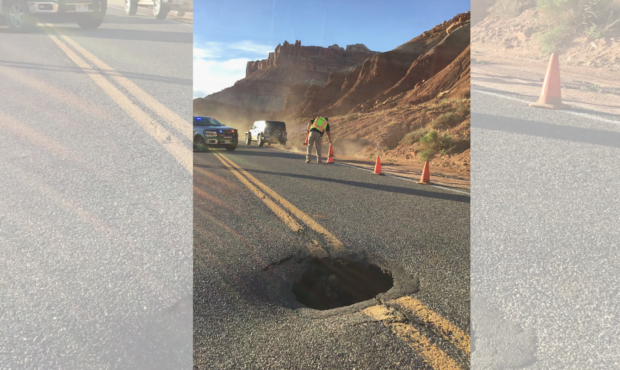
(Photo: National Park Service / L. Rome)
(Photo: National Park Service / L. Rome)

SALT LAKE CITY — A sinkhole recently caused the temporary closure of a road in Bountiful. Here’s an explanation of how sinkholes form.
Sinkholes form when water seeps into dissolvable rock beneath the ground’s surface, causing erosion. Eventually, when a cavity below the surface becomes too big, the top layer gives out, opening up a hole.
Surface land remains stable until the cavity below grows too large.
The American Geosciences Institute explained that some sinkholes form naturally with rainfall, while others are caused by over-pumping groundwater, mining or leaky pipes that sit beneath roads or structures.
According to the United States Geological Survey, sinkhole damage has cost an average of $300 million to repair over the last 15 years in the U.S. However, that is just an estimate, as there is no national tracking system for the phenomenon or the costs associated.
Sinkholes can happen most anywhere, but some places are more likely
A sinkhole can form virtually anywhere, but they are more likely in certain areas.
The USGS said they’re most common in karst terrain — areas where subsurface rock is easily eroded. Examples include limestone, salt and gypsum.
A map published by the organization shows where karst terrain is found. Several areas in Utah were noted.

A map displays areas of the U.S. that lie above karst terrain, where sinkhole formation is more likely. (United States Geological Survey)
UGSG reported that the most sinkhole damage is reported in Florida, Texas, Missouri, Alabama, Kentucky, Tennessee and Pennsylvania.
Can they be repaired?
After a sinkhole opened up in Roy in May 2025, construction work to close the hole in the road led to traffic delays.
Lehigh University explained how sinkholes are best repaired. According to its report, they are excavated to reveal stronger rock. Then, layers of stones are placed in the hole, followed by gravel and then sand.
Finally, geotextile fabric is layered on the sand before it’s covered with soil. The fabric is used to increase stability, control erosion and facilitate water drainage.