2020 Election Explained: What are the rules for poll watchers?
Oct 12, 2020, 4:52 PM

In this Sept. 8, 2020 photo, voting booths As mid-term elections approach, voters may see an increase in police when they go to vote. (Kristopher Radder/The Brattleboro Reformer via AP)
(Kristopher Radder/The Brattleboro Reformer via AP)

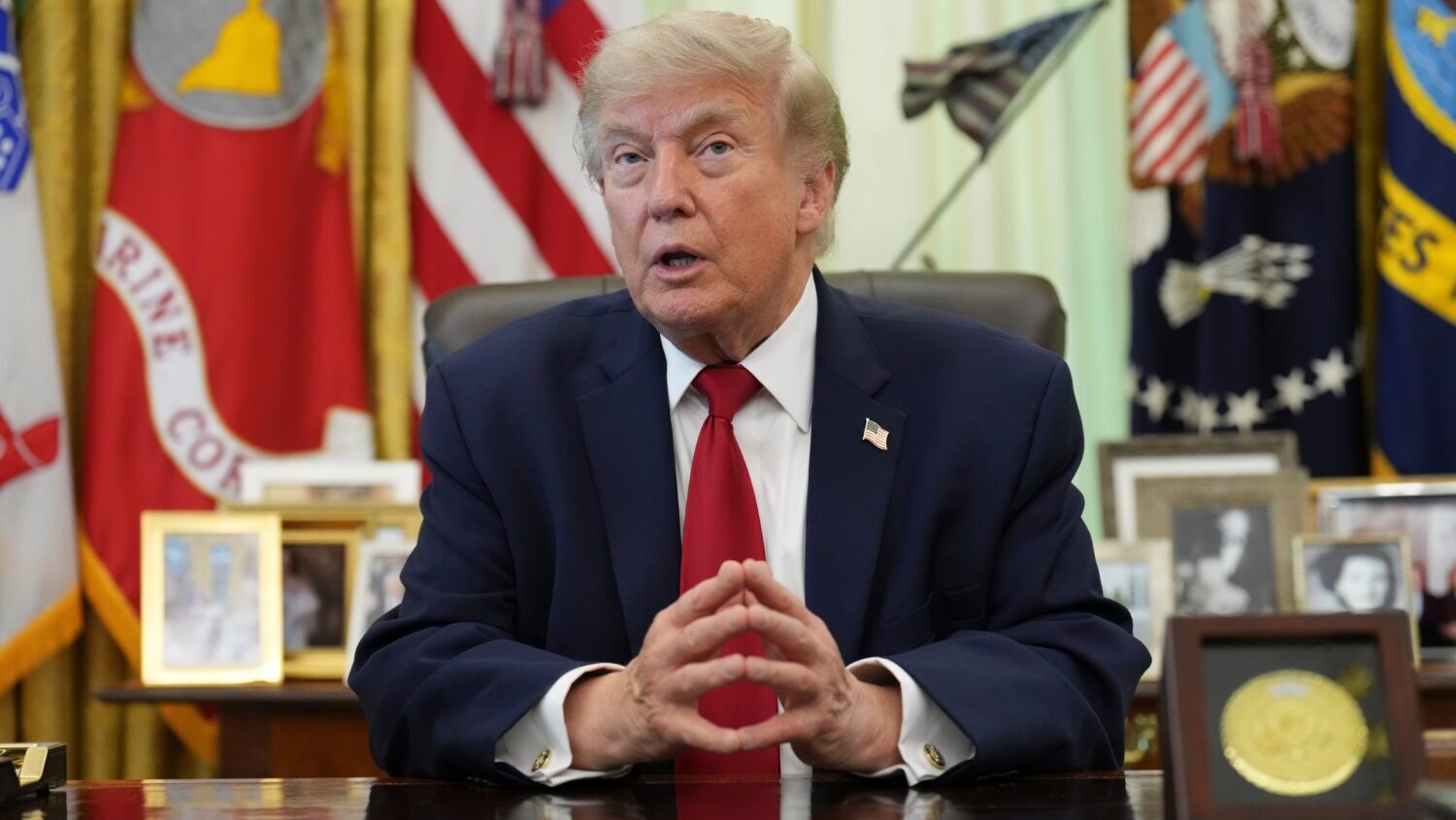
The campaign of President Donald Trump seeks to recruit thousands of volunteers — poll watchers — to watch the 2020 presidential election, and particularly mail-in balloting, for fraud and irregularities.
Poll watchers are nothing new. A number of county clerks in Utah confirmed poll watchers regularly observe elections and different parts of the electoral process across the state. That remains the case ahead of the 2020 election in Utah.
However, the accusations of widespread fraud or other problems are new. And they became, in part, heightened and more contentious after Mr. Trump addressed the neo-fascist group “Proud Boys” during a presidential debate and told them to “stand back and stand by.”
Watch the moment here:
In August, Mr. Trump said that he planned to send law enforcement and U.S. attorneys to the polls in November to prevent voter fraud.
“We’re going to have sheriffs, and we’re going to have law enforcement. And we’re going to have hopefully U.S. attorneys, and we’re going to have everybody and attorney generals,” President Trump told Fox News host Sean Hannity.
States call the shots on poll watchers
The US Constitution gives states the power to regulate the “time, place and manner” of elections.
Poll watchers have been part of U.S. elections dating back to the 18th century; their activities, who is selected as an observer and by whom are controlled by state laws.
Related: Poll watchers will be a part of the election process
But the general idea is poll watchers are supposed to simply be present in the room and not play too active a role.
What poll watchers actually do
Poll watchers have two purposes: ensure the votes are counted correctly in their polling place and report any and all irregularities to local election officials.
Nonpartisan or citizen poll watchers are permitted by at least 35 states and the District of Columbia, according to research by the National Conference of State Legislatures.
Partisan observers are appointed by political parties or candidates. Nearly every state allows partisan observers; most states specify how many can be present at each polling place and what they can or can’t do while there.
No last minute poll watching allowed
Almost every voting jurisdiction requires poll watchers to be approved at least two weeks in advance. In other words, you can’t just declare yourself a poll watcher on Election Day.
Most states don’t allow law enforcement or state workers to serve as poll workers to avoid conflicts of interest or intimidation.
Federal law makes it a crime to intimidate voters or otherwise seek to suppress voting based upon race, color, national origin or religion. Every state makes it illegal to intimidate a voter.
Other rules for observers
Poll watchers also are permitted by law in states that conduct elections mostly by mail. For example, in Oregon, the law says parties and candidates can sponsor observers to watch election workers open ballots and count them, but these monitors must behave in a way that “will not interfere with an orderly procedure.”
These advocates must keep a marked distance from the entrance as to not to harass or intimidate voters. For example, in Ohio the border is 100 feet. It’s supposed to be marked by two US flags. In Florida and Georgia, the boundary is 150 feet.
In Florida, a poll watcher must be a registered voter in the county where the voting takes place.
Poll watchers as challengers?
Thirty-nine states allow citizens to challenge the eligibility of their fellow voters within polling places, and 28 allow the challenge to be issued before someone votes, according to a 2012 report by the Brennan Center for Justice at New York University School of Law.
Poll watchers who seek to challenge a voter are generally prohibited from approaching voters themselves. Instead, they must file a challenge with on-site election workers.
An observer in Florida can raise a challenge so long as they explain their reasons for doing so under oath. In Illinois, the state law directs the challenge to be resolved on site.
Most states permit poll watchers to count voters. But most states prohibit poll watchers from taking any photos or recording any audio within the polling place.
Guns at polls
11 states and D.C. have laws banning guns at polling places. In states that do not restrict the open carrying of handguns, poll watchers could legally be armed outside a polling location. But nearly all states ban carrying weapons in schools and government buildings, which is the location of many polling places.
Arkansas used to ban carrying concealed weapons into polling places. The ban was repealed in 2015, so voters and poll watchers can legally be armed.
Utah has no statutes prohibiting firearms in polling places, although administrative regulations may apply, according to Giffords Law Center.
Unlike poll watchers, poll workers can help you if you need assistance, are trained to answer questions, and have the legal authority under state laws to confirm a person’s entitlement to vote and to resolve other challenges made by poll watchers or other voters. Find out how to contact your county clerk’s office on our 2020 Election Guide.
What Utah Code says
- Poll observers are designated by the parties or persons interested in a ballot issue by affidavit; one to watch counting ballots; one to inspect the ballot packages.
- The election officer may reduce the number of watchers and alter or otherwise regulate the placement and conduct of watchers as the election officer determines is appropriate;
- Any individual may become a poll watcher in an election at any time by registering with the administering election officer.
- An individual who registers as a watcher shall notify the administering election officer of the dates, times, and locations that the individual intends to act as a watcher.
A person who is a candidate whose name will appear on the ballot, a qualified write-in candidate, a registered political party or a political-issues committee may certify an individual as an official watcher for the person:
- By filing an affidavit with the administering election officer responsible to designate an
individual as an official watcher for the certifying person; and - If the individual registers as a watcher under Subsection (2)(a).
- A watcher who is certified by a person under Subsection (3)(a) may not perform the same
function described in Subsection (4) at the same time and in the same location as another
watcher who is certified by that person. - A watcher who is certified by a person under Subsection (3)(a) may designate another
individual to serve in the watcher’s stead during the watcher’s temporary absence by filing
with a poll worker an affidavit that designates the individual as a temporary replacement.
A poll watcher may:
- observe a voter checking in at a polling location;
- observe the collection, receipt, and processing of a ballot, including a provisional ballot or a
ballot cast by a covered voter as defined in Section 20A-16-102; - observe the transport or transmission of a ballot that is in an election official’s custody;
- observe the opening and inspection of a manual ballot;
- observe ballot duplication;
- observe the conduct of logic and accuracy testing described in Section 20A-5-802;
- observe ballot tabulation;
- observe the process of storing and securing a ballot;
- observe a post-election audit;
- observe a canvassing board meeting described in Title 20A, Chapter 4, Part 3, Canvassing
Returns; - observe the certification of the results of an election;
- observe a recount or
- observe the setup or takedown of a polling location.
A poll watcher may not:
- electronically record an activity described in Subsection (4) if the recording would reveal a
vote or otherwise violate a voter’s privacy or a voter’s right to cast a secret ballot; - interfere with an activity described in Subsection (4), except to challenge an individual’s
eligibility to vote under Section 20A-3a-803; or - divulge information related to the number of votes counted, tabulated, or cast for a
candidate or ballot proposition until after the election officer makes the information public.
A person who violates Subsection (5)(a)(iii) is guilty of a third-degree felony.
Find out more about Utah election code provisions here.