Communications experts weigh in on censorship issues and FCC threatening licenses
Sep 18, 2025, 6:55 PM | Updated: 10:34 pm
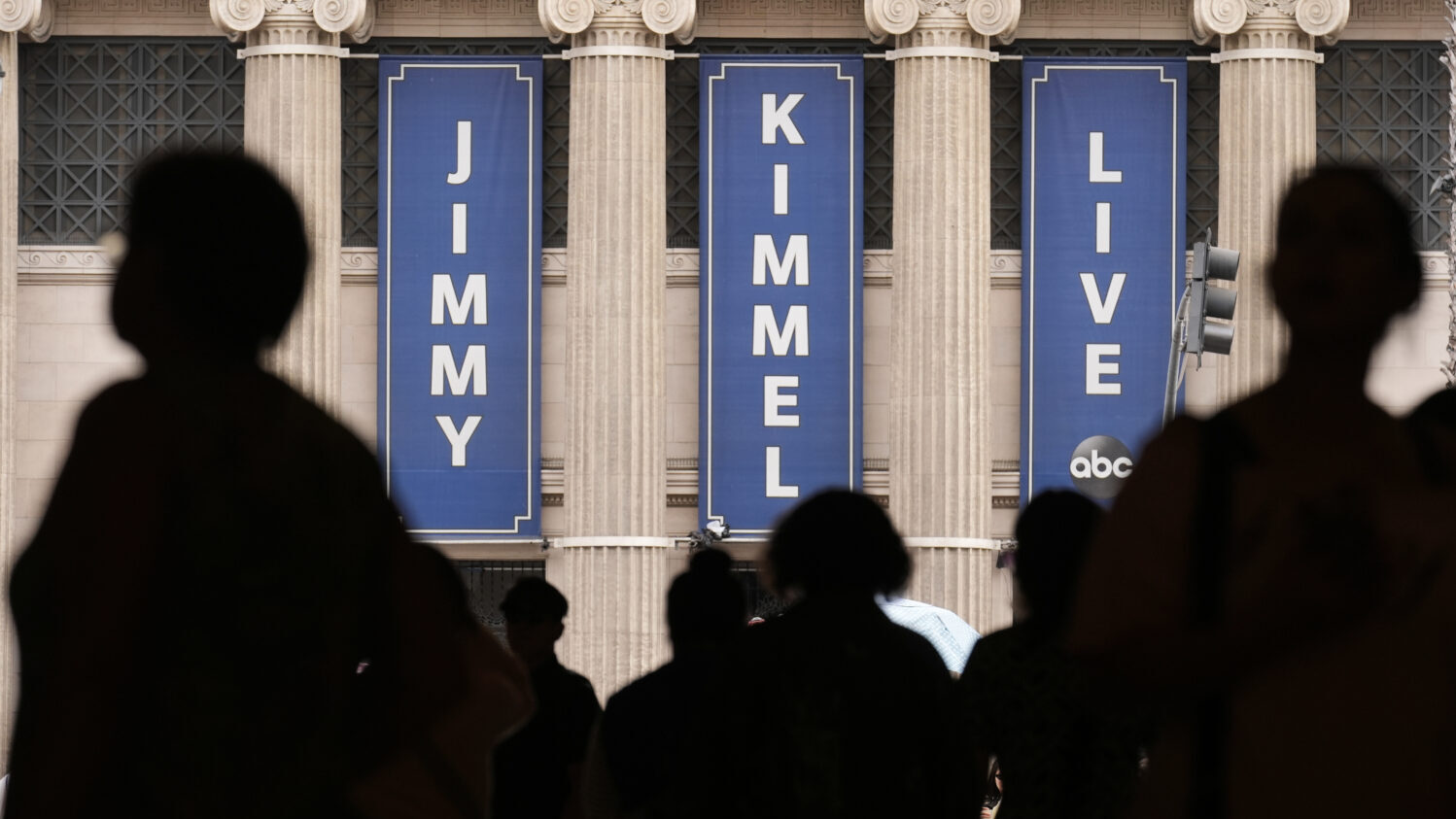
Utah communications professors weigh in on FCC's responsibilities in light of the Jimmy Kimmel Live situation. (Chris Pizzello/Associated Press)
(Chris Pizzello/Associated Press)

SALT LAKE CITY — On Thursday, President Donald Trump said that “maybe” the FCC should come for networks that are critical of him. It’s the latest development in a chain of events that has some communications experts concerned about government censorship.
“I read someplace that the networks were 97% against me. 97% negative,” President Trump said aboard Air Force One. “I mean, they’re getting a license. I would think maybe their licenses should be taken away.”
President Trump said that the decision would be up to FCC Commissioner Brendan Carr. Carr is the man who threatened to take action against ABC over Jimmy Kimmel’s comments about the murder suspect in the Charlie Kirk case.
“We hit some new lows over the weekend with the MAGA gang desperately trying to characterize this kid who murdered Charlie Kirk as anything other than one of them and doing everything they can to score political points from it,” Kimmel said.
Soon after, Carr appeared on “The Benny Show” and told podcaster Benny Johnson there would be repercussions for Kimmel’s implication, which he said was a lie to the American public.
“Look, we can do this the easy way or the hard way,” Carr said. “These companies can find ways to change conduct, to take action, frankly, on Kimmel, or, you know, there’s going to be additional work for the FCC ahead.”
Hours later, Kimmel’s late-night show was “preempted indefinitely” by ABC.
‘It’s not what the FCC is supposed to be doing’
Dr. David Vergobbi, an associate professor of communications at the University of Utah, said the FCC did not actually pull ABC’s license. Rather, he said the agency just implied retribution.
He said that while the FCC regulates a lot of what can and cannot go on the air, it cannot make decisions based on what people express in the content they broadcast.
“It’s not what the FCC is supposed to be doing,” Vergobbi said. “Content is not a deciding factor, and that’s, of course, exactly what the issue seems to be.”
The FCC is a government entity. On its website, the agency has written that it is “barred by law from trying to prevent the broadcast of any point of view.” However, it is empowered to do what is best for the public interest.
“What people don’t understand is that the broadcasters … are entirely different than people that use other forms of communication. They have a license granted by us at the FCC, and that comes with an obligation to operate in the public interest,” Carr explained.
Vergobbi said that ‘what is in service of the public interest’ is up to interpretation.
“You can have your license as long as it’s being used in the public’s interest,” Vergobbi said. “But who decides what’s public interest is really at issue, and that’s something we should be paying attention to.”
Role of the modern FCC
BYU Communications Professor and attorney Dr. Ed Carter said the role of the modern FCC is based on the Communications Act of 1934, when Congress mandated that the FCC would regulate the broadcast airwaves in the public interest, convenience and necessity.
“That’s really the regulatory mandate — to serve the public interest,” Carter said. “(It’s) not to serve a political agenda, or silence critics of the White House, or anything like that.”
This all comes while Nexstar, which owns many of ABC’s local TV stations, is waiting on the FCC to approve its merger with TEGNA. Vergobbi said this may be a factor in this equation.
“The chair of the FCC made organizational entities who are trying to do business with mergers be more concerned with not doing anything that might upset the FCC when it’s voting,” Vergobbi explained.
Nexstar has been asking the FCC to relax its ownership limits and approve its merger, so it can own the lion’s share of local stations. Currently, there is a 39% cap, meaning a single company cannot own TV stations that reach more than 39% of U.S. households. If the merger succeeds, they would reach 80% of U.S. households.
Carter explained that legal action or license revocation did not happen in this case. In his opinion, it was corporate pressure that influenced the decision.
“Even without actual former legal action by the FCC … the administration can put its thumb on the scale in such a way to impact corporate decision making,” Carter said. “Clearly, we have a White House that’s interested in going after perceived critics or political opponents and putting pressure on corporate owners to silence those folks.”
Contributing: Joe Wirthlin