Utah autism community responds to Trump’s statements about Tylenol, autism
Sep 22, 2025, 8:00 PM

FILE: Kids play in a bounce house at Success On The Spectrum’s Autism Play Day, a free event for American Fork families intended to create a safe and inclusive space for children with autism, at Success On The Spectrum in American Fork on Saturday, Oct. 7, 2023. (Megan Nielsen, Deseret News)
(Megan Nielsen, Deseret News)
SALT LAKE CITY — On Monday, President Donald Trump said that the Food and Drug Administration will soon tell doctors that using acetaminophen can be associated with an increased risk of autism. And he warned women not to take acetaminophen, widely known as Tylenol, at any time during pregnancy.
The announcement came right on schedule, as health secretary Robert F. Kennedy, Jr., earlier this year, committed to finding a cause for autism by this month.
There has been a rise in the number of children diagnosed with autism in the United States. In 2000, The National Institutes of Health published data showing that 6.7 out of every 1,000 children had received a diagnosis of autism. The CDC reports that, by April 2025, one in 31 children, or approximately 32.2 out of every 1,000, were diagnosed with autism spectrum disorder.
What’s behind the jump in autism diagnoses? Some say more people are aware of autism. Others point to the broader definition of autism, and the relatively new name, autism spectrum disorder, as adding to the increased number of diagnoses.
Research also points to genetics and advanced maternal age as other possible reasons for the increase.
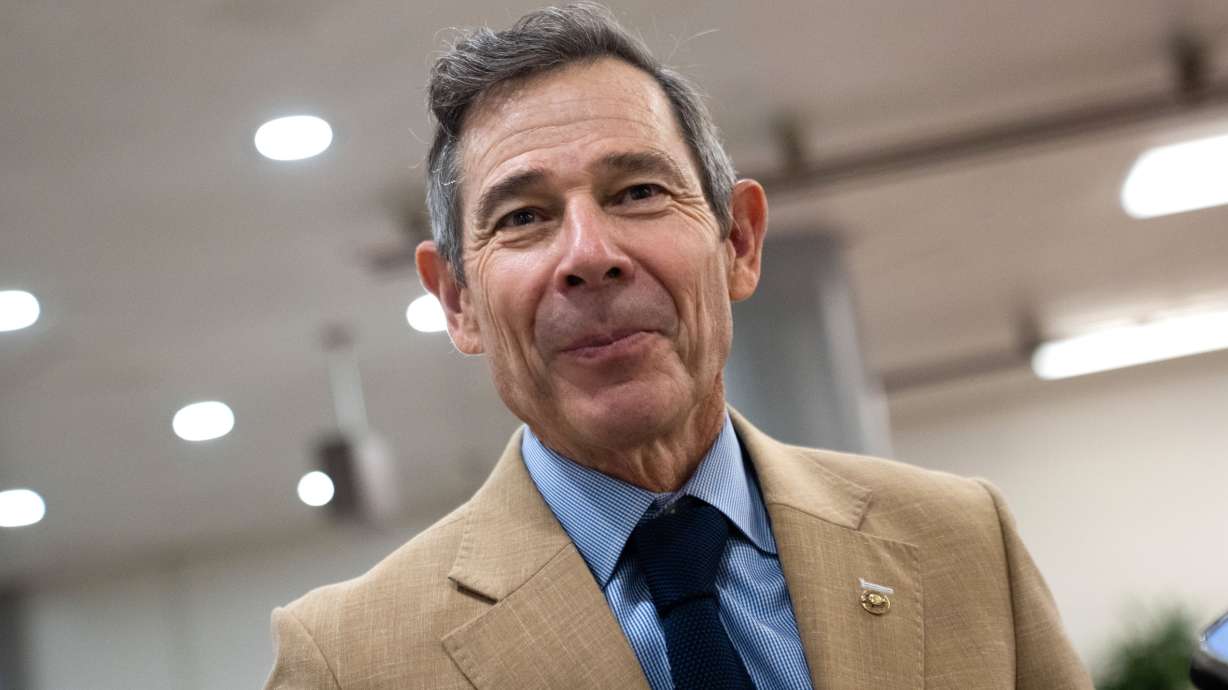
On the same day the announcement was made, KSL NewsRadio spoke with Dr. Richard Ferguson, President of Black Physicians of Utah , and Calleen Kenney, a member of the leadership council for the Autism Council of Utah.
Below, we have included a partial transcript of each interview as well as a link to the podcast which features the entire program.
HOST MARIA SHILAOS: How is the scientific community responding? Is there evidence to support this hypothesis?
PRESIDENT OF THE BLACK PHYSICIANS OF UTAH, DR. RICHARD FERGUSON: I can sort of understand what little fringe evidence, or, should I say, observational studies, is being used to support this hypothesis. It’s just unfortunate that this is being done on a national scale that is going to cause people to lose possible trust in medicine, because I feel this is a form of misinformation. This is actually already been explored, even recently, in very large studies. It’s going to cause the jobs for us, as physicians, to be that much harder.
SHILAOS: Is there a danger in telling [pregnant women] they shouldn’t use Tylenol?
‘One of the safest medications out there’
FERGUSON: It’s one of the safest medications out there. There is no scientific literature beyond a small association in two really small studies that were highly susceptible to confounding factors (genetics and environmental influences) that are probably more causal to an outcome of a birth, such as infection or fever, than actually the drug itself.
Trust your physicians. We go to medical school. We are not taught opinion. We do not take one small study and use that as some form of medical law. That is not how medicine is done.
SHILAOS: In addition to today’s announcement on the cause of autism, the White House is also expected to announce what they are calling a cure for autism. They say that a form of vitamin B, sometimes used to treat deficiency caused by chemotherapy, could help end autism. Colleen Kenney is on the Leadership Council for the Autism Council of Utah, and is the mother of an autistic child. She said she’s torn by the announcement.
COLLEEN KENNEY, LEADERSHIP COUNCIL MEMBER, AUTISM COUNCIL OF UTAH: I love that they’re talking about it. That’s important, but I think that they’re bringing up really old information that’s been researched. It seems like we’re rehashing things we’ve already spent time and money on.
SHILAOS: You said that you’re at least happy we’re talking about it. But are you happy about the way the conversations going?
KENNEY: No, I’m really disappointed. It’s really sad to see such a negative light put on our families.
SHILAOS: For those that don’t understand, explain why this is so negative.
‘My daughter doesn’t need to be fixed’
KENNEY: My daughter is 27, years old now, and a big part of my life is trying to help her maintain dignity in our community and helping the community learn how to better — I don’t know, include her, as opposed to making her feel like she needs to be fixed.
SHILAOS: I think that’s something that many people just would not understand. They would think, hey, but don’t you want a cure?
KENNEY: I don’t. I want help and support. I mean, cures are for the things and maybe some of the symptoms, again, that affect her more profoundly, but not for her other abilities in and of itself.
SHILAOS: What would you rather see happen at this point?
KENNEY: Looking into what could support individuals. I understand we want to help future generations, that there’s families that need help now. Those are the kinds of things I wish that we were we were researching a little bit more as well.