New report outlines the crisis on the Colorado River and the ongoing threats
Dec 16, 2025, 2:07 PM | Updated: Dec 17, 2025, 2:20 pm
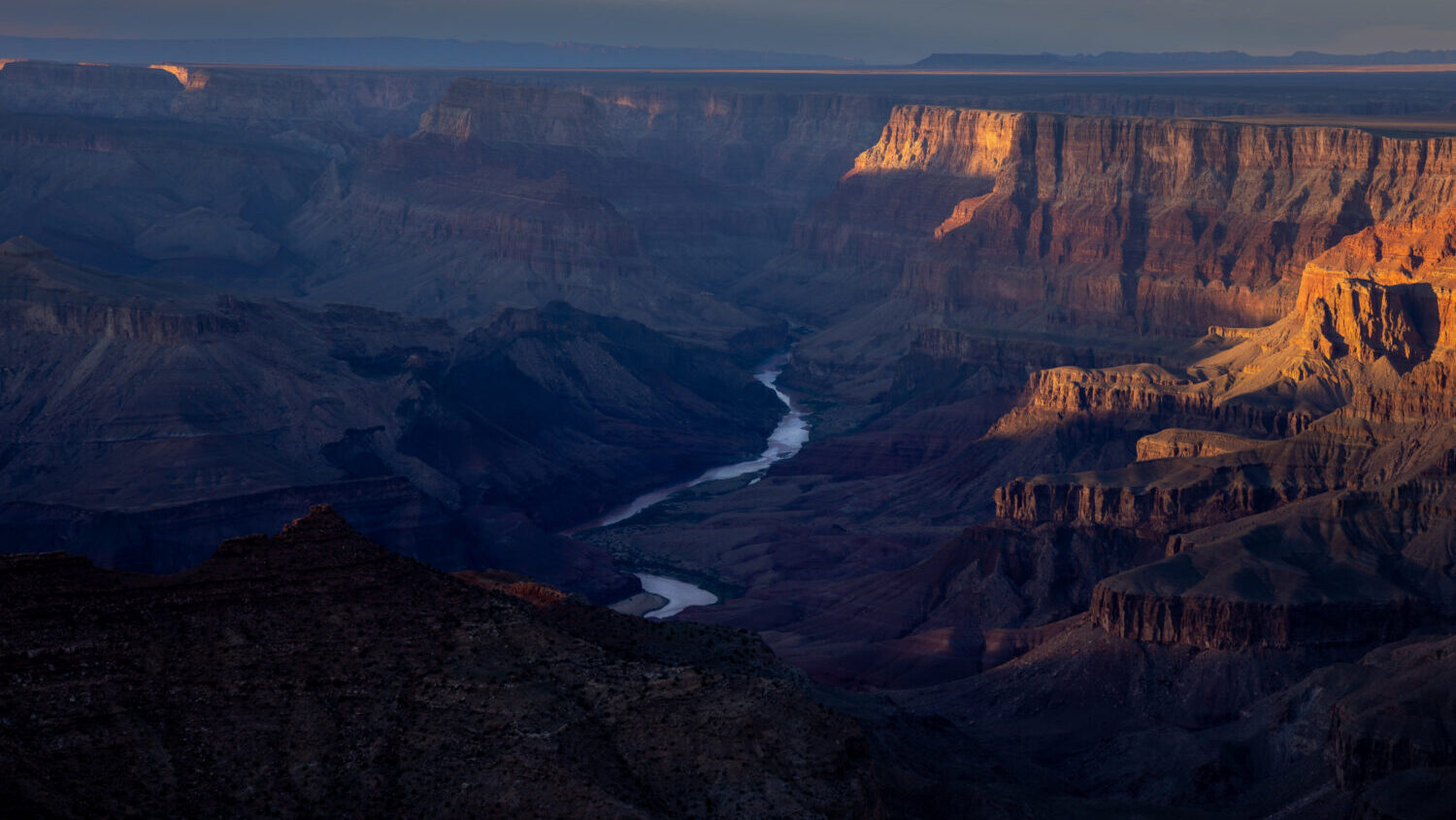
The Colorado River is visible flowing through the Grand Canyon as seen from the south rim of Grand Canyon National Park in Arizona on Monday, Oct. 10, 2022. (Spenser Heaps, Deseret News)
(Spenser Heaps, Deseret News)

A new report from Colorado Law’s Colorado River Research Group warns the Colorado River Basin is “out of time,” describing conditions so severe they threaten the region’s water supply, economy and governance.
Called “Colorado River Insights 2025: Dancing with Deadpool,” the report details a dire assessment of the basin’s worsening crisis and offers options for reform.
According to the report, reservoirs that once stored four years of river flows are now more than two-thirds empty.
The authors note a single dry year or two could push Lake Powell and Lake Mead below critical thresholds, jeopardizing hydropower, water deliveries, and even physical conveyance downstream. The report concludes that current operating rules through 2026 are unlikely to prevent this scenario.
“This report underscores that the basin is out of time, the crisis is no longer theoretical,” said Douglas Kenney, director of the Western Water Policy Program of the Getches-Wilkinson Center at the University of Colorado Law School and chair of the Colorado River Research Group.
“Post-2026 negotiations must produce durable, equitable, climate-realistic solutions — and they must do so urgently. The message is stark: the Colorado River system is now dancing with Deadpool.”
Among the key challenges:
- Severe shortage risk: The authors warn that if the next two winters are dry, combined usable storage in Powell and Mead could fall below 4 million acre-feet — far short of what’s needed for water supply and compact obligations.
- Climate-driven decline: Rising temperatures, shrinking snowpack efficiency and ocean-atmosphere interactions are reducing runoff and precipitation.
- Safety nets collapsing: Groundwater reserves are rapidly depleting, while federal capacity — funding, staffing and science programs — are eroding. Interstate cooperation is fraying, and litigation may be on the table.
Authors stress that many challenges are self-inflicted and, in their view, solvable with technical, legal and financial tools already available.
“What’s missing is urgency,” Kenney said. “The window for decisive, collaborative action is closing fast.”
The report notes that the vast challenges are straining the relationships among the seven basin states that include Utah, Colorado, Wyoming, New Mexico, Arizona, California, Nevada as well as the 30 federally recognized tribes served by the river and the country of Mexico.
At Glen Canyon Dam at Lake Powell, power generation is under threat because of the diminished lake levels.
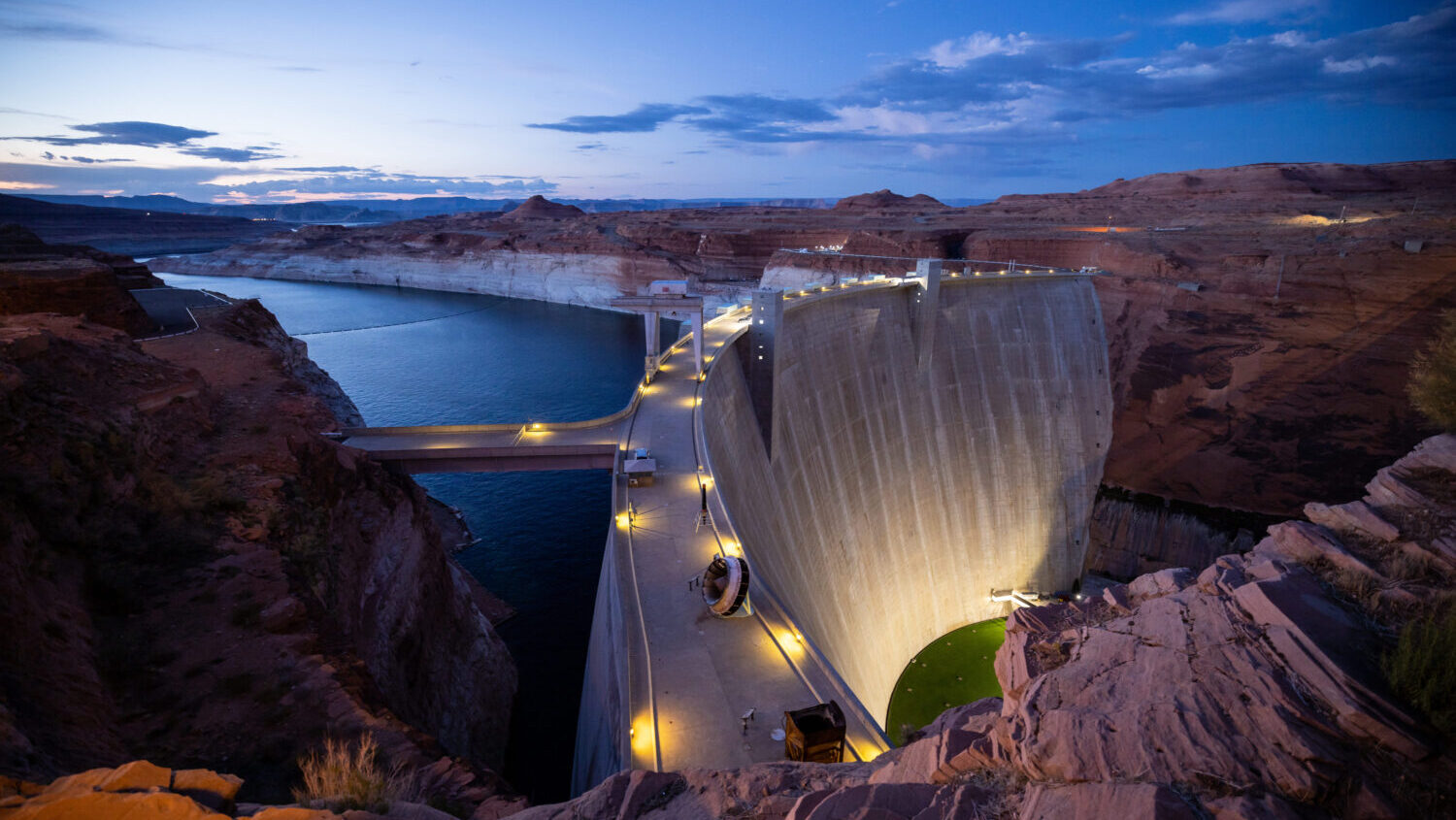
Glen Canyon Dam holds back Lake Powell in Page, Ariz., on Monday, July 18, 2022. (Spenser Heaps, Deseret News)
Each year, the Western Area Power Administration transmits around 25,000 gigawatt hours of electricity across its more than 17,000 circuit mile transmission system.
This power comes from 57 hydropower plants operated by the Bureau of Reclamation, U.S. Army Corps of Engineers and the International Boundary and Water Commission. Together, these power plants have an installed capacity of more than 10 gigawatts.
The administration has a $1.4 billion operational budget derived from power and transmission rates, with no impact to taxpayers.
Related: Is power generation at risk?
“… The tradition of collaborative crisis management among the seven basin states may have reached its breaking point, as the ongoing (environmental review) process for developing post-2026 rules has made it increasingly clear that finding truly sustainable solutions is both an exceptionally difficult challenge and is one that can no longer be kicked down the road,” it said.
The decline of the river
The basin’s reservoirs were nearly full in late summer 1999, acting as a buffer against dry years and serving their fundamental purpose.
At that time, the 46 Colorado River Basin reservoirs tracked by the Bureau of Reclamation in its hydro database held 59.5 million acre feet in active storage, more than four times the basin’s average consumptive uses and losses in the 1990s.
Beginning in 2000, five years of below average runoff resulted in a 46% reduction in storage in the basin’s reservoirs.
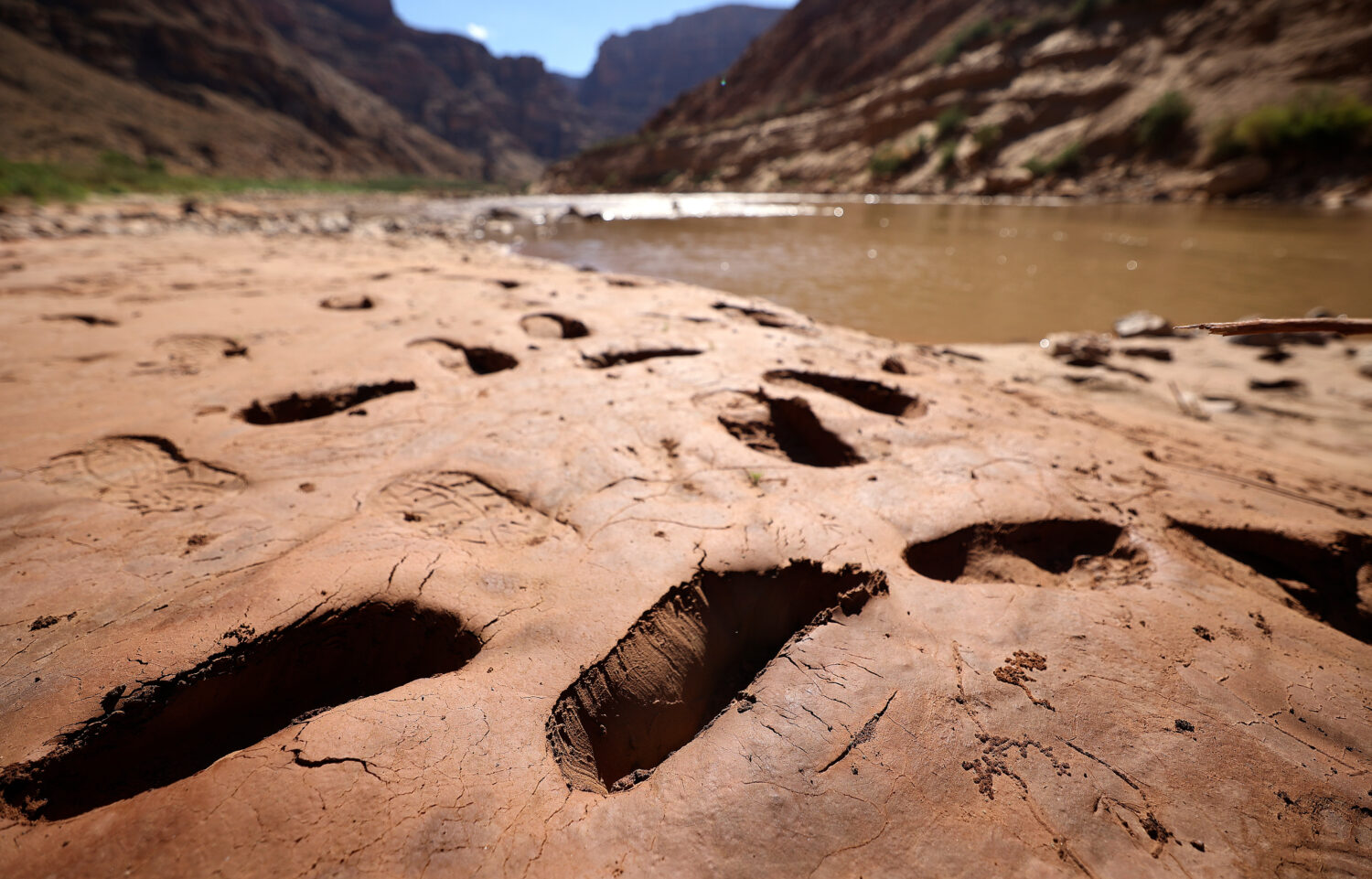
Footprints where people have sunk into mud are pictured above Gypsum Canyon rapid in Cataract Canyon on the banks of the Colorado River on Friday, Sept. 20, 2024. (Kristin Murphy, Deseret News)
Could water cuts be on the table for the Upper Basin?
“It is obvious that any long-term agreement for future Colorado River operations among the basin states should be evaluated based on its immediate ability to reverse the storage declines experienced in recent years and anticipated in the future under similar hydrology. An agreement that does not reliably balance supply with uses and losses is not sustainable,” the report said.
Related: Challenges in the basin
It asserts permanent reductions in consumptive use are both necessary and also the most productive use of limited funding. In addition, to be effective, changes to state law in some Upper Basin states may be necessary, including recognition of water conservation as a beneficial use for the purpose of avoiding litigation over the compact.
Additionally it goes on to say that a mechanism to help the river would be a reduction in consumptive water use in Upper Basin states’ federal projects.
That scenario is likely to make the four Upper Basin states bristle with objection, since the Upper Basin has never failed to meet its obligation to deliver 7.5 million acre feet to its Lower Basin partners. In some years, the Upper Basin has delivered more water than its obligation under the compact.
Related: Behind the compact
The river is often described as the “workhorse of the West,” serving more than 40 million people in an economy worth in excess of $1.4 trillion.
The report was released Monday during a week when the Colorado River Water Users Association is meeting in Las Vegas to discuss challenges facing the 1,450-mile long river.
Many of the participants include nongovernmental organizations such as The Nature Conservancy, the Theodore Roosevelt Conservation Partnership, as well as water law experts.
The Monday report was published by the Getches-Wilkinson Center for Natural Resources, Energy, and the Environment at the University of Colorado Law School, a nationally recognized leader in western water and natural resource policy.
Other reading: Santa makes special visit to NICU at Ogden Regional Medical Center
(Amy Joi has worked at the Deseret News for 25 years and for 14 years has devoted her coverage to the environment, agriculture and energy issues facing the West.)