A.I. voice clone could be used in decades old murder case
Dec 18, 2025, 6:00 AM
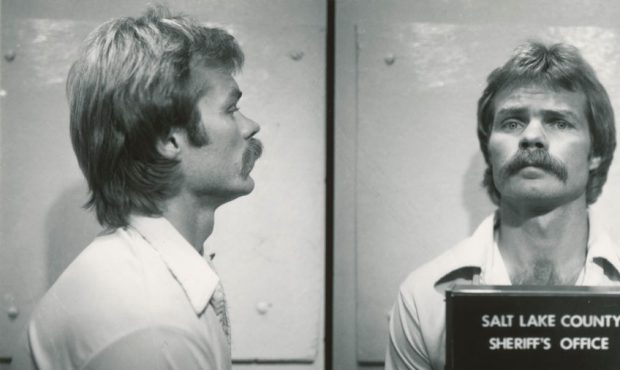
Douglas Anderson Lovell’s July 8-9, 1985 booking photo following his arrest on a warrant for felony possession of a stolen vehicle. (Salt Lake County Jail)
(Salt Lake County Jail)
FARMINGTON — Weber County prosecutors are seeking to make history by using AI to bring a murder victim’s voice to a jury next year. It’s the latest twist in the long and complicated death penalty case rising from the August 1985 murder of Joyce Yost.
The man who killed Yost, Douglas Anderson Lovell, has twice been sentenced to death for the crime and twice had that sentence overturned by the Utah Supreme Court. He’s scheduled to face a jury again in late summer 2026, where he could potentially receive a death sentence for the third time.
Read more: Humanoid robots take center stage at Silicon Valley summit, but skepticism remains
In court today, Weber County prosecutor Branden Miles demonstrated how his team created an AI clone of Yost’s voice, using an audio tape of a 40-year-old police interview and a text transcript of Yost’s sworn testimony from a preliminary hearing.
The judge overseeing the case did not immediately rule on whether he’d allow the AI voice. Lovell’s defense team also said they wanted more information on how the voice clone was created.
“This is the first time this has been proposed in any state, anywhere in the country, so this is brand new,” defense attorney David Ferguson said.
Joyce Yost voice clone
Prosecutors built the AI voice clone using Elevenlabs, an online service that allows users to create realistic replicas of actual people’s voices. Elevenlabs requires sample audio in order to generate a clone. Once the clone is created, a user can input text which the AI model will synthesize into audible speech, closely mimicking the tone and cadence of the reference recordings.
On the witness stand, Weber County Attorney’s Office Victim Witness Coordinator Jamie Pitt described feeding 12 clips from a police interview recording of Yost into Elevenlabs’ software to build the voice clone.
Utah 2nd District Judge Michael DiReda asked Pitt whether the output from the AI voice clone allows for inflections. When she responded in the affirmative, he posed a follow-up question.
“How does this program tease out emotion where it doesn’t know what her emotion would’ve been at the time that she testified,” DiReda asked.
Pitt said the method Weber County used to generate the AI voice simply reads the text in a flat tone, without embellishment.
However, KSL created its own Elevenlabs AI clone of Yost’s voice, using the same source recordings and reading the same text transcript. The software does allow a user to add tags to the prompt, which can lead to different emotive effects in the output.
Lovell’s defense team has not yet filed a formal motion opposing the use of the AI voice clone. His lawyers signaled strong skepticism of the approach during the hearing. They expressed a desire for more information about what specific prompts Weber County used, and whether other competing AI text-to-audio services might generate significantly different outputs.
Judge DiReda scheduled a follow-up hearing for February 27 to discuss those issues.
History of the Joyce Yost case
The Joyce Yost case is the subject of season 2 of KSL’s investigative podcast series COLD.
It began in April of 1985, when Lovell followed Yost home from a restaurant in Clearfield called the Pier 3. Lovell attacked Yost as she sat in her own car outside her apartment, then abducted and sexually assaulted her.
Over the next several hours, Yost managed to gain Lovell’s trust. She ultimately convinced him to release her, then reported what he’d done to police. A Clearfield detective interviewed Yost the morning following the assault.
That same detective identified and arrested Lovell a short time later. Davis County prosecutors charged Lovell with rape. At a preliminary hearing the following June, Yost took the witness stand and described the events of the attack.
The case was scheduled for trial in August of 1985. Lovell was ordered to remain in custody ahead of the trial, but through a series of oversights and errors he was released from jail without police, prosecutors or Yost herself realizing it.
On August 10, 1985, 10 days prior to the trial, Lovell broke into Yost’s apartment and murdered her. He later admitted to taking her body to a place in the mountains east of Ogden, before asking his wife to help him discard of Yost’s car and other evidence.
Lovell expected the rape case would be dismissed once the victim went missing. However, prosecutors proceeded with the trial, introducing Yost’s sworn testimony from the preliminary hearing as evidence. A jury convicted Lovell and the judge sentenced him to prison.
Douglas Lovell murder charge
South Ogden police investigating Yost’s disappearance suspected Lovell was responsible, but they lacked physical evidence, such as Yost’s body, that could link Lovell to the crime.
It wasn’t until Lovell’s wife, Rhonda Buttars, divorced Lovell and confessed her role in covering up Yost’s murder that Weber County prosecutors were able to secure criminal charges against him.
They filed a capital murder case in 1992, and in 1993 Lovell accepted a plea deal to try and avoid the death penalty. He promised to lead police to Yost’s remains, in exchange for a sentence of life in prison.
Lovell pointed detectives to a location alongside the Old Snowbasin Road south of Pineview Reservoir. Weeks of searches during the summer of 1993 failed to turn up any of Yost’s remains there, or any evidence of a clandestine grave. Because he’d failed to return Yost’s body as promise, the judge sentenced Lovell to death.
However, years later the Utah Supreme Court determined the trial court judge made a technical error when advising Lovell of his rights. The high court justices allowed Lovell to withdraw his guilty plea to Yost’s murder, setting the stage for a trial in 2015.
Lovell’s 2015 trial
At trial in 2015, Lovell’s defense team opted to concede his guilt to Yost’s murder. His attorneys attempted to convince the jury Lovell had reformed during 30 years in custody, making him deserving of a sentence of life in prison with the chance for parole.
The jury instead opted to sentence Lovell to death, finding that the aggravating factors behind the crime, which included the fact he killed Yost to prevent her from testifying against him, outweighed evidence presented about his good behavior during the decades since.
Lovell appealed the sentence, arguing his trial defense lawyers failed to properly object to testimony about his excommunication from The Church of Jesus Christ of Latter-day Saints, and questioning from one of the prosecutors about Latter-day Saint views on capital punishment.
The Utah Supreme Court issued a decision in July 2024 siding with Lovell, finding that the religious testimony could have improperly influenced the jury’s decision.
Read more: Fighter jets to fast sleds: Weber State advanced materials lab could give USA sleds the edge