Arches gets nod as dark park
Jul 5, 2019, 5:30 PM | Updated: 5:43 pm
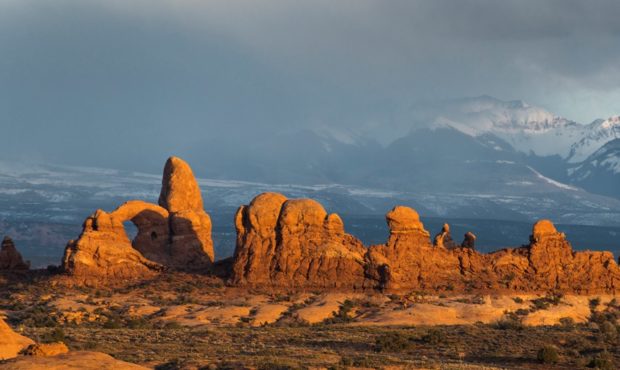
Source: Flickr

For protecting and sharing its natural darkness and the quality of its night skies, Arches National Park in Utah has received certification as an International Dark Sky Park from the National Park Service and the International Dark-Sky Association.
Park rangers will host a ceremony and star party on Sept. 21 at the Panorama Point stargazing area within the park. Details about the event are upcoming, according to a Southeast Utah Group news announcement.
Rangers have led regular astronomy programs and special events at Arches since at least 2012.
“The certification for Arches is the culmination of more than 10 years’ effort to preserve and share dark night skies in southeast Utah,” said superintendent Kate Cannon of the Southeast Utah Group.
National Park Service’s Southeast Utah Group comprises Arches, Canyonlands National Park, and Hovenweep and Natural Bridges national monuments, all of which have received International Dark Sky Park certifications in recent years. In 2007, Natural Bridges National Monument was certified as the world’s first international dark sky park.
Natural Bridges National Monument, in the sparsely populated southeastern corner of Utah, is famous for the second-largest natural bridge in the world. It is also notable for its almost perfect lack of light pollution.
Arches staffers have revamped and replaced lights with fully-shielded bulbs. Nearly 100 percent of the park’s lights are now “night-sky friendly,” which means they meet the recommendations by the International Dark-Sky Association to minimize glare and the amount of blue light emitted at night.
Arches staff has worked closely with the Colorado Dark Sky Cooperative and Moab Dark Skies to engage the city of Moab and Grand County in an effort to preserve naturally dark skies.
Arches is bordered by the Colorado River in the southeast and is known as the site of more than 2,000 natural sandstone arches, the largest concentration of natural stone arches in the world.
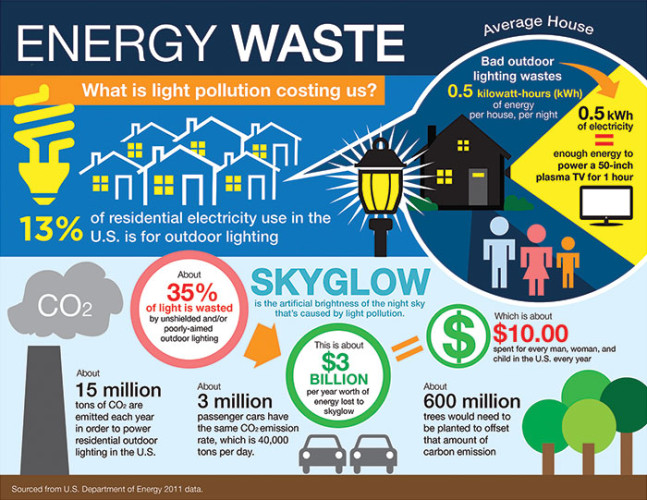
Light pollution’s harmful effects
More than 80% of the world and more than 99% of the U.S. and European populations live under light-polluted skies, according to the journal Science Advances.
Darksky.org includes the following as light pollution’s components:
- Glare – excessive brightness that causes visual discomfort
- Skyglow – brightening of the night sky over inhabited areas
- Light trespass – light falling where it is not intended or needed
- Clutter – bright, confusing and excessive groupings of light sources
Because of light pollution, only a handful of the 5,000 stars visible in the unaltered night sky can be seen in most populated places.
Nighttime exposure to artificial light suppresses melatonin, which is a hormone produced in our bodies in response to circadian rhythms.
Circadian rhythms are important in determining the sleeping and feeding patterns of all animals, including humans.
Humans and most life on Earth adhere to a circadian rhythm — a sleep-wake pattern governed by the day-night cycle, which can be disrupted by artificial light at night (ALAN).
Melatonin contains antioxidant properties, induces sleep, boosts the immune system, lowers cholesterol, and helps the thyroid, pancreas, ovaries, testes and adrenal glands.
Plants and animals depend on Earth’s daily cycle of light-and-dark rhythm to govern life-sustaining behaviors such as reproduction, nourishment, sleep and protection from predators.
“Predators use light to hunt… prey species use darkness as cover,” says research scientist Christopher Kyba. “Near cities, cloudy skies are now hundreds, or even thousands of times brighter than they were 200 years ago. We are only beginning to learn what a drastic effect this has had on nocturnal ecology.”
Research suggests ALAN can increase risks for obesity, depression, sleep disorders, diabetes, breast cancer and more.
“Both prostate and breast cancer were associated with high estimated exposure to outdoor ALAN in the blue-enriched light spectrum.” Compared to the control group, participants exposed to higher levels of blue light had 1.5x higher risk of developing breast cancer and a 2x higher risk of developing prostate cancer, according to a study published in Environmental Health Perspectives.
Exposure to blue light at night is particularly harmful. Unfortunately, most LEDs used for outdoor lighting — as well as computer screens, TVs and other electronic displays — create blue light.
Scientific evidence suggests that ALAN has negative and deadly effects on many creatures including amphibians, birds, mammals, insects and plants.
Sea turtles live in the ocean but hatch at night on the beach. Hatchlings find the sea by detecting the bright horizon over the ocean. Artificial lights draw them away from the ocean. In Florida, millions of hatchlings die this way every year.
Doesn’t deter crime
A 2015 study published in the Journal of Epidemiology and Community Health found that streetlights don’t prevent accidents or crime, but they do cost a lot of money.
The researchers looked at data on road traffic collisions and crime in 62 authorities in England and Wales and found that lighting had no effect, whether it had been turned them off completely, dimmed, turned off at certain hours, or substituted by low-power LED lamps.