ELECTIONS, POLITICS, & GOVERNMENT
As tensions rise overseas, Utah veteran says uncertainty weighs heavily on military families
Mar 2, 2026, 5:00 PM | Updated: 5:09 pm
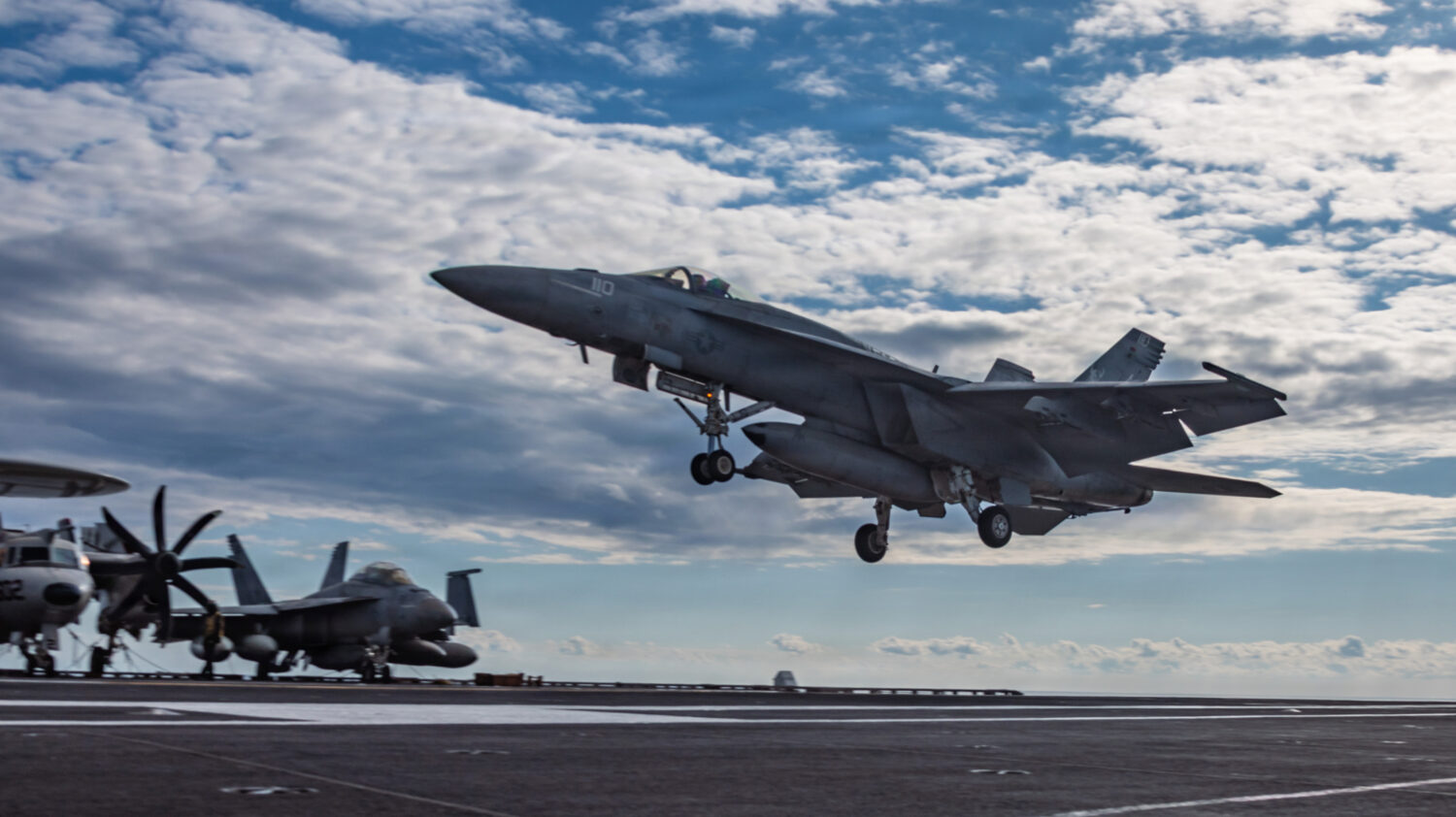
This image provided by U.S. Central Command shows a F/A-18E Super Hornet landing on the USS Gerald R. Ford (CVN 78) in support of Operation Epic Fury, on Sunday, March 1, 2026. (U.S. Navy via AP)
(U.S. Navy via AP)
SALT LAKE CITY — As tensions escalate overseas, a Utah Air Force veteran said the impact of global conflict is felt long before any official deployment orders — especially by the families waiting at home.
Kimberly Chatto, who served more than 11 years as an Air Force officer, said headlines about rising conflict immediately bring to mind the young men and women currently serving, and the uncertainty they and their families face.
“There’s a level of uncertainty when you’re watching the news unfold and trying to figure out what that means,” Chatto said. “Whether it’s deployment, longer hours or added stress on your family.”
Chatto began her military career as a nuclear combat crew commander focused on deterrence and defense, later serving as a public affairs officer supporting special operations. She said that background shapes how she processes news of conflict.
“I immediately start thinking about the service members,” she said. “No matter how many years you have in, there’s always uncertainty when things start unfolding.”
But she emphasized that uncertainty does not stop with those in uniform.
View this post on Instagram
Chatto has experienced military life from multiple perspectives — as the daughter of a Navy service member, as a military spouse and as a service member herself. She is also a mother.
“I’ve covered every different perspective there is,” she said. “And it’s different every single time.”
As a child, she remembers her father missing birthdays while deployed. Later, as a parent serving overseas herself, she experienced the weight of missing daily life with her own children during a two-year unaccompanied assignment in South Korea.
“There are moments where whatever boxing of your mental thoughts you’ve done, it slips a bit,” she said. “And you’re like, ‘Wow — this is really hard.’”
She said service members often learn to compartmentalize in order to stay mission-focused.
“We did volunteer to serve,” she said. “There’s an aspect of this where you believe in the cause. But that doesn’t mean it isn’t difficult.”
For families, she said, the emotional toll can sometimes be just as challenging as physical separation.
Spouses often focus on what they can control — maintaining routines, counting down days and sending letters or care packages. But unanswered questions and shifting global events can weigh heavily.
“You’re just trying to do the next right thing,” Chatto said.
She also cautioned families against relying on social media for clarity during uncertain times.
“You’re not going to find your answers on social media,” she said. “You’re going to see a lot of opinions and feelings, but that doesn’t give you a guided plan for how this will impact your family.”
Instead, she encourages military families to focus on preparation and communication — having conversations ahead of time about plans if deployment or extended hours become necessary.
Installations like Hill Air Force Base offer resources including military family readiness centers, chaplains and confidential counseling services. Military and Family Life Counselors, known as MFLACs, are also often available to support children in local school districts.
Utah is also home to several veteran-focused organizations, she noted, that provide community support.
“Don’t be afraid to ask for help,” Chatto said. “You don’t have to struggle in silence or by yourself.”
She said one of the strengths of Utah’s military and civilian communities is a willingness to step in when families need assistance.
“There are so many people who genuinely care about your well-being,” she said. “Especially in this state.”
As global events continue to unfold, Chatto said she hopes people remember that behind every headline are families managing uncertainty quietly at home.
“When tensions rise overseas,” she said, “there’s a ripple effect that reaches families here long before anyone sees it.”
Related: U.S. military says three service members have been killed, five seriously wounded in the Iran operation