ELECTIONS, POLITICS, & GOVERNMENT
Bridging Political Divides: How faith can help find common ground
Apr 5, 2026, 1:00 PM | Updated: 2:07 pm
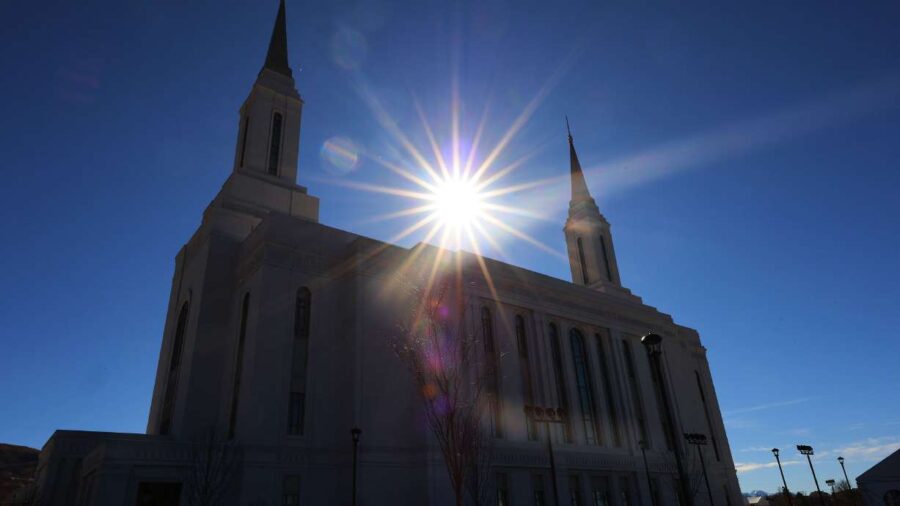
The sun shines above the new Lindon, Utah Temple of the Church of Jesus Christ of Latter-day Saints. (Jeffrey D. Allred, Deseret News)
(Jeffrey D. Allred, Deseret News)
SALT LAKE CITY — About 80% of American adults believe our political divides run so deep that we cannot even agree on basic facts, according to the Pew Research Center.
But some Utah leaders say faith is helping them to find the common ground needed to bridge those political divides and find a new path forward.
KSL NewsRadio’s Amanda Dickson sat down with three such leaders to find out how their faith and politics intersect.
Faith key to bridging political divides
Francine Giani, former director of the Utah Department of Commerce, said finding compromise helps when tensions run high.
“I feel like compromise is the best way to deal with (political disagreements),” Giani said. “I think it’s important to see people the way God sees them, and that’s always — that’s hard. So that’s a learning kind of thing that you have to do, but I feel I left with my integrity intact and that’s a good thing.”
Rep. Verona Mauga, D-Taylorsville, also said it helps to see others through a lens of faith.
“The one thing I do know is that I’m a child of God, I’m a daughter of a loving heavenly father. And so that means the conversations I’m having, even with the people who I disagree with, those are my brothers and sisters,” Mauga said. “Just know that that’s the reality, it helps me when I’m having conversations and it helps me to show up as someone who’s going to listen and want to understand.”
Rep. Anthony Loubet, R-Kearns, shared a common perspective from the other side of the political aisle.
“We’re all children of God,” he said. “Even though we might have different views, we’re still entitled to dignity and respect. And so when I’m talking to people, I try to have that perspective of, ‘What is it that this person is trying to communicate to me? What is it they’re trying to accomplish? And is it something that we can share in that?'”
Constant negativity and bullying hard to navigate
Loubet, Mauga and Giani agreed that political bullying plays a part in keeping the ideological divides wide and deep.
“Negative sells, right?” Giani said. “When I went to school and graduated in communications, I mean, those are some of the things we talked about. Negative tends to sell. People tend to pay more attention (to that),”
Mauga pointed out that news coverage tends to lean into negativity, using the recently ended legislative session as an example.
“There’s a lot of (media) attention on those instances (of negativity) — on bullying, on people who are being mean, on what you’d call ‘the bad bills.’ But there’s actually some really good legislation out there that’s just not getting the attention, and I think if we can start to refocus our energy on some of these things, we can start removing some of that bullying that we’re seeing,” Mauga said.
Related: The intersection of faith and technology
Loubet said in an era where many people get their news from the echo chamber of social media, the solution needs to be similarly complex.
“I think that it’s going to be a very multifaceted approach,” Loubet said. “I know during the legislative session, and even since the legislative session, I’ll get text messages from people that are angry about something that occurred whether or not I actually voted for or against it. They just assume a certain narrative.”
When faith hurts instead of helping
Mauga said she finds it troubling when people use phrases like “What Would Jesus Do?” as more of an attack.
“That’s the complete opposite of what faith means, Mauga said. “We’re flipping things for our own needs, our own desires. But if you really look at what Jesus would do or what faith actually means — faith is bringing people together, not dividing people.”
Loubet said using “What Would Jesus Do?” as a shaming tactic misses the point of the question.
“I think we need to be more like Jesus. And being more like Jesus is to forgive those who may do something against us. I mean, that’s – he was the ultimate example,” Loubet added. “And, you know, even as he hung on the cross, he forgave those that did that to him.”
The power of prayer
All three panelists stressed the importance of prayer in bridging political divides, starting with themselves.
“I have to tell you, our Founding Fathers believed in prayer,” Giani said. “You know, life is chaotic, and without prayer, without turning to our Heavenly Father and asking for his help, I got to tell you, it would be an awful life for me. And I know that sometimes when things are really tough is when you really, you know, wear out your knees. But I need to be better doing that . . . Prayer is very, very important, and should be important in everyone’s life.”