ELECTIONS, POLITICS, & GOVERNMENT
How would the SAVE Act affect Utahns if it becomes law?
Apr 11, 2025, 6:19 PM
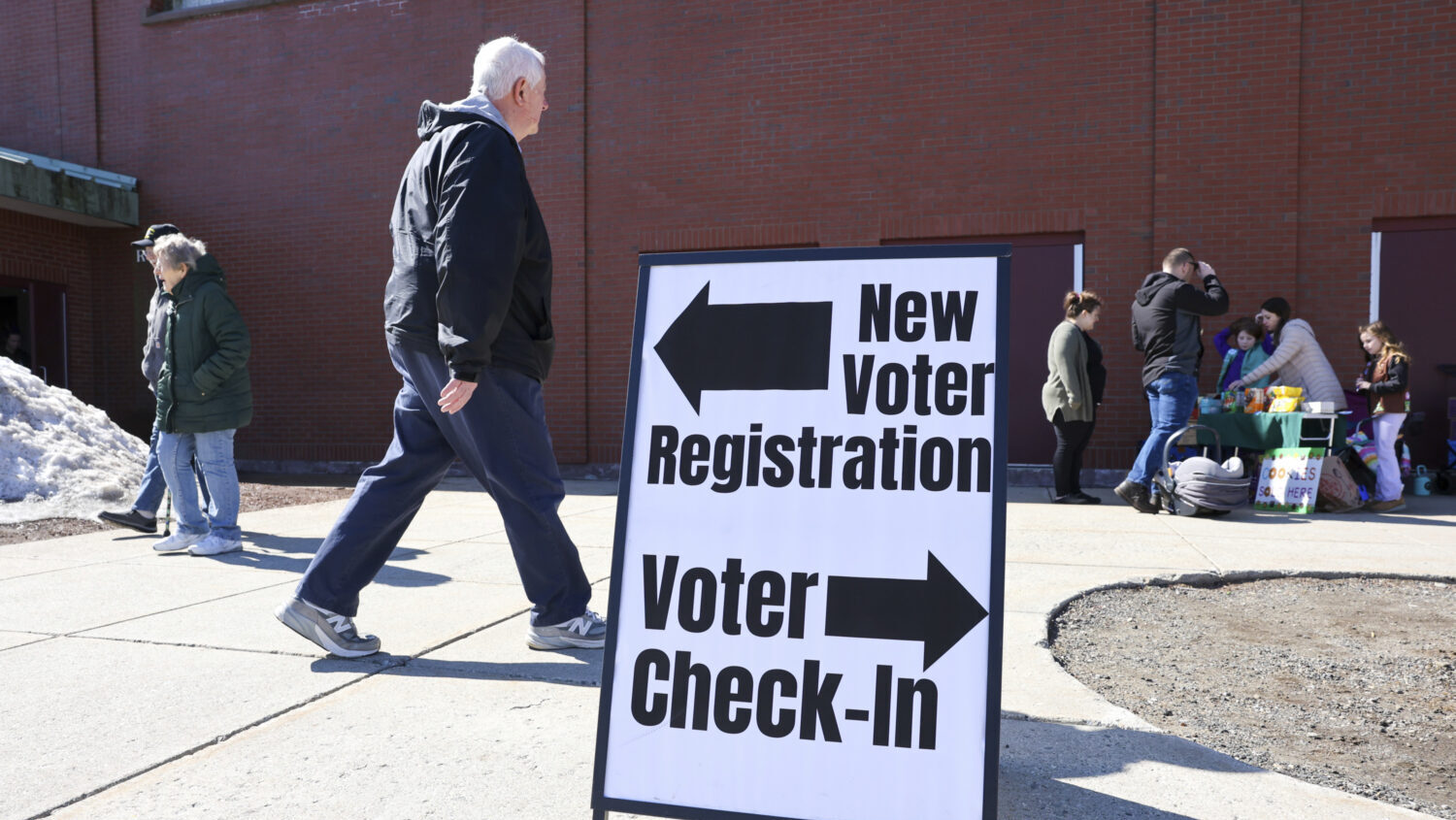
A sign for new voter registration is seen outside a polling location at Pinkerton Academy in Derry, N.H., Tuesday, March 11, 2025. (Reba Saldanha/Associated Press)
(Reba Saldanha/Associated Press)

SALT LAKE CITY — On Thursday, the House of Representatives passed the SAVE Act, which would require proof of U.S. citizenship when registering to vote. It has yet to be voted on by the Senate.
According to the Associated Press, the ID you bring would have to show your birthplace in order to be approved. How would this affect Utahns?
If the SAVE Act becomes law…
Weber County Clerk Ricky Hatch said you would have to come in person to a county clerk’s office to show your proof of U.S. citizenship.
“Every voter is going to have to do that. And every time you move or change your party affiliation or any change to your voter registration, you’re going to have to come in and do that in person,” he said.
This would be a challenge for those who don’t have access to their birth certificate, which, according to Hatch, is approximately 10% of U.S. citizens.
“In essence, they would not be allowed to be registered to vote, even though they meet all of the qualifications and have been voting for years and, often, decades,” Hatch said.
If you don’t have a valid U.S. passport but do have a valid driver’s license, you would still need to supplement it with a birth certificate because a driver’s license doesn’t indicate your citizenship status.
What if I change my last name?
For those concerned whether having a different last name makes the verification process harder for them, Hatch said the SAVE Act requires states to provide reasonable accommodations.
“In Utah, we do a pretty good job at being reasonable and allowing folks to be able to provide the documentation and without being over-burdensome. So I think Utah would be able to figure it out,” he said.
Hatch said the SAVE Act would also hold local election administrators accountable so that they don’t end up “disenfranchising someone over a discrepancy in paperwork.”
“If we registered someone improperly, we could face five years of prison … It really creates a challenge for local administrators to enforce the law properly but not to harm voters who have … legitimate proof but maybe not technically proper documentation.”
Read more: Viral ‘chicken jockey’ trend gets Provo student removed from theater