ELECTIONS, POLITICS, & GOVERNMENT
Takeaways from the Supreme Court’s oral arguments over social media censorship
Mar 19, 2024, 6:22 AM
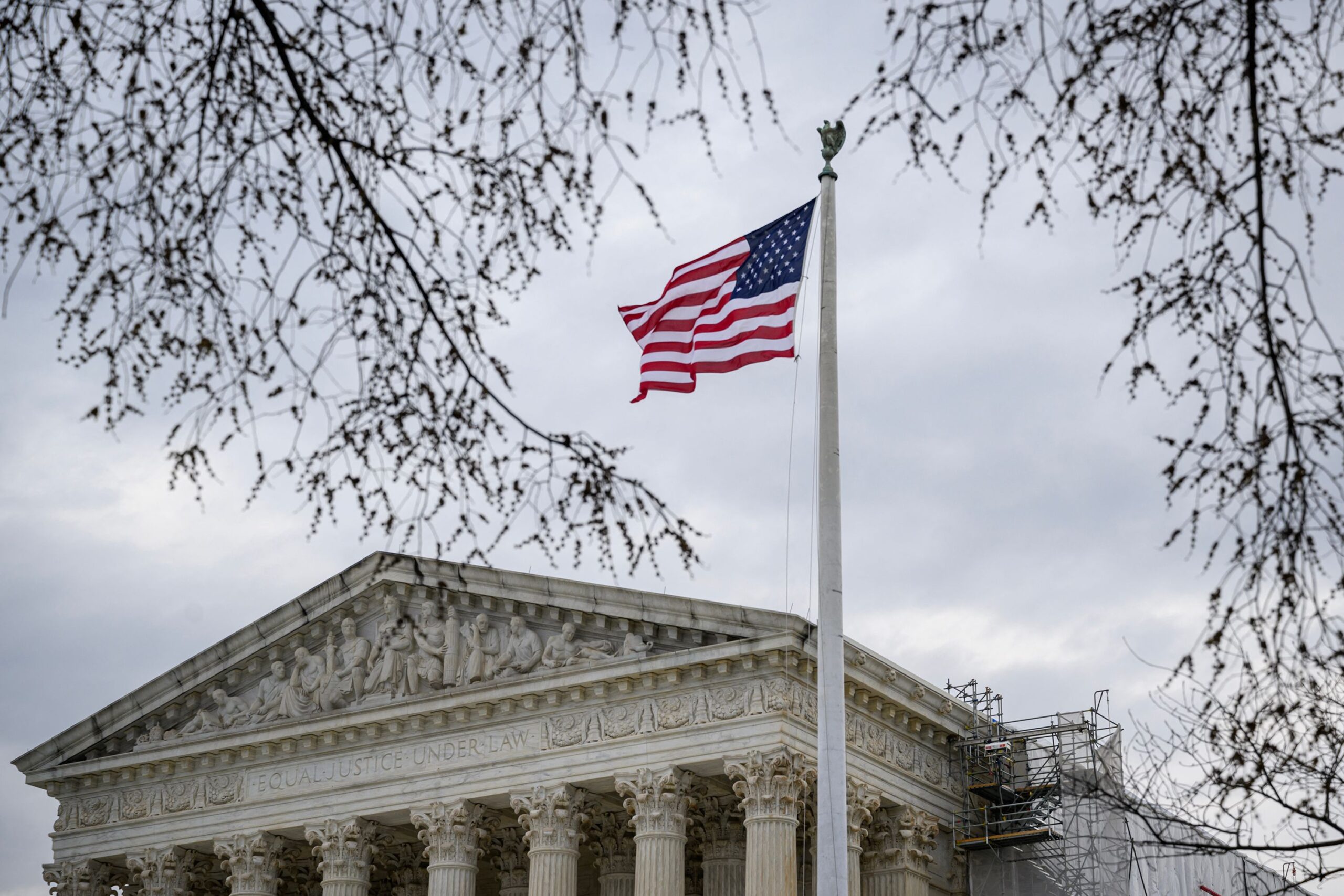
(Credit: Mandel Ngan/AFP/Getty Images via CNN Newsource)
(Credit: Mandel Ngan/AFP/Getty Images via CNN Newsource)
(CNN) — The Supreme Court on Monday appeared deeply skeptical of arguments by two conservative states that the First Amendment bars the government from pressuring social media platforms to remove online misinformation.
Tune at 6:45 for more!
In more than 90 minutes of oral arguments that occasionally veered into the justices’ personal frustrations with the press, several conservative justices sided with the liberal wing in appearing to doubt claims by two states that the Biden administration violated the Constitution with the practice.
Louisiana and Missouri accused the Biden administration of a sweeping censorship campaign conducted through emailed and other communications with social media platforms.
In the communications, government officials routinely used expletives and other strong language to flag posts related to Covid-19 and the 2020 election that they believed violated the platforms’ terms, and demanded the posts be removed. In some cases, platforms complied with the takedown requests. Others were ignored.
Whether those emails amount to censorship is a question for the court that could reshape the government’s ability to respond to election meddling, public health crises, child sexual exploitation and other pressing issues playing out in the virtual public square, the US government has said.
Here’s what to know from Monday’s arguments:
Roberts, Kavanaugh, Barrett point to potential for fallout
In a series of hypothetical questions, Chief Justice John Roberts and Justices Brett Kavanaugh and Amy Coney Barrett signaled concern about setting a standard that restricted the government’s ability to communicate with the platforms over content that might be problematic.
Such a standard, they seemed to suggest, could be damaging.
Kavanaugh noted it is “not uncommon for government officials to protest an upcoming [newspaper] story on surveillance or detention policy and say, you know, ‘If you run that, it’s going to harm the war effort and put Americans at risk.’” He asked whether the government couldn’t request the platforms to remove content that was, for instance, posed danger to American troops.
In another telling exchange, Barrett pressed the states on what would happen if a social media user identified the home addresses of public officials and encouraged people to rally so that those officials could be “harmed.” The justices, of course, have had firsthand experience with similar circumstances. In the run-up to the overturning of Roe v. Wade, protesters rallied outside several of their homes for weeks.
Barrett asked: Could the FBI not call the social media sites and encourage them to take such posts down?
“I’m a purist on the First Amendment,” said Benjamin Aguiñaga, the attorney for the states, suggesting that that course of action would be unconstitutional. But then Aguiñaga quickly added that “the FBI absolutely can identify certain troubling situations like that for the platforms” and allow them to take action themselves without an explicit request from the government.
Alito accuses Biden admin of ‘pestering Facebook’
Not all of the conservatives appeared ready to back the Biden administration.
Led by Justice Samuel Alito, several raised concerns about the extent of the contact between the government agencies and the private platforms over posts they wanted stricken.
In one key exchange, Alito laid out a case for how unusual it was that federal officials were pressuring the sites to remove content. Alito, among the most stalwart conservatives on the court, wondered aloud what would happen if the government had made similar requests of traditional media companies, like newspapers and cable television outlets.
Alito described what the government did as a “constant pestering of Facebook.”
“It’s treating Facebook and these other platforms like they’re subordinates,” Alito told Brian Fletcher, an attorney representing the Biden administration. “Would you do this to the New York Times?”
Alito later added: “I cannot imagine federal officials taking that approach to the print media.”
Justice Elena Kagan, one of the court’s liberal members, contradicted Alito in a different exchange.
“Like Justice Kavanaugh, I’ve had some experience encouraging press to suppress their own speech,” Kagan said to chuckles in the courtroom. “This happens literally thousands of times a day in the federal government.”
Alito brings up Section 230
Alito argued that the difference between traditional and social media is that the federal government ostensibly holds the power to revoke protections under Section 230 of the Communications Decency Act that immunize the sites from lawsuits involving content moderation. In other words, Alito said, the government had “big clubs” it could use to try to coerce the social medica companies to cooperate.
Fletcher pointed to the context of the communication between the Biden administration and the social media companies. “This was a time when thousands of Americans were still dying every week and there was a hope that getting everyone vaccinated could stop the pandemic,” he said.
Elsewhere, Fletcher added that the Biden administration may have a bully pulpit role in shaping the debate over Section 230 but that it lacks any actual authority to weaken the law. That is Congress’ role, he said, challenging claims that the administration has issued credible threats against social media that could support a coercion argument.
US government may have a legitimate interest in influencing platforms
Some of the court’s liberal justices suggested there may be situations in which the government has an important role to play in influencing social media platforms’ handling of user speech.
“Part of the reason why you might be running into all of these difficulties,” Justice Ketanji Brown Jackson told the state’s lawyer, “is because you’re not focusing on the fact that there are times in which the government can, depending on the circumstances, encourage, perhaps even coerce, because they have a compelling interest in doing so.”
Aguiñaga repeatedly sought to persuade the court to look at the overall outcome of the communications.
“Regardless of the label you apply — whether it’s coercion, whether it’s encouragement, or joint participation and conspiracy — at the end of the day, if what the government is trying to do is eliminate viewpoints from public discourse,” that would be unconstitutional, he argued.
But many of the justices pushed back, suggesting it is not enough to look at the outcome and that there is an important distinction between coercion and encouragement.
Related: Legal expert questions Utah’s social media restrictions