Wildlife officials on the lookout for chronic wasting disease
Mar 21, 2025, 7:00 PM
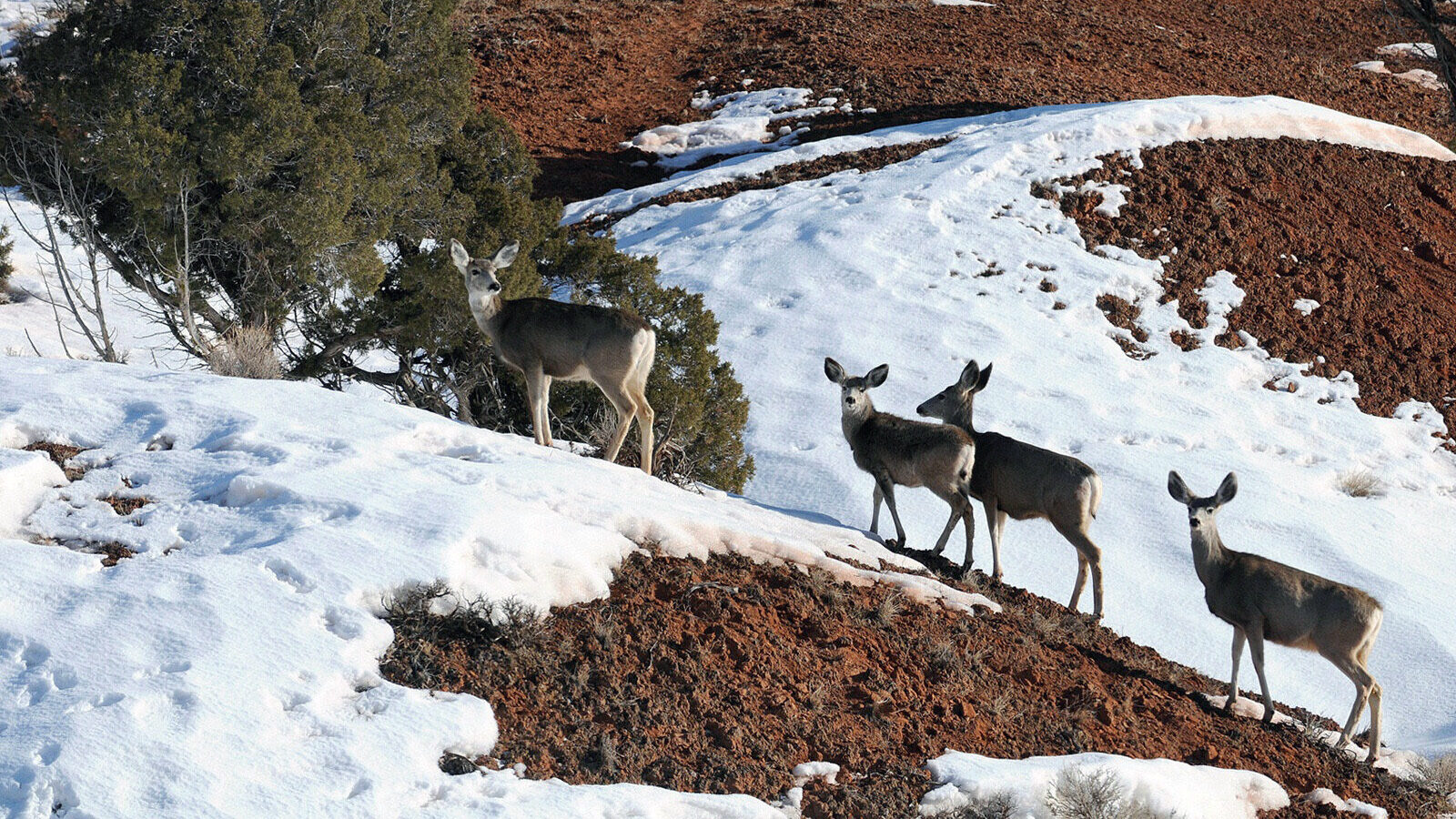
In the winter, deer visit lower elevation areas where food is a little easier to find. (Utah Division of Wildlife Resources)
(Utah Division of Wildlife Resources)

SALT LAKE CITY — Wildlife officials are keeping a close eye on the deer, elk and moose in Utah for signs of chronic wasting disease.
As wildlife becomes more active in the spring, scientists hope to stop the slowly spreading disease.
According to the Utah Division of Wildlife Resources, 262 mule deer and 6 elk have contracted the disease in Utah since 2002.
Be on the lookout
Faith Heaton Jolley with the DWR said hunters should report deer that may show signs of the disease.
“If your deer ever looks droopy and slow-moving, lethargic, it’s drooling … that is probably an indication that it sick or could possibly have chronic wasting disease.”
People who suspect they’ve killed an animal with the disease are advised not to eat the meat.
Hunters can also have their animals tested by the DWR.
Jolley also advised Utahns not to feed animals if they encounter them.
“There is obviously that disease risk that it can come in through their urine and their drool, things like that.”
The disease is in 36 U.S. states, as well as parts of Canada, Scandinavia and South Korea.
So far, there is no immunity to CWD or vaccine. But humans have not contracted the illness.
Call chronic wasting disease by its name
Heatons said CWD is often called “zombie deer” disease but scientists are trying to get rid of this description and have hunters take it more seriously.
“It’s not, obviously, accurate, right? These are not dead deer or dead elk that are coming back to life and that are going to come eat your brain. So we want people to take it seriously and sometimes when it’s called a playful name like that, people don’t really take it seriously or maybe don’t think that it’s real.”