Risk of surgery complications increases with poor air quality, Utah study finds
May 6, 2026, 10:00 PM

FILE: Hazy air hangs over 700 East in Salt Lake City on Thursday, Jan. 26, 2023. University of Utah researchers found a possible increased risk for surgery complications during times of poor air quality. (Spenser Heaps, Deseret News)
(Spenser Heaps, Deseret News)
SALT LAKE CITY — Risks of surgery complications could increase with poor air quality in the days leading up to a procedure, according to new research involving Utah surgery patients.
Dr. John Pearson, lead study author, University of Utah research associate and Stanford University clinical associate professor, said northern Utah provided a unique backdrop for the study.
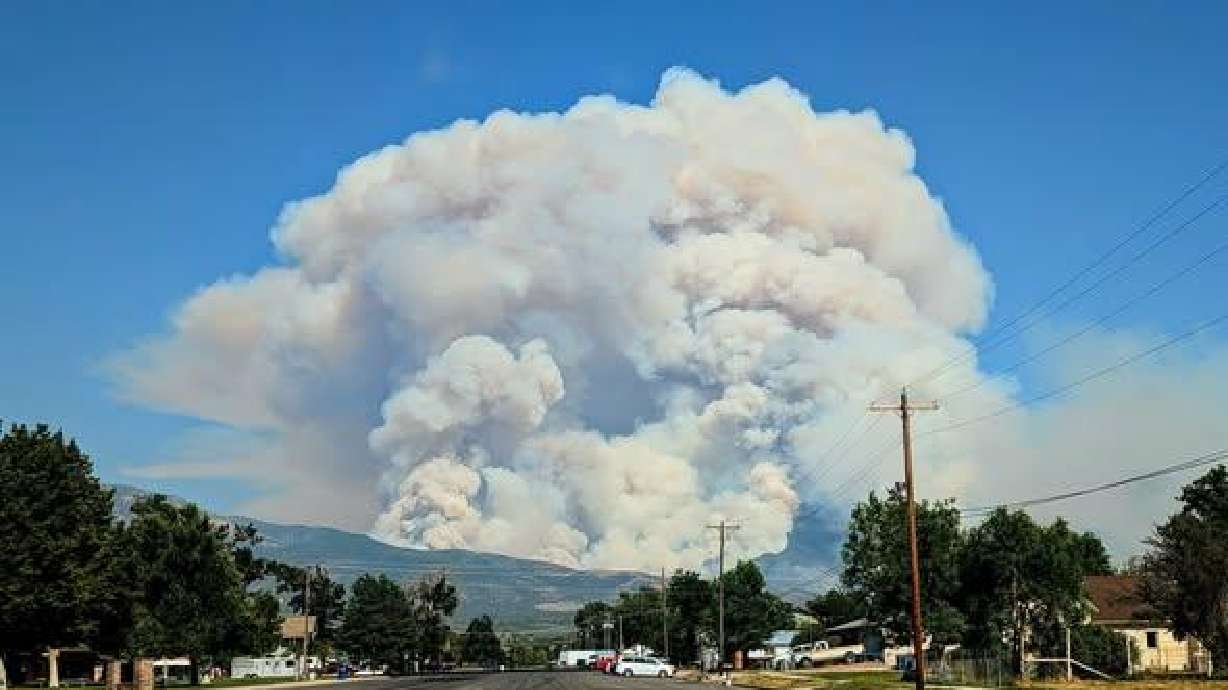
“My team was interested in, ‘How do these bad air pollution events we see in Salt Lake City and along the Wasatch Front impact our patients?'” he said. “Part of it was… the unique geography in Utah along the Wasatch Front, where we get both pollution in the winter from inversion events. …Our unique, beautiful mountains also [trap] wildfire smoke in the summertime, and so we have exposures both that are very episodic both in the summer and in the winter.”
Air quality and surgery complications
The team studied nearly 50,000 surgical patients in the region, focusing on air quality conditions in the week before their operations. Just one day of elevated PM2.5 pollution in that seven-day period meant an uptick in the risk of complications after surgery, including pneumonia, sepsis and wound infection.
Pearson wants to expand the research nationwide to involve more surgical centers. One of the goals would be to explore whether mitigation efforts might reduce those risks from air pollution. For example, future elective surgeries could be scheduled around better periods of air quality.
“There is some data coming out of China that suggests that that would be economical, in terms of cost to the health care system,” Pearson said. “For patients that are coming in for an elective scheduled surgery, where there’s flexibility in the timing, and they are a patient that has a baseline higher risk, we’re going to test it, and potentially it could be the case that those patients may benefit from rescheduling.”
More research needed into surgery, poor air connection
Not everyone can reschedule a surgery, though Pearson said future research would also explore options for those patients.
“In those cases, if there is some time available, they could potentially benefit from in-home filtration,” Pearson suggested. “Maybe we’re able to test sending them home with something to sleep with that filters the air in their room, or other strategies that they could do in the days leading up to the surgery.”
Of course, the most urgent procedures may not work that way.
“There’s definitely a component of urgency, there’s a component of patient resources, and there’s a component of what the health system and physicians need to do — and hospitals need to do — in order to prepare their patients better for that,” Pearson said.
The study can’t say for sure whether the pollution directly increases the risk — just that the risk is increased when pollution occurs. Co-author and University of Utah anesthesiology professor Dr. Nathan Pace said in a news release there could be some third factor they haven’t identified yet.
“A caveat in any observational study is that there might be a relevant factor that affects both the exposure and the outcome,” Pace said.
The study results were published in a Swedish medical journal. You can learn more about Pearson and Pace’s work online through Facet Lab.
Read more:
- Research finds air quality monitors more frequently placed in affluent neighborhoods
- University of Utah professor finds that ship fuel emissions might not impact climate change
- Utah researchers work to help families of babies with hearing loss navigate their next steps