Utah DWR gets pushback on study culling mountain lions to improve mule deer population
Jan 14, 2026, 5:55 PM
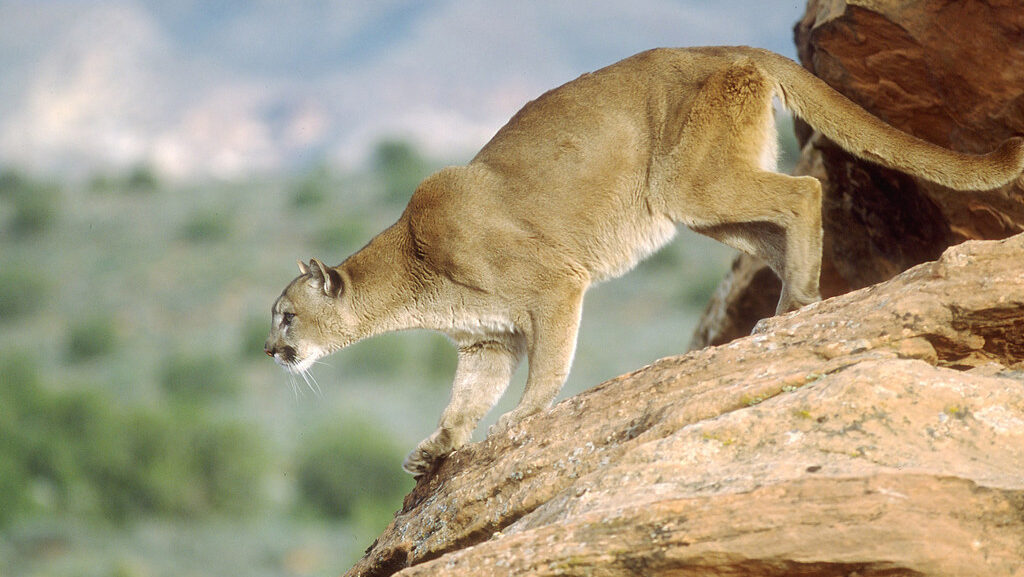
A mountain lion on a rocky ledge. The Utah Division of Wildlife Resources is getting a lot of pushback against a study it's running to cull mountain lions and help increase the mule deer population. (Lynn Chamberlain, Utah Division of Wildlife Resources)
(Lynn Chamberlain, Utah Division of Wildlife Resources)

SALT LAKE CITY — The Utah Division of Wildlife Resources is getting a lot of pushback against a study it’s running to cull mountain lions and help increase the mule deer population.
The study is culling mountain lions in six different regions: Boulder, Monroe, Stansbury, Pine Valley, Wasatch East and Zion, and tracks mule deer using collar monitors. It has been running since December and is planned to last three years.
It has drawn ire from several conservation groups. A petition on change.org to stop the study has gathered over 4,000 signatures at the time of publication.
In a Wildlife Board meeting held Thursday, Jan. 8, the DWR‘s incoming director, Riley Peck, said he felt the department’s responsibility is to balance and manage wildlife.
“A lot of us in this room love and are passionate about our predators … We want to walk outside and be able to go for a hike and know that they’re there and know that they’re protected for the amazing species that they are,” he said
Peck said the DWR has been mandated by the State Legislature to manage the mountain lion population to help the mule deer population, and conducting the study is the most responsible way it can do that.
“And so that puts us in an interesting spot as we are trying to manage for the abundance and the existence of cats … and to manage for a big game species that is primarily their prey,” Peck said.
Also in the meeting, Kent Hersey with the DWR said the department is getting data showing cougars are hunting not only weaker deer that wouldn’t survive the winter, but also healthy fat ones.
“So populations are set up so that if it’s just a small percentage, a few points hear or there, deer populations can handle that,” Hersey said. “However, the issue becomes when this lion predation side of things starts to get too much.”
Conservationists take issue with mountain lion culling
Utah Mountain Lion Conservation spokesperson Anna Wright pushed back against the study, saying similar studies have been done throughout the west.
“The results are consistent. Short-term, localized increases in fawn survival may occur, but they are temporary, require continual killing to maintain and disappear once removals stop,” Wright said during the board meeting.
She said, “habitat quality, winter severity and human pressure” are what ultimately determine mule deer population recover. The long-term effects of culling mountain lions, according to Wright, include orphaned cubs and increased conflict between younger “inexperienced” lions and livestock depredation.
“This is not theory. It is well-documented in peer-reviewed literature,” she said. “If we truly value mountain lions on this landscape … then they deserve the same long-term management approach we use for deer.”
Ultimately, Wright said conservationists are asking that “lethal trapping and snaring” be put on halt in areas that do not have high levels of deer predation by mountain lions.
“Applying lethal tools in areas where the data do not support a clear management need undermines both scientific integrity and public trust,” she said.
Contributing: Devin Oldroyd, KSL
Related: Where to watch bald eagles in Utah in celebration of America 250