
Finding Peace in the Storm: a conversation with Elder J. Devn Cornish
Apr 4, 2020, 1:57 PM | Updated: 4:09 pm
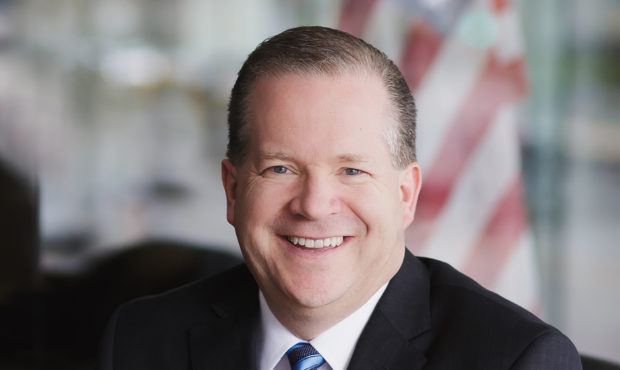

SALT LAKE CITY — Boyd Matheson is joined by health care professionals and local leaders to discuss the evolving and improving mental health care conversation and finding peace in the storm. What has been done to improve mental health care in Utah? How can you help others and yourself find peace in the storms of life?
Conference Conversations is special programming with content brought to you by KSL Newsradio for The Church of Jesus Christ of Latter-Day Saints during General Conference weekends. Listen for great conversations on faith that will appeal to members of the church but also Christians in general.
What follows is a shortened version of Boyd’s conversation with Elder J. Devn Cornish, General Authority Seventy of The Church of Jesus Christ of Latter-day Saints, about the role of faith in mental health.
No respecter of persons
“As you’ve ministered throughout the church as you’ve traveled the world, what have you learned about mental health and dealing with some of these diseases of despair?” Boyd asked.
“I’ve learned that disease is no respecter of persons. People become depressed and have mental illness, whether they’re richer, poor, whether they live in advanced cultures or in depressed and difficult cultures.
“People, they’re susceptible to mental and emotional difficulties, whether they have a background of those things in their family or not,” Elder Cornish said.
What’s wrong with me?
“I think sometimes we do feel like: What’s wrong with me? Is there something wrong with me? How do we come to grips with that?” Boyd asked.
“When was the last time you were concerned about the moral soundness, the character strength, the goodness of a person who had diabetes?” Elder Cornish asked. “Were you ever embarrassed to say, ‘Oh, this person with diabetes is my friend?'”
“Do you know where you get diabetes? You get diabetes because your pancreas stopped making insulin. Well, other organs have biochemical deficiencies,” he said.
“One of the organs that could do that is your brain,” he said. “The problem is that if your brain stops making a chemical that transmits feelings, you’re feeling system may not work right, but now you’re depressed for no obvious reason.
“Nothing’s happened. You just have a gloom and a sadness, and inertia around you, and people start to treat you differently. They think, What did this person do wrong? What sin did they commit?” Elder Cornish said.
“There is no more moral meaning to having depression because your brain doesn’t make the right chemicals than there’s moral meeting to having diabetes because your pancreas doesn’t make the right chemicals,” he said.
Elder Cornish said it is a tragedy that throughout the world, emotional problems such as anxiety and depression have the moral overtone of character deficiency.
“For so long, I think the solution has been that people just say, ‘You just need to buck up. You just need to choose to be happy,'” Boyd said. “But it’s more than that, isn’t it?”
Spectrum of mental illness
“Some people have this overwhelming depression, as I said, without any obvious cause,” Elder Cornish said, “and then there are people in between. There are people who have in fact had a difficult experience but can’t seem to pull out of it.”
Elder Cornish said it’s important to understand that depression encompasses a spectrum of illnesses. On one end of that spectrum, there are cases of situational depression caused by a sad experience, such as the death of a loved one. On the other end of the spectrum, there are cases of depressive disorders caused by a biochemical defective in the brain and the way it makes and processes certain chemicals. He said for minor and major cases of depression, patients respond to counseling and often medications.
“The counseling is so effective,” Elder Cornish said, “it seems to literally change their brain chemistry. And they don’t have to stay on medications on the long term basis.”
“That’s such important insight for everybody listening today,” Boyd said, “that we do have this spectrum to work from, that there are a wide range of ways to address it and engage it, from medicines to counseling and everything in between.”
J. Devn Cornish received a bachelor of arts degree in biology from Johns Hopkins University in 1975 and in 1978 received a doctor of medicine, also from Johns Hopkins University. He completed his pediatric residency at the Boston Children’s Hospital at Harvard University. He also served as chairman in the Department of Pediatrics in the Emory University School of Medicine. His church service includes being a full-time missionary in the Guatemala El Salvador mission, a bishop, stake president, president of the Dominican Republic, Santiago Mission and Area 70.






