First Alzheimer’s drug to slow disease progression gets full FDA approval
Jul 7, 2023, 6:00 AM
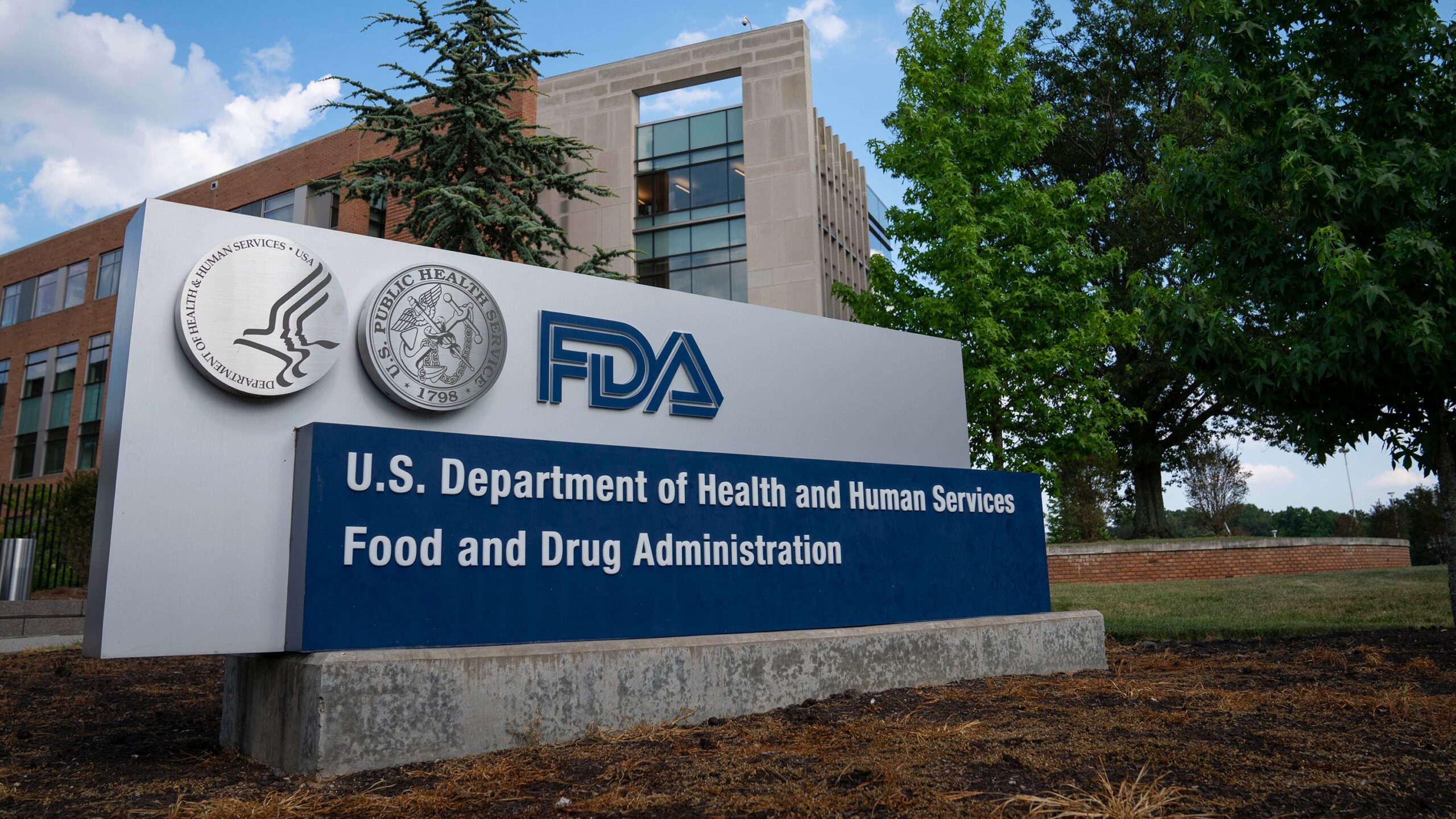
A sign for the Food And Drug Administration is seen outside of the headquarters on July 20, 2020 in White Oak, Maryland. Photo credit: Sarah Silbiger/Getty Images
(CNN) — The US Food and Drug Administration on Thursday granted traditional full approval to the Alzheimer’s drug Leqembi, the first medicine proven to slow the course of the memory-robbing disease.
The Centers for Medicare and Medicaid Services said Thursday that it will now expand coverage of the drug, broadening access for up to an estimated million people with early forms of the disease.
“Today’s action is the first verification that a drug targeting the underlying disease process of Alzheimer’s disease has shown clinical benefit in this devastating disease,” Teresa Buracchio, acting director of the Office of Neuroscience in the FDA’s Center for Drug Evaluation and Research, said in the announcement. “This confirmatory study verified that it is a safe and effective treatment for patients with Alzheimer’s disease.”
Leqembi, from drugmakers Eisai and Biogen, received accelerated approval in January based on evidence that it clears amyloid plaque buildups in the brain that are associated with Alzheimer’s disease. But because of an earlier coverage decision by CMS, which provides insurance coverage for many elderly people with Alzheimer’s through Medicare, the drug hasn’t been widely used. It costs $26,500 annually before insurance coverage.
“You had this treatment at your fingertips, and suddenly you had Medicare saying, ‘Yeah, but you can’t quite get access to that yet,’ ” said Joe Montminy, 59, who was diagnosed with younger-onset Alzheimer’s in his early 50s. “Getting that insurance coverage is incredibly significant … because having a treatment is awesome, but I can’t afford to pay the $26,000 cost.”
‘The beginning of a new era’
The drug was approved only for people with early forms of Alzheimer’s disease, those with mild cognitive impairment or mild dementia who have been confirmed to have amyloid plaques in their brains. Dr. Lawrence Honig, a professor of neurology at Columbia University Irving Medical Center, estimates that group constitutes about a sixth of the more than 6 million Americans currently diagnosed with Alzheimer’s.
People with more advanced forms of the disease may not benefit from the drug, he said, and may face increased safety risks.
“It’s not that we know it’s not good for people with moderate or severe disease; it’s just that we don’t know,” said Honig, who has consulted for drug companies working on Alzheimer’s medicines.
Even for those who may benefit from the drug, Honig noted, it’s not a cure; Leqembi was shown in an 18-month clinical trial to slow declines in cognitive ability and function by 27%.
“The treatments we have right now are just the beginning of a new era,” Honig said. “We hope that we will have treatments that are more efficacious.”
The Alzheimer’s Association said in a statement Thursday that it welcomes the FDA’s full approval.
“This treatment, while not a cure, can give people in the early stages of Alzheimer’s more time to maintain their independence and do the things they love,” said Dr. Joanne Pike, the group’s president and CEO. “This gives people more months of recognizing their spouse, children and grandchildren. This also means more time for a person to drive safely, accurately and promptly take care of family finances, and participate fully in hobbies and interests.”
However, the drug also comes with side effects and requires monitoring through regular brain imaging. About 13% of participants in the trial experienced brain swelling or bleeding, and those risks could be higher for certain groups based on their genetics or if they take blood-thinning medications. The FDA says a boxed warning is included in the prescribing information to alert patients and caregivers to the potential risks associated with these side effects.
Health systems have been gearing up for broader use of the medicine.
“It’s complicated, and because of all these complications, we have been trying to be very thoughtful and taking our time and preparing the system for this,” said Dr. Georges Naasan, medical director of the Division of Behavioral Neurology and Neuropsychology at Mount Sinai.
The drug is given as an IV infusion once every two weeks. Infusion centers have been preparing for a potential surge of new patients.
“In certain areas, I anticipate we will receive probably 15% to 20% more patient referrals for this drug,” said Sue Rottura, chief operating officer of Vivo Infusion, which says it provides infusion services for about 50,000 patients in the US. “We know in clinics in Florida that we may have to increase capacity at those clinics, and that may involve increasing the number of days, increasing hours [or] offering weekend hours.”
Drugmaker Eisai said it doesn’t expect that everyone estimated to have early Alzheimer’s disease will seek to use the medicine right away.
“You’re going to have a much, much lower number, at least at this moment,” Eisai US CEO Ivan Cheung said. “Maybe a few years down the road, as these therapeutic options are available, these testings are reimbursed, that number will go up more, but I don’t think you’re going to see a million people in the next couple of years.”
Montminy is waiting to see if he qualifies for the drug based on brain imaging – for which Eisai said it also expects a CMS decision on coverage soon. If he is, he won’t hesitate to take it for the chance to have more time with his wife and two sons, who he says are in their late 20s and are early in their careers.
“They’ll often call me and ask me for advice about work, and I enjoy those phone calls, but I worry that sometime soon I might not be able to help them,” Montminy said. “Like any parent, I would love to see them actually get married and have a family. You know, basically I just want to experience many of the activities that most people take for granted.”
Expanded Medicare coverage
CMS said this year that it would provide broader coverage for Leqembi if the drug received traditional FDA approval.
“CMS today affirms our commitment to help people with Alzheimer’s disease have timely access to innovative treatments that may lead to improved care and better outcomes,” Administrator Chiquita Brooks-LaSure said in a statement Thursday. “With FDA’s decision, CMS will cover this medication broadly while continuing to gather data that will help us understand how the drug works. This is welcome news for the millions of people in this country and their families who are affected by this debilitating disease.”
Medicare recipients will probably face out-of-pocket costs for Leqembi. Those in traditional Medicare will be responsible for the 20% coinsurance of the Medicare-approved amount after they meet their Part B deductible.
How much those enrolled in Medicare Advantage or supplemental plans will have to pay will vary based on their policy.
The coverage also comes with some qualifications. Medicare will cover the approved drugs when a physician and clinical team participate in the collection of evidence about how these drugs work in the real world, also known as a registry, CMS said. This information will help gauge the usefulness of the medications for people with Medicare.
Providers will be able to submit the evidence through a CMS-facilitated portal, which will be free to use.
CMS released more details of its plan to cover new Alzheimer’s drugs in late June. It said it is working with a number of organizations that are preparing to open their own registries. Clinicians will be able to choose which registry to participate in.
The agency is looking for data to help answer several questions outlined in its national coverage determination, released in April. They include: Does the drug meaningfully improve health outcomes – such as slowing the decline of cognition and function – for patients in broad community practice? Do benefits and harms, such as brain hemorrhage and edema, of using the drug depend on the characteristics of patients, providers and the setting? And how do benefits and harms change over time?
Patient groups and the pharmaceutical industry, however, have voiced concerns about the use of a registry, saying it will create a barrier to treatment.
Broad Medicare coverage of Leqembi and similar types of medications to slow the progression of Alzheimer’s disease will probably have a big impact on the program’s spending.
If 10% of the estimated 6.7 million older adults take Leqembi, at an annual list price of $26,500, it would boost spending by $17.8 billion, according to an analysis by KFF, formerly the Kaiser Family Foundation. That would exceed the total spending on the top 10 Part B drugs administered in doctors’ offices in 2021.
The increase in spending could lead to higher Medicare Part B premiums for all enrollees.