Utahns celebrate their contribution to the Artemis II mission
Apr 1, 2026, 10:27 PM
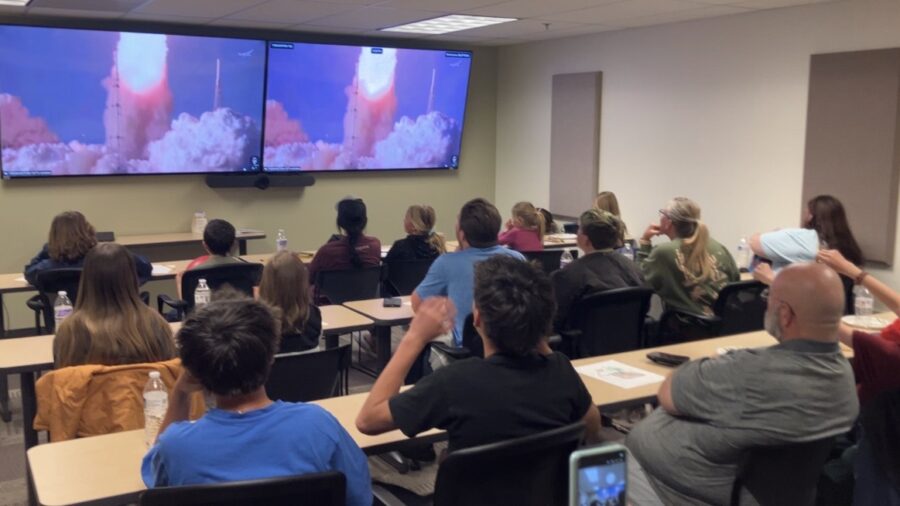
The Artemis II launch wouldn't have been possible without Utah; the massive fuel boosters that lifted the rocket to space came from a facility just north of Ogden. (Sarah Martin, KSL)
(Sarah Martin, KSL)
OGDEN — The Artemis II launch wouldn’t have been possible without Utah; the massive fuel boosters that lifted the rocket to space came from a facility just north of Ogden.
Friends and family members came together to watch the launch at the Utah State University Tremonton campus, most with a story of how their family helped get these astronauts to space.
“We belong in space. We belong. Traveling. Seeing the stars,” said Mike Wadsworth, a teacher at Bear River Middle School.
Related: Artemis II astronauts bound for moon after rocketing away on NASA’s first lunar voyage in decades

Astronaut Don Lind, first Utahn in space in 1985. Photo courtesy of grandson Mike Wadsworth.
Wadsworth is the grandson of Astronaut Don Lind, the first Utahn in space in 1985 who also did communications on the first mission to the moon with Neil Armstrong.
“When he said, one small step for man, one giant leap for mankind, he was talking to my grandpa,” said Wadsworth.
Wadsworth teaches just a couple miles away from Northrop Grumman, the company behind the Artemis rocket boosters, “Talk about space travel. ‘My dad works here or my uncle works here.’ It’s really cool, like yeah that’s right in our backyard.”

Artemis II Mission preparations, courtesy of Northrop Grumman Quality Assurance Technician, Gage Swenson.
Gage Swenson works in quality control at Northrop Grumman and followed the boosters to Florida for most of last year to prepare for Artemis II. He said watching the rocket launch was surreal.
“This proved to the world that we are definitely still in the space race and, where it might take us three years to get a rocket done, it works every time,” he said.
Swenson explained how valuable Utah’s contribution is to a successful mission, “We are completely vital. The white boosters, the boosters that we make here, provide 75% of the boost. They get that rocket out of the atmosphere during the first two minutes.”
Swenson is getting ready to move to Florida full-time for a new job with quality control at NASA.
“Today I just feel a sense of pride in the work that we do and like it matters,” said Swenson.
After delivering the Orion capsule safely to space, the boosters fell into the sea. Swenson explained they will be fished out and brought right back here to Utah to be refurbished and re-fuled for the next mission.