Utah lawmakers want to use fines collected from vandalism to repair archaeological sites
Feb 26, 2026, 1:32 PM
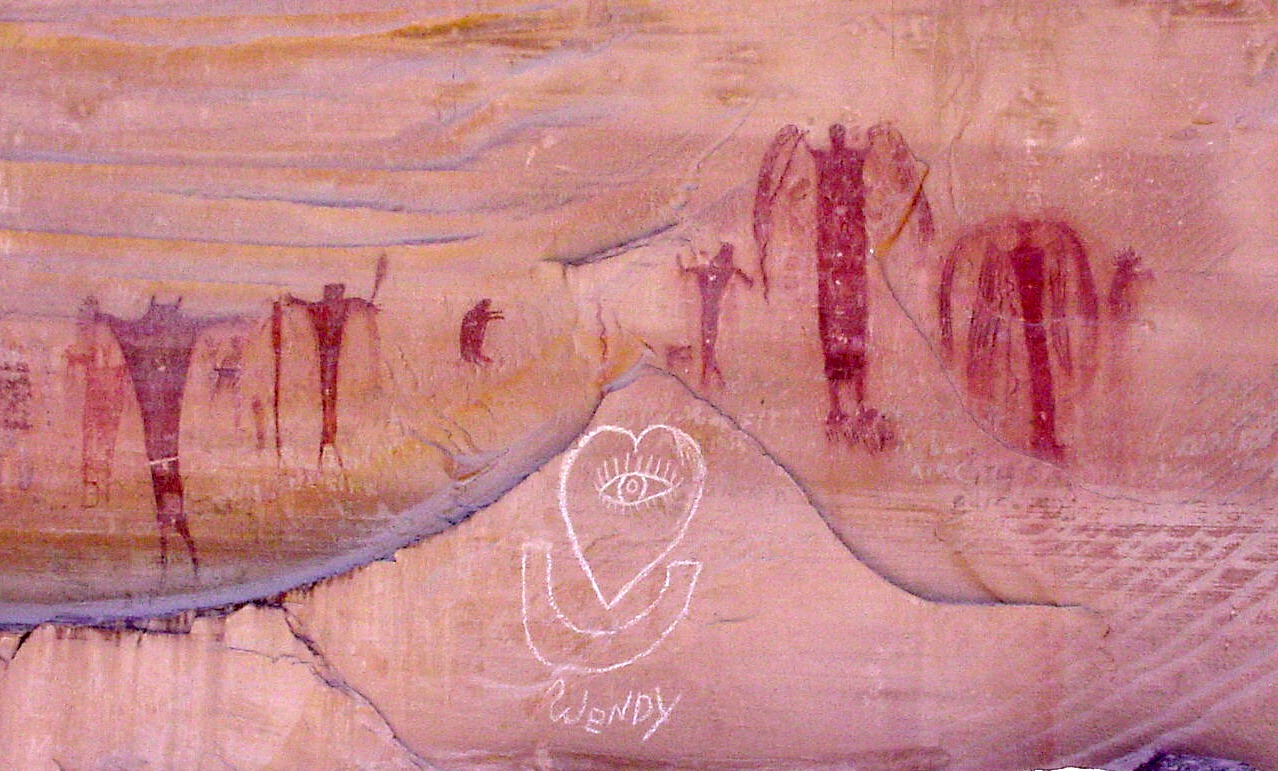
Ancient pictograph panel in Buckhorn Draw, Emery County, shows recent vandalism. (the U.S. Bureau of Land Management, managers of that area.)
(the U.S. Bureau of Land Management, managers of that area.)

SALT LAKE CITY — Utah lawmakers are looking to create a fund that will specifically be used to repair and restore damaged natural and historic sites and to promote a culture of conservation.
Vandalism and destruction of natural and historic features like hoodoos or petroglyphs only seem to be increasing every year, said bill sponsor Rep. Stewart Barlow, R-Fruit Heights.
Barlow said there needs to be a culture of integrity. That’s why he sponsored HB536.
Under this bill, fines passed down to vandals would be used in the specific area where the destruction happened to repair the site or feature.
“Right now, in code, it does say that fines can be ordered to restore the site that was damaged,” said Law Enforcement’s Deputy Chief Wyatt Bubak with the Department of Natural Resources. “However, code isn’t necessarily super clear on where that money goes and it doesn’t necessarily guarantee that it goes back to the resource that it was intended to protect.”
The fund would work similarly to the state’s help stop poaching program and also encourage more public reporting.
“It also allows for them to run a more public reporting campaign associated with rewards, much like our help stop poaching program does in DNR,” said Bubak . “And offered some potential rewards to those people that take the step to report some of these archaeological and historical site vandalisms.”
Bubak also explained that, currently, if vandalism of this sort occurs on private property within the state and the owner wants it restored, there’s no funding source to cover it, so they would have to do it themselves.
“This would help ensure that if there is restitutions or fines ordered that those various landowners, whether it’s a state park, a different government agency, a private landowner, can work with the Historical Preservation Office to get funds to restore those antiquities if they’re restorable on a private landscape or a public landscape,” Bubak said.
Rep. John Arthur, D-Holladay, said that, as someone who grew up looking for these historic sites, he appreciates the bill.
“I think that every time I see one of these stories on the news, it always breaks my heart to see somebody who grew up going out into working really hard to find these locations to enjoy them,” Arthur said. “And I really appreciate the fact that with this fund, with this fund, the fines incurred will be used specifically within those localities to repair the harm done and then also ultimately to build in that educational piece that will hopefully prevent more of these from taking place in the future.”