Lawmaker proposes new public alert for people with disabilities
Jan 15, 2026, 3:23 PM | Updated: 3:48 pm
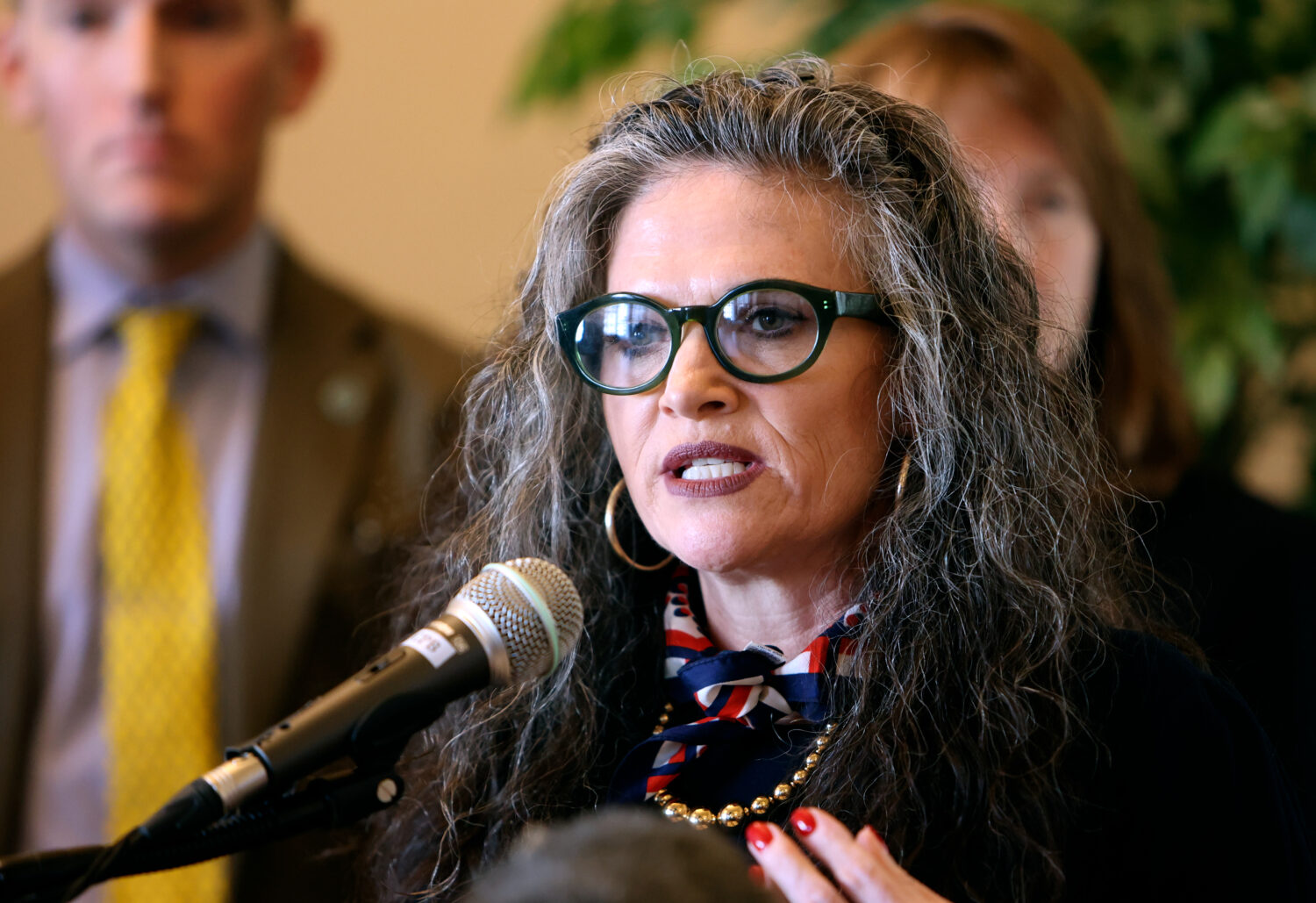
Senate Minority Assistant Whip Jen Plumb, D-Salt Lake City, talks to members of the media during the first day of the 2025 legislative session in the Senate Minority Caucus room at the Capitol in Salt Lake City on Tuesday, Jan. 21, 2025. (Kristin Murphy, Deseret News)
(Kristin Murphy, Deseret News)

SALT LAKE CITY — A Utah lawmaker wants to create a new alert system for missing people who have certain disabilities or other vulnerabilities.
Minority Assistant Whip Jen Plumb’s bill would set up the Purple Alert system, similar to the already existing Silver Alert and Amber Alert systems.
Plumb said several people brought the topic to her attention, but she said one specific case had a big impact.
A nonverbal man with autism went missing near the University of Utah in November and then went missing again the following month; that case played a big role in bringing the issue to light.
Plumb’s bill, SB128, currently only encompasses missing vulnerable “adults,” but she said she plans to amend it to include kids who don’t meet the criteria for an Amber Alert.
“We are going to make sure that we add it’s just not adults, as the bill’s written. Now it’s over 18, but there are actually youth who are under 18 who would fit the criteria for a Purple Alert, but wouldn’t fit the criteria for an Amber Alert.”
Plumb wanted to acknowledge the importance of being sensitive to people with disabilities’ particular needs, not stigmatizing them and understanding their unique vulnerabilities.
“We have an individual who exists in the world differently. We’re worried about them. We need the community to come together, help us locate them, make sure they’re okay, but also to acknowledge that there is a little bit of a different way we want to navigate this,” Plumb said.
Plumb said she believes this is an important issue, because of the community members who’ve spoken with her about it.
“Legislation that community members bring to you and say, ‘this is something that I see as a need for our state or for our particular community,’ and then it comes together to do good. That’s truly my favorite kind of legislation, because it feels like that’s the process working for the people.”