USU chemists’ CRISPR discovery could lead to single diagnostic test for viruses like COVID, flu, RSV
Jan 8, 2026, 5:26 PM

From left, Utah State University biochemists Kadin Crosby (seated), Bamidele Filani and Ryan Jackson report newly discovered functions of the bacterial immune system CRISPR-Cas12a3 in the journal ‘Nature.’ The findings could lead to more efficient and safer rapid diagnostic tools for detecting COVID, influenza and RSV in human patients. (USU, M. Muffoletto)
(USU, M. Muffoletto)

SALT LAKE CITY — Researchers from Utah State University’s Department of Chemistry and Biochemistry revealed new findings Wednesday that could revolutionize the way doctors diagnose and combat viruses like COVID, influenza and RSV infections.
A team of researchers, R. Gaurth Hansen Associate Professor Ryan Jackson, doctoral student Kadin Crosby and master’s student Bamidele Filani, have been studying two lesser known CRISPR systems that host cells utilize to prevent harmful viruses from reproducing within themselves.
CRISPR, short for “clustered regularly interspaced short palindromic repeats,” is a technology used by scientists to selectively modify DNA of living organisms. It was created by mimicking naturally occurring genome editing systems within bacteria.
DNA is the molecule that carries genetic information for the development and functioning of an organism. RNA is used by cells to ‘read’ DNA strands to instruct cells to regulate gene expression. Multiple types of RNA exist, including transport RNA (tRNA), ribosomal RNA (rRNA) and messenger RNA (mRNA).
“We’re very focused on the basic research of understanding the structure and function of the CRISPR systems we study, and helping researchers around the world work through bottlenecks that enable them to pursue therapeutic applications,” Jackson said.
CRISPR systems can be used to target invading pathogens, chopping up their DNA to disable or modify genes to become useless. This works particularly well against viruses, which are made up of a DNA or RNA strand surrounded by proteins.
Viruses will inject their DNA or RNA into a host’s cells, hijacking materials within the cell to replicate itself. This process often ends up killing the cells involved, which damages the host organism and causes them to become sick.
Traditional antibiotics that target bacteria are useless against viral infections, as bacteria have cell membranes that antibiotics can disrupt and destroy. With only a protein shell, viruses are immune to antibiotics.
However, CRISPR is used to specifically target DNA and RNA. Two CRISPR systems, Cas12a2 and Cas12a3, show special promise in eliminating viral production within cells.
“Instead of making a single break in the bound target … RNA target binding by Cas12a2 and Cas12a3 changes the shape of a protein in a way that activates them to cut another nucleic acid target over and over again,” Jackson said. “When activated, Cas12a2 indiscriminately cleaves DNA, destroying all viral DNA, but collaterally killing the host cell as well. In contrast, Cas12a3 cleaves transfer ribonucleic acids, known as tRNAs, halting virus protein production, while sparing the DNA of host cells.”
The latter ability demonstrated by Cas12a3 allows the CRISPR system to target tRNA in a very precise way, slicing off amino acids at the ‘tail’ of tRNA.
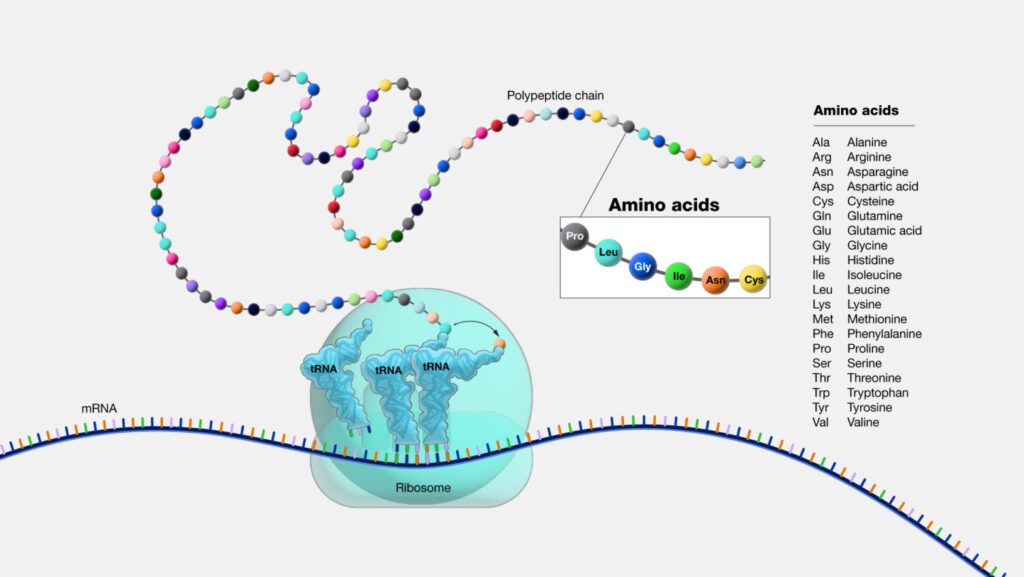
CRISPR system Cas12a3 cuts the amino acid off the ‘tail’ end of tRNA, preventing a strand of amino acids from being built into a specific protein shape. (National Human Genome Research Institute)
Amino acids are combined into chains using tRNA, combining in different shapes to build proteins. Without amino acids, viruses cannot build new protein shells to replicate themselves inside host cells.
“This is a very powerful and precise way to prevent a pathogen, including a virus, from replicating in a cell, without damaging the cell’s DNA,” Jackson said. “We think being able to stop an invading pathogen, while leaving DNA unchanged could be a therapeutic breakthrough.”
The new findings about CRISPR systems Cas12a2 and Cas12a3 were published in the Jan. 7, 2026 edition of the journal Nature.