Historic moon mission troubleshoots fuel leak issue hours before launch
Nov 15, 2022, 9:00 PM

NASA's Space Launch System (SLS) rocket with the Orion spacecraft aboard is seen on Nov. 12 at NASA's Kennedy Space Center in Florida. NASA is gearing up to launch a historic moon mission. Photo credit: Joel Kowsky/NASA
(SLS)
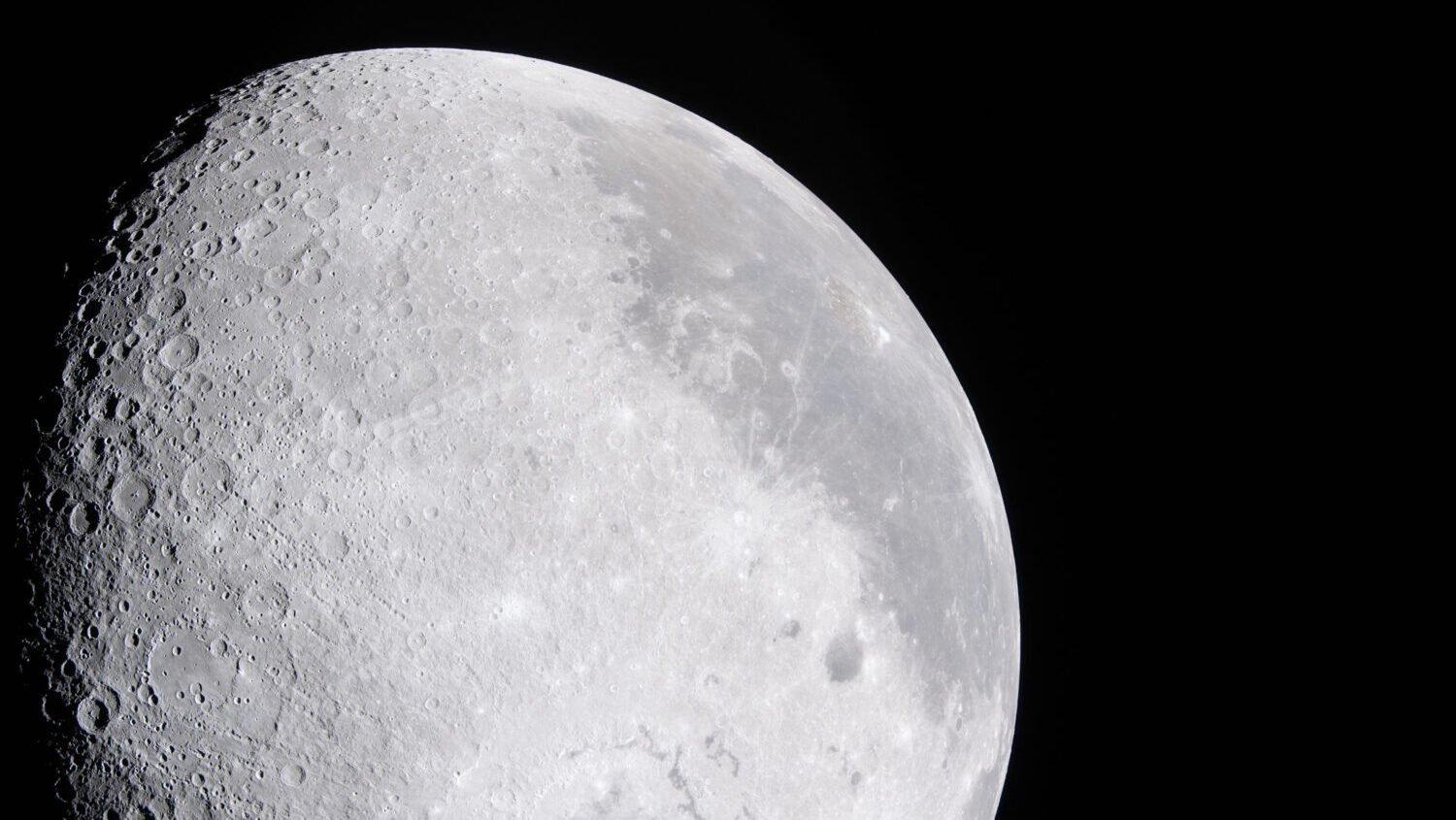
(CNN) — The historic Artemis I mission — an uncrewed test flight around the moon that will make use of the most powerful operational rocket in the world — could finally take flight this week, though the team is once again troubleshooting fueling issues with the massive Space Launch System rocket.
The NASA mission team began fueling the rocket Tuesday afternoon at Kennedy Space Center in Florida ahead of another launch attempt, which comes after weeks of battling various technical problems and setbacks that included the rocket withstanding a Category 1 hurricane. For hours, the fueling appeared to go smoothly, progressing further into the countdown than the two previous launch attempts.
Then, around 9:30 p.m. ET, intermittent leaks began to spring up that were occasionally above the threshold NASA officials hoped to see.
“Teams have advised launch director Charlie Blackwell-Thompson that there’s not a lot they can do from here if (the leak readings) were to go back up” above the safety threshold, NASA spokesperson Derrol Nail said on the agency’s official livestream for the launch.
Those leaks then forced a halt to fueling the tanks involved, and Nail reported that NASA would deploy a “red crew” — a group of personnel specially trained to make repairs while the rocket is loaded with propellant. They will attempt to tighten some hardware on the rocket in the hopes of stopping the leak. Emergency responders will be waiting nearby as they carry out that work, Nail added.
The launch hasn’t been called off yet. It’s scheduled to kick off overnight, with liftoff from Kennedy Space Center set to occur anytime within a two-hour launch window that opens at 1:04 a.m. ET Wednesday.
The public can follow along with the mission by catching NASA’s livestream or, for those in the vicinity of the launch site, by looking skyward from various public beaches and viewing spots if the rocket takes flight.
The launch attempt kicked off just days after Hurricane Nicole barreled through Florida, bringing winds of up to 100 miles per hour (87 knots) to the launchpad area. By the time it became clear the storm was bound to grow into a threat, there wasn’t enough time to get the rocket back indoors, the space agency said.
The rocket sustained only minor damage, according to NASA, including a 10-foot (3-meter) strip of caulking that came loose on the Orion spacecraft. Technicians have also been checking an electrical connection on what’s called a tail service mast umbilical, a 33-foot-tall (10-meter-tall) structure that links to the rocket’s engine area while it sits on the launchpad.
“We’re still seeing some funnies on that particular umbilical,” but engineers have other sources that can provide the same information as the connector, said Mike Sarafin, Artemis I mission manager.
And while there is “a small likelihood” that caulking could dislodge during launch, the Artemis team determined it was within an acceptable range of risks, Sarafin said.
“We’re going to do our best and we’re going to try on Wednesday,” Sarafin said. “That said, if we have an issue that occurs that would cause us to meet one of our No-Go criteria, it may not be our day.” (No-Go critera are a set of predetermined checklist items that must be cleared for NASA to give the green light to launch.
If the mission takes off, viewers can expect a dazzling display as the Space Launch System, or SLS, rocket fires up its four main engines and two side boosters to become airborne and blaze across the night sky en route to the cosmos. The Orion spacecraft will ride atop the rocket and break away after reaching space. Orion is designed to carry humans, but its passengers for this test mission will be of the inanimate variety, including some mannequins collecting vital data to help future crews.
After reaching orbit, the spacecraft is expected to embark on a journey around the moon, traveling roughly 1.3 million miles (2 million kilometers) over the course of about 25 and a half days. Orion will then splash down in the Pacific Ocean on December 11 off the coast of San Diego, where recovery teams will be waiting nearby to haul it to safety.
The aim of the mission is to gather troves of data for NASA engineers and to prove that the SLS rocket and Orion spacecraft perform as expected before astronauts are allowed on board.
Artemis I is just the first in what’s expected to be a long series of increasingly difficult missions as NASA works toward its goal of establishing a permanent outpost on the moon. Artemis II will follow a similar path as Artemis I but will have astronauts on board. Artemis III, slated for later this decade, is expected to land a woman and a person of color on the lunar surface for the first time. That mission will target the moon’s south pole, where permanently shadowed regions may harbor ice and other resources that could sustain astronauts during long moonwalks.
What to watch for
Weather is always a wild card when it comes to launching from Florida, but forecasters said Tuesday evening that conditions are expected to be 90% favorable in the early hours of Wednesday morning.
Issues with leaky fuel may also sound familiar. The Artemis I mission team has run into trouble previously with leaks springing up while loading the rocket with superchilled liquid hydrogen, a central issue in the first two Artemis launch attempts (and the decision to scrap those attempts). After the most recent try in September, NASA did some troubleshooting and put the rocket through a fueling test. That test didn’t go exactly as planned, but the space agency deemed it a success and quickly moved to planning its next launch attempt.
As the hours-long fueling process began, NASA moved forward with what it has called a “kinder, gentler” approach to loading the fuel, a slower method employed in the hopes of avoiding the leaks. No major issues were reported as of 9 p.m. ET as the countdown clock ticked lower than it had during any previous Artemis I launch attempts. It was only after the SLS rocket’s core stage, the massive orange part of the rocket, was completely filled with fuel and merely needed to be continuously “topped off” that problems arose.
Officials were questioned during a news conference last week whether they intended to tighten the very hardware that may have been at the root of the fuel leak and that the “red crew” was sent in to address at the launch pad.
But Jim Free, NASA’s associate administrator for the exploration systems development mission directorate, said they did not.
“That’s not in the current timeline,” Free said.
If NASA moves forward with liftoff, some of the most crucial moments of the journey will occur shortly after the towering orange rocket clears the pad.
The rocket will experience Max Q — an aerospace term that essentially means the rocket is enduring the maximum amount of stress that it must on its way to orbit — about a minute after takeoff. Then, the rocket will begin intentionally shedding parts, which will fall away from the Orion spacecraft and into the ocean, until a single engine remains attached to the gumdrop-shaped capsule.
That rocket engine will have to conduct some crucial burns to get Orion on the right path, including a very brief firing about 50 minutes after launch and another 20-minute-long burn a half-hour later. Two hours into the mission, the capsule will separate from the large rocket engine and rely solely on small, onboard thrusters to steer for the remainder of the trek.
This a test mission, but NASA — and the corporate contractors that helped build the $4.1 billion SLS — have a lot riding on it.
The rocket’s development has been billions of dollars over budget and years behind schedule, and it has faced staunch detractors and criticism over its ballooning costs that have made it far more expensive than initial projections. The space agency is anxious to prove that the architecture it designed will function as promised, even if there are hurdles to address along the way.